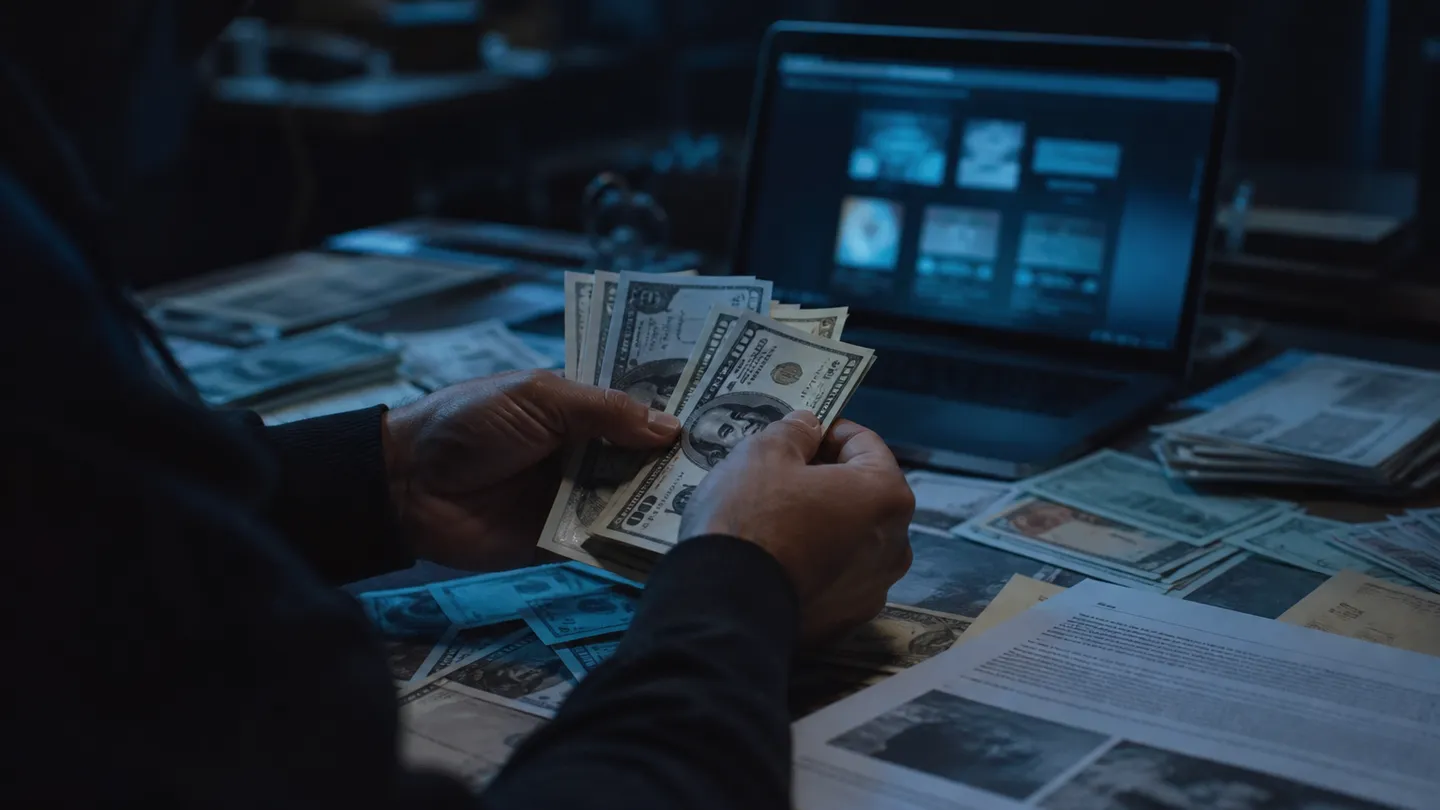
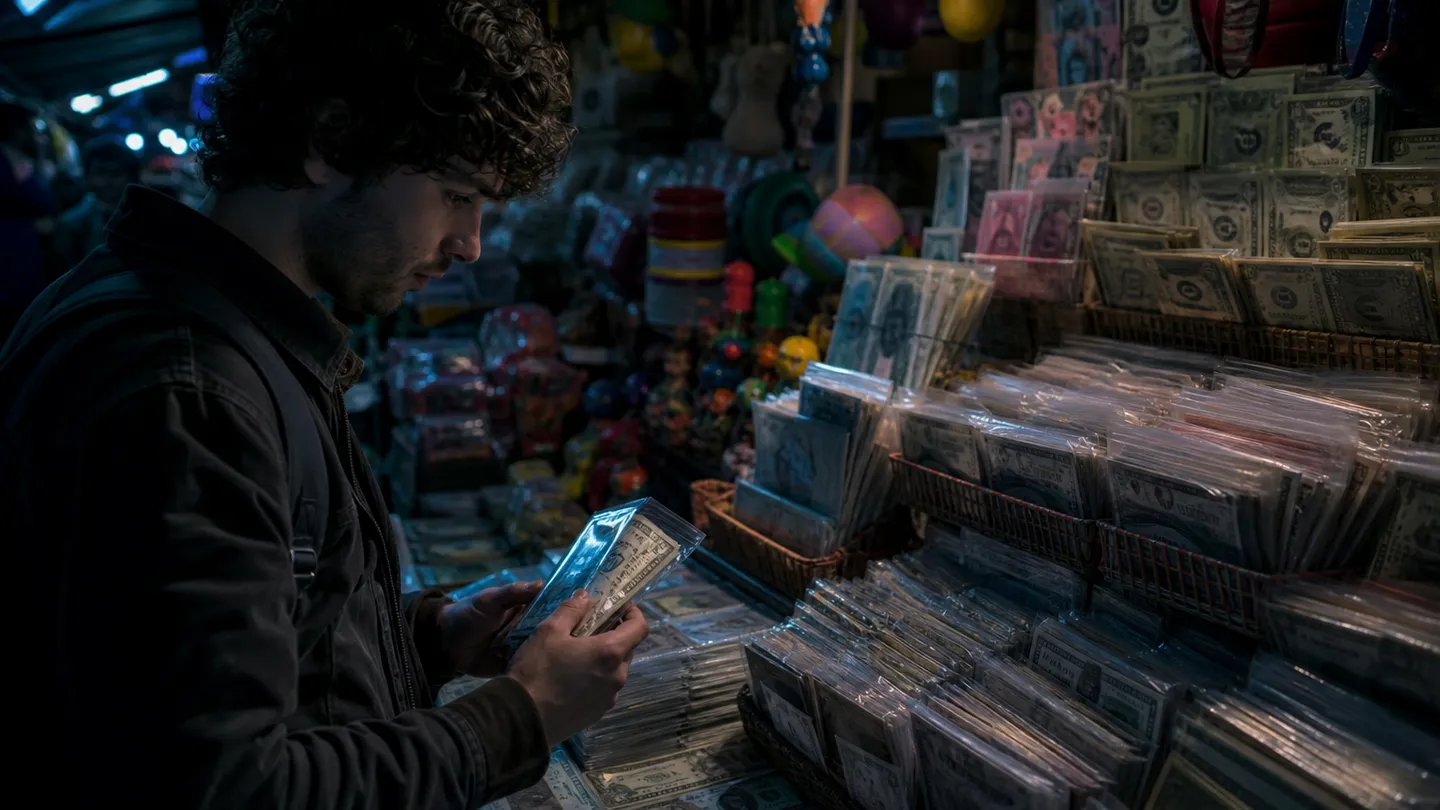
"Fake money dark web" refers to counterfeit currency advertised through hidden online marketplaces, often alongside scams and stolen payment details. We advise against buying it: sellers may take your money without delivering, expose your identity or financial information, and leave you facing serious criminal consequences for possessing or using counterfeit notes.
What “Fake Money” on the Dark Web Actually Means
Counterfeit currency refers to illegally produced banknotes that are designed to imitate real money, intending to deceive individuals and businesses into accepting them as legitimate. This is distinct from legal prop money, which is used primarily for film, theatre, or educational purposes, and is clearly marked to indicate it is not real currency. Other terms such as replica notes, altered banknotes, and novelty items also differ from counterfeit currency. Replica notes might mimic the appearance of real money but are not intended for circulation, while altered banknotes are genuine notes that have been modified to change their value or appearance.
Labels often seen in darknet marketplaces, such as “undetectable,” “ATM-ready,” or “for educational use,” do not confer legality on the items being sold. Buyers should be aware that possessing or using counterfeit currency is a serious crime. In the United States, laws such as 18 U.S.C. §§ 471–473 outline severe penalties for counterfeiting, which can include significant fines and imprisonment. Similarly, in the UK, the Forgery and Counterfeiting Act 1981 sets stringent regulations against the production and distribution of counterfeit money.
When considering counterfeit US dollars, euros, or British pounds, it is crucial to recognise that these items are illegal. For example, counterfeit US dollars might closely resemble genuine notes, making them appealing to unsuspecting individuals. However, law enforcement agencies such as the United States Secret Service and Europol actively monitor and prosecute counterfeit operations.
In summary, while the dark web may offer a variety of counterfeit currency options, the associated risks and legal consequences far outweigh any perceived benefits. We recommend exploring legal alternatives, such as prop money, which can be found in sources like Prop Money Euro: Realistic Options Available.
Is It Illegal to Buy Counterfeit Money Online?
Accessing the dark web itself is not illegal; however, the activities associated with counterfeit currency are. Buying, importing, possessing, passing, or manufacturing counterfeit money can lead to severe legal consequences. In the United States, laws outlined in 18 U.S.C. §§ 471–473 impose strict penalties. For instance, counterfeiting can result in a fine of up to $250,000 and imprisonment for up to 20 years, depending on the specifics of the case. The law also stipulates that a defendant's intent and knowledge—known as mens rea—can influence the severity of charges. Just because a buyer claims ignorance or relies on disclaimers does not provide immunity from prosecution.
In the UK, the Forgery and Counterfeiting Act 1981 addresses similar issues. Under this act, individuals found guilty of producing or distributing counterfeit currency can face imprisonment for up to ten years. This highlights the seriousness with which counterfeit currency is treated across jurisdictions. Additionally, many European countries have their own regulations, often aligning with the principles set by the European Central Bank, which aims to combat counterfeiting throughout the EU.
When engaging with darknet marketplaces, buyers should be aware that law enforcement agencies, such as the Federal Bureau of Investigation and Europol, actively monitor these platforms. Transactions often involve cryptocurrencies, making them harder to trace, but this does not eliminate the risk of legal repercussions. If caught, individuals may face investigations that include postal inspection and other surveillance methods.
Before considering any purchases, it's crucial to understand that possessing counterfeit currency is a crime, regardless of the buyer's intentions. We advise against engaging in such activities and recommend exploring legal alternatives, like prop money, which can be safely sourced from reputable vendors.
The Main Risks Buyers Face
Engaging in the purchase of counterfeit currency on the dark web exposes buyers to numerous significant risks. Criminal prosecution is one of the most severe consequences. In the United States, laws such as 18 U.S.C. §§ 471–473 impose harsh penalties for counterfeiting, including fines up to $250,000 and imprisonment for up to 20 years. Similarly, the UK’s Forgery and Counterfeiting Act 1981 offers penalties of up to ten years in prison for related offences.
Financial loss is another substantial risk. Many buyers fall victim to scams, receiving nothing in return for their payment. The anonymity of the dark web means that recovering lost funds is often impossible. Additionally, buyers risk identity theft; personal information can be captured and exploited by sellers or other malicious actors on these platforms.
Malware is prevalent in darknet marketplaces, with many sellers using it to infect buyers' devices. This can lead to account compromise, where hackers gain access to sensitive information, including banking details. Extortion is also a risk, as buyers may find themselves targeted for additional payments or threats of violence. Customs interception is a real concern for those attempting to import counterfeit currency, as postal inspections are routinely conducted by law enforcement agencies.
Lastly, exposure to unrelated criminal activity is a danger. The dark web is rife with illegal activities, and buyers may inadvertently engage with individuals involved in more serious crimes, leading to potential legal troubles or personal harm.
To illustrate these risks, we have created a compact risk table:
| Risk | Likelihood | Potential Impact | Example |
|---|---|---|---|
| Criminal Prosecution | High | Severe (fines, imprisonment) | Buying counterfeit notes |
| Financial Loss | High | Moderate to Severe | Paying for undelivered currency |
| Identity Theft | Moderate | Severe | Personal data sold on forums |
| Malware | High | Severe | Device infection from downloads |
| Extortion | Moderate | Severe | Threats for additional payments |
| Account Compromise | High | Severe | Hacked bank accounts |
| Customs Interception | Moderate | Severe | Seizure of counterfeit items |
| Exposure to Unrelated Criminal Activity | Moderate | Severe | Interaction with dangerous individuals |
Cryptocurrency and encrypted communication methods do not eliminate these risks. While they may provide a layer of anonymity, law enforcement agencies actively monitor darknet transactions, and individuals can still be traced through various means. We advise against engaging in these activities and encourage exploring legal alternatives, such as prop money, which can be safely sourced from reputable vendors.
Why Most Dark-Web Counterfeit Money Offers Are Unreliable
Why Most Dark-Web Counterfeit Money Offers Are Unreliable
Many offers for counterfeit money on the dark web are unreliable, and several common warning signs can help potential buyers identify scams. First, be cautious of sellers offering impossible exchange rates. If the price for counterfeit currency seems too good to be true, it likely is. Sellers often use recycled images of currency, which can be found on various websites, making it easy for them to mislead buyers. Additionally, fabricated reviews are prevalent; sellers may create fake testimonials to build credibility, further obscuring the truth about their operations.
Another red flag is the demand for advance fees. Legitimate sellers typically do not require payment upfront without some form of assurance. If a seller insists on additional payments after an initial transaction, this is often an indication of a scam. Impersonation also occurs frequently; sellers might pose as reputable businesses or individuals to gain trust.
We can draw evidence-backed findings from peer-reviewed research, such as the study conducted by Holt et al. from 2017 to 2021, which examined the characteristics of online counterfeit vendors. The study highlights the prevalence of scams and the methods used by these sellers to exploit buyers. However, it is essential to note that the findings may have limitations, as they primarily focus on specific darknet marketplaces and may not encompass the entire landscape of online counterfeit operations.
In conclusion, buyers should remain vigilant and sceptical when navigating dark web offers for counterfeit currency. Understanding these warning signs can help individuals avoid falling victim to scams. For those interested in legal alternatives, exploring options such as prop money is advisable, which can be found from reputable vendors.
Can Law Enforcement Track Dark-Web Purchases?
Law enforcement agencies have developed various methods to track purchases made on the dark web, despite the common misconception that accessing these marketplaces guarantees anonymity. While using Tor and cryptocurrencies can obscure a user's identity, it does not make them completely untraceable. Investigations often leverage a combination of techniques, including marketplace seizures, payment records, communications, postal evidence, and device data, to identify and prosecute individuals involved in illegal activities.
A notable example is Europol's operation in 2018, which targeted buyers of counterfeit euro banknotes. This initiative resulted in multiple arrests across Europe, demonstrating that law enforcement can successfully track and apprehend individuals engaged in purchasing counterfeit currency, even when transactions occur on hidden networks. Similarly, the United States Secret Service has been involved in several high-profile cases, employing advanced investigative techniques to trace counterfeit currency transactions back to their origins.
It's important to understand that while law enforcement may not identify every visitor to a darknet marketplace, they can piece together evidence from various sources. For instance, payment methods like cryptocurrencies may offer some level of anonymity, but exchanges and wallet transactions can still be monitored. Additionally, communications between buyers and sellers can be intercepted or analysed, providing further leads for investigators. Postal inspections can also reveal the identity of individuals receiving counterfeit items, as law enforcement agencies routinely conduct such checks.
Buyers should remain aware that even seemingly anonymous transactions can lead to serious consequences. Engaging in the purchase of counterfeit currency exposes individuals to significant legal risks, as outlined by laws such as 18 U.S.C. §§ 471–473 in the United States and the Forgery and Counterfeiting Act 1981 in the UK. Understanding these risks and the potential for law enforcement intervention is crucial before considering any purchases on the dark web.
What Can Happen If Counterfeit Notes Are Used
Using counterfeit notes can lead to severe legal consequences, including arrest, imprisonment, fines, forfeiture, and restitution. The penalties vary significantly depending on jurisdiction and the nature of the offence. For instance, in the United States, individuals caught knowingly passing counterfeit currency face potential fines up to $250,000 and imprisonment for up to 20 years under 18 U.S.C. §§ 471–473. In the UK, the Forgery and Counterfeiting Act 1981 imposes similar penalties, with imprisonment for up to ten years for those found guilty of distributing counterfeit currency. In the EU, regulations align with the European Central Bank's efforts to combat counterfeiting, resulting in stringent laws across member states.
A crucial distinction exists between unknowingly receiving a counterfeit note and knowingly attempting to use one. If someone unknowingly receives counterfeit currency, they may still face legal action but could argue a lack of mens rea, or intent. This defence may not absolve them entirely, but it can influence the severity of the penalties. Conversely, knowingly passing counterfeit notes demonstrates intent to commit a crime, which typically leads to harsher penalties and prosecution.
Possible Legal Consequences
Arrest: Law enforcement agencies, including the Federal Bureau of Investigation and Europol, actively monitor dark web transactions. Buyers can be apprehended if they are identified during investigations.
Imprisonment: Depending on the jurisdiction and circumstances, sentences can range from a few years to over a decade in prison.
Fines: Substantial financial penalties are common, with potential fines reaching hundreds of thousands of dollars.
Forfeiture and Restitution: Courts may impose forfeiture of any money involved in the crime and restitution to victims or financial institutions.
Account Closures: Financial institutions may close accounts linked to suspicious activities, including transactions involving counterfeit currency.
Investigation of Related Transactions: Law enforcement may scrutinise other financial activities that could be connected to the counterfeit transaction, leading to further charges.
Before considering any purchases, understanding these risks is vital. Engaging with counterfeit currency can lead to life-altering consequences, making it imperative to explore legal alternatives, such as prop money, which can be safely sourced from reputable vendors.
Myths and Claims: What the Evidence Supports
Understanding the myths surrounding counterfeit currency on the dark web is crucial for anyone considering such purchases. We have compiled a table that contrasts common claims with the facts supported by law and expert sources.
| Claim | Myth or Fact | Evidence |
|---|---|---|
| The dark web is untraceable. | Myth | Law enforcement agencies, including the Federal Bureau of Investigation, actively monitor dark web activities, employing various tracking methods. |
| Small orders are ignored. | Myth | Law enforcement has conducted operations that successfully targeted small-scale transactions, demonstrating that no order is too small to attract attention. |
| Prop money is always legal. | Myth | The legality of prop money varies by jurisdiction; in some cases, it must be clearly marked as fake to avoid legal issues. |
| Cryptocurrency makes purchases anonymous. | Myth | While cryptocurrencies provide a degree of privacy, exchanges and transaction patterns can still be traced by authorities. |
| High-quality notes are guaranteed to pass. | Myth | There are no guarantees with counterfeit notes; many high-quality fakes can still be detected by trained professionals or through advanced technologies. |
Analysis of Claims
The notion that the dark web is completely untraceable is a common misconception. Agencies such as the United States Secret Service have been successful in tracking down individuals involved in illegal transactions, demonstrating that anonymity is not absolute. Similarly, the belief that small orders go unnoticed is misleading; law enforcement conducts regular operations that include small-scale purchases.
When it comes to prop money, the legality is nuanced. For example, in the UK, the Forgery and Counterfeiting Act 1981 outlines specific regulations regarding the use of prop money, which must not be confused with actual currency. Cryptocurrency may seem like a foolproof method for anonymous transactions, but the reality is that patterns can be identified, particularly when users convert crypto back into fiat currency.
Lastly, the idea that high-quality counterfeit notes are guaranteed to pass is simply not true. Counterfeit detection methods are becoming increasingly sophisticated, meaning that even the best fakes can be identified. Buyers should approach offers with caution and consider the legal repercussions associated with such transactions.
For those interested in alternatives, exploring options like prop money from reputable vendors can provide a safe and legal way to fulfil various needs without the associated risks of counterfeit currency.
What to Do If You Already Ordered or Received Suspected Counterfeit Money
If you suspect that you have ordered or received counterfeit money, it is crucial to act carefully to minimise potential harm. First and foremost, do not attempt to spend, deposit, sell, return, or destroy the suspected notes. Handling counterfeit currency can lead to serious legal repercussions, as possession or distribution can be interpreted as intent to commit a crime. Instead, you should focus on preserving the evidence and minimising your interaction with the notes.
Steps to Take
Minimise Handling: Avoid touching the notes more than necessary. Each time you handle them, you may inadvertently alter evidence that could be important for law enforcement investigations.
Preserve Relevant Records: Keep all records related to the transaction, including any communications with the seller, payment confirmations, and the original packaging if applicable. These documents can be vital if you need to report the incident.
Report to Authorities: Contact your local police department or the appropriate authority in your country. In the United States, the United States Secret Service is specifically tasked with investigating counterfeit currency. You can also reach out to your central bank or financial institution for guidance on the next steps. Procedures may vary by country, so ensure you are following local laws.
Seek Legal Advice: Consider consulting with a qualified criminal-defense lawyer who can provide personalised legal guidance based on your situation. They can help you understand your rights and the potential consequences you may face.
Avoid Confrontation with the Seller: It is advisable not to confront the seller directly. This could escalate the situation or lead to further complications, especially if the seller is involved in illegal activities.
Taking these steps can help you navigate the complex situation of dealing with suspected counterfeit currency while protecting yourself from legal liabilities. Engaging with law enforcement and legal professionals will provide you with the support needed to address the issue appropriately.
Risk Matrix and Myth vs. Fact Table for Fake Money on the Dark Web
| Stage | Likely Scams | Legal Exposure | Safe Next Steps |
|---|---|---|---|
| Listing Claim | Fake reviews, non-existent sellers | Potential arrest for conspiracy | Research seller reputation thoroughly |
| Payment | Phishing scams, chargebacks | Fines up to $250,000 | Use secure payment methods, avoid personal info |
| Shipment | Lost packages, tracking scams | Possession can imply intent | Use discreet shipping options, avoid direct contact |
| Possession | Legal action for possession | Imprisonment up to 20 years | Report to authorities immediately |
| Attempted Use | Arrest for passing counterfeit | Severe penalties, restitution | Consult a lawyer, do not use notes |
Common Mistakes and Misconceptions
Access is not the offence.
Confusing Dark-Web Access With Counterfeit-Money Offences
People often treat opening a dark-web marketplace and ordering fake currency as the same legal act. Merely accessing privacy tools may be lawful, while agreeing to buy, paying for, importing, possessing, or using counterfeit notes can create separate legal exposure depending on jurisdiction and intent. We suggest checking the law governing both your location and the shipment route rather than relying on a seller’s interpretation.
Treating Vendor Claims as Evidence
Sellers describe notes as "undetectable", "tested", or safe for particular shops because those claims reduce buyers’ hesitation. Such language is marketing, not independent evidence, and marketplace reviews may be manipulated or written by accounts connected to the vendor. Before believing any claim, ask whether it can be checked against primary legal guidance or official currency information; if not, treat it as unsupported.
Assuming the Main Risk Is Receiving Poor-Quality Notes
Potential buyers often focus on print quality and overlook losses unrelated to the notes themselves. A listing may lead to payment theft, phishing, malware, identity exposure, extortion, or a parcel that never arrives, with no legitimate dispute process available. We advise assessing the full risk chain:
- payment and wallet exposure;
- disclosure of a name or Seattle delivery address;
- malicious files or links;
- customs or postal interception;
- later threats from the seller.
Believing Importation Is Just a Shipping Issue
Some buyers assume legal risk begins only when counterfeit notes are spent. In reality, arranging an international delivery may involve conduct evaluated separately from attempted use, and a package crossing borders can attract scrutiny from several authorities. Before ordering anything resembling currency, make sure you understand local possession rules, import restrictions, and whether the item could reasonably be mistaken for genuine money.
Trying to "Fix" an Order After It Arrives
Fear can lead someone to return the notes, hide them, destroy them, or send them to another person. Those actions may remove useful records, spread the suspected currency, or make later explanations more difficult. The safer approach is to stop handling the package, avoid contacting the seller impulsively, preserve transaction details, and obtain advice from a Seattle criminal-defence lawyer or the appropriate authorities.
Assuming Lack of Intent Is Automatic Protection
People sometimes believe that calling an order "prop money" removes any concern, even when the listing, appearance, messages, or delivery circumstances suggest otherwise. Labels alone do not settle how conduct will be interpreted; surrounding communications and subsequent actions can matter. Before purchasing film or photography currency, ensure it comes from a legitimate supplier, is clearly distinguishable from genuine notes, and complies with the rules where it will be shipped and used.
Conclusions
- Do not buy counterfeit currency. The promised anonymity, quality, and buyer protection cannot be verified, while the consequences may extend beyond losing the payment.
- We recommend choosing clearly marked prop money from a legitimate supplier when notes are needed for filming, photography, education, or display.
- Treat cryptocurrency, encrypted messaging, and marketplace ratings as tools rather than proof that a transaction or seller is safe.
- If suspicious notes arrive, leave them unused, retain the packaging and transaction records, and seek advice from a Seattle criminal-defence lawyer or the relevant authorities.
- Before purchasing any currency-like product, confirm that its appearance, shipment, possession, and intended use comply with applicable rules.
As a practical next step, learn the visible warning signs in Fake US Dollars: How to Spot Them.
Straight answers
Is it illegal to enter the dark web?
No, merely accessing the dark web is not inherently illegal in the United States. The legal risk comes from what someone does there, such as purchasing prohibited goods, downloading unlawful material, or participating in fraud.
Is it illegal to buy fake money online?
Buying counterfeit currency intended to resemble or circulate as genuine money can expose a buyer to federal criminal liability. Calling the notes "replicas" or "prop money" does not protect the transaction when their design, marketing, or intended use indicates counterfeiting.
Can I go to jail for using fake money?
Yes, knowingly passing counterfeit money as genuine can result in prosecution and imprisonment. Intent matters, so anyone who accidentally receives a suspicious note should stop using it and avoid trying to recover the loss by passing it elsewhere.
Can the FBI track the dark web?
Yes, the FBI can investigate dark-web activity using transaction records, seized marketplace data, undercover operations, device evidence, and mistakes that reveal a user's identity. Tor, cryptocurrency, and encrypted messaging can reduce casual visibility, but they do not make illegal activity untraceable.
Is prop money the same as counterfeit money?
No, legitimate prop money is produced for uses such as filming or photography and should be clearly distinguishable from genuine currency. It can still create legal problems if it closely imitates real notes or is offered, altered, or used as actual money.
What happens if counterfeit money is sent through the mail?
A suspicious parcel may be intercepted, retained as evidence, and referred to postal inspectors or other law-enforcement agencies. The recipient's order records, messages, payment trail, and actions after delivery may be examined to determine knowledge and intent.
Are dark-web counterfeit money listings usually scams?
There is no dependable marketplace data proving how many listings deliver anything, so claims about success rates should not be trusted. We advise treating every listing as a potential scam involving stolen payment, phishing, malware, identity exposure, extortion, or an empty parcel.