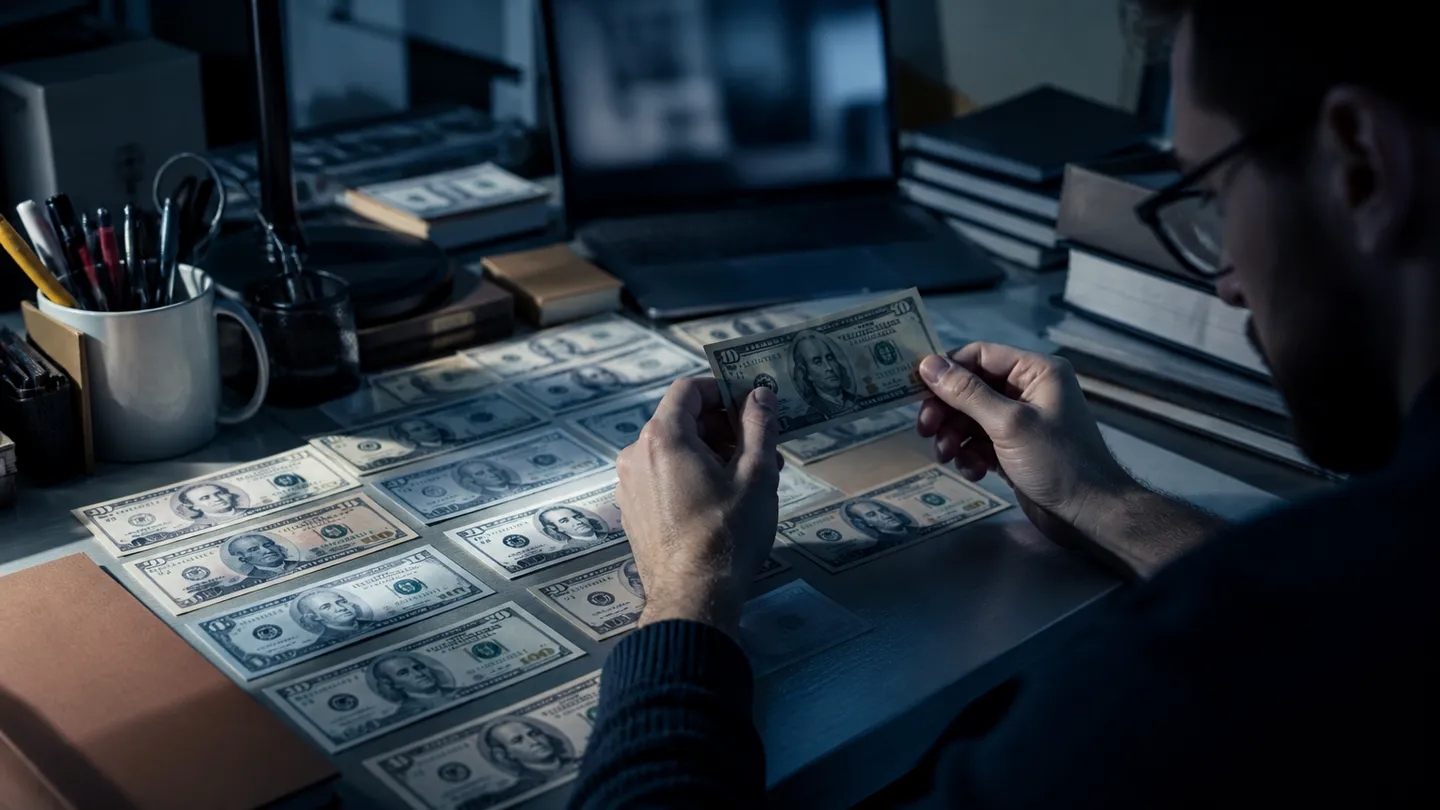
Truly undetectable counterfeit money does not exist; a note may fool one check yet fail another. Set aside a brief inspection using feel, light, colour-shifting features, and comparison with a known genuine note. If doubt remains, refuse or isolate it and contact local police or the U.S. Secret Service. Success depends on checking several security features, not trusting a detector pen alone.
The Truth About Undetectable Counterfeit Money
- Step 1: Understand the Concept
Recognise that the term 'undetectable counterfeit money' often refers to bills that closely mimic real currency. Familiarise yourself with the reasons why some counterfeit bills can be difficult to spot, particularly if they are made using advanced printing techniques. This understanding will help you remain cautious when handling cash.
- Step 2: Learn the Security Features
Study the security features present in U.S. currency, such as watermarks, security threads, and microprinting. Each denomination has unique features that can be checked visually. For example, the $20 bill has a security thread that glows under UV light, while the $100 bill has a blue security ribbon.
- Step 3: Use Multiple Verification Methods
Employ a layered approach to verify the authenticity of a bill. This means using a combination of visual checks, tactile checks, and tools like counterfeit pens or UV lights. By using multiple methods, you increase your chances of identifying a counterfeit bill.
- Step 4: Check with a Counterfeit Pen
Use a counterfeit detection pen to mark the bill. If the mark turns dark, it indicates the bill may be counterfeit. However, remember that this method is not foolproof, as some counterfeit bills can pass this test.
- Step 5: Inspect the Serial Number
Check the serial number on the bill. Ensure it matches the series year and is consistent with the overall design. If the serial number appears unusual or if the bill feels off, consider it a red flag.
- Step 6: Use UV Light for Verification
Shine a UV light on the bill to see if it reveals any hidden security features. Real currency will typically show specific glow patterns under UV light, while counterfeits may not. This step can help you identify potential fakes quickly.
- Step 7: Stay Informed About Common Myths
Be aware of common misconceptions about counterfeit money, such as the belief that all counterfeit bills are easy to spot. Understanding these myths can help you avoid unnecessary panic and encourage a more thorough verification process.
- Step 8: Report Suspicious Bills
If you suspect a bill is counterfeit, report it to local authorities or a bank. Provide as much detail as possible about the incident. This action not only helps you but also protects others from receiving counterfeit currency.
- Step 9: Educate Yourself Regularly
Regularly update your knowledge about counterfeit detection methods and security features. This can be done through workshops, online resources, or community classes. Staying informed will empower you to handle cash transactions with confidence.
Is “Undetectable Counterfeit Money” Real?
Counterfeit currency refers to fake money that is designed to resemble genuine U.S. bills. The term "undetectable" is often used in marketing but does not denote an official category of counterfeit notes. In practice, while some counterfeit bills may pass a quick visual inspection, they can still fail more thorough checks conducted by trained staff or financial institutions.
High-quality counterfeits, sometimes referred to as "superdollars," are designed to closely mimic real currency, making them particularly challenging to identify. However, it is crucial to remember that no counterfeit note is truly undetectable. A bill may fool one form of verification but fail another, such as those involving advanced security features like watermarks and microprinting.
When handling cash, we recommend being vigilant and knowledgeable about the different security features present in U.S. currency. If you suspect a bill is counterfeit, it is wise to refuse or isolate it and inform local authorities or the U.S. Secret Service. Successful identification of counterfeit money relies on checking multiple security features rather than relying solely on a detector pen. For a deeper understanding of how to spot fake U.S. dollars, we encourage you to explore our guide on this topic Fake US Dollars: How to Spot Them.
Counterfeit Money vs. Real Money: Use a Layered Check
Counterfeit bills can closely resemble real currency, making it essential to employ a layered approach when checking for authenticity. Start by feeling the paper and raised printing, as genuine U.S. bills have a distinct texture that counterfeits often lack. Tilt the note to observe the colour-shifting ink, which changes appearance based on the angle of light. Holding the bill up to the light will reveal the embedded security thread and watermark, both of which are critical features of authentic currency.
When comparing a suspect bill with a known genuine note, ensure they are of the same denomination and series. This comparison allows you to examine details such as microprinting and print quality, which are often poorly replicated in counterfeits. Remember, however, that matching just one feature does not guarantee authenticity; counterfeiters may replicate certain aspects while failing to include others.
If you encounter any discrepancies during your checks, it is best to set the bill aside and consult local authorities. It’s important to understand that even advanced counterfeits can sometimes pass basic inspections, so relying solely on one method, such as a counterfeit pen, is insufficient. Always be prepared to take further action if there is any doubt about a bill's legitimacy.
Security Features by Denomination
Security Features by Denomination
Understanding the security features of U.S. currency is essential for identifying counterfeit notes. Each denomination has unique characteristics, and being aware of these can significantly enhance your ability to detect fakes. Below is a quick-reference table that outlines the security features for $1, $2, $5, $10, $20, $50, and $100 notes, including differences between older and current designs.
| Denomination | Current Design Features | Older Design Features |
|---|---|---|
| $1 | No embedded security thread | No security thread |
| $2 | No embedded security thread | No security thread |
| $5 | Blue security thread (visible under UV light) | Lacks embedded security features |
| $10 | Orange security thread (visible under UV light) | Lacks embedded security features |
| $20 | Green security thread (visible under UV light) | Lacks embedded security features |
| $50 | Yellow security thread (visible under UV light) | Lacks embedded security features |
| $100 | Pink security ribbon (3-D feature) | Lacks modern security features |
It is important to note that genuine $1 and $2 Federal Reserve notes do not have the denomination-specific embedded security thread found in higher denominations. For current designs, the UV thread colours are distinctive: blue for $5, orange for $10, green for $20, yellow for $50, and pink for $100. The $100 note also features a unique 3-D security ribbon that shifts as the note is tilted, providing an additional layer of verification.
When assessing a bill, always use multiple verification methods. If you suspect a bill could be counterfeit, such as noticing the absence of critical features or discrepancies in colour, do not hesitate to isolate it and report your concerns to local authorities. Understanding these security features is a proactive step towards preventing counterfeit currency from entering circulation. For more detailed information on identifying fake U.S. dollars, check out our guide on spotting them Fake US Dollars: How to Spot Them.
UV Lights, Counterfeit Pens, and Money Scanners: What They Can—and Cannot—Prove
UV lights, counterfeit pens, and money scanners are widely used tools for detecting counterfeit currency, but their effectiveness varies. UV lights can reveal hidden security features in genuine notes, such as specific glow patterns. However, not all counterfeit bills will fail this test, especially if they are crafted using advanced techniques that mimic these features. It's vital to remember that while UV lights can provide quick insights, they are not foolproof.
Counterfeit pens, which typically use iodine-based ink, mark bills to indicate authenticity. A dark mark usually suggests a bill is fake; however, this method has limitations. Some counterfeiters use genuine paper that has been chemically altered, which can pass the pen test. Therefore, relying solely on a pen's result can lead to false security.
Automated money scanners offer a more sophisticated approach, checking various features simultaneously. Yet, they too can be deceived by high-quality counterfeits. These devices may not always account for the nuances of different denominations or the latest security updates in U.S. currency.
To enhance your verification process, we recommend combining the results from these tools with visible and tactile checks. Examine the bill's texture, colour-shifting features, and watermarks. By using multiple methods, you increase the chances of identifying a counterfeit bill effectively. If you have doubts about a bill's authenticity, it is best to refuse it and consult local authorities or the U.S. Secret Service. Understanding the limitations of these tools will empower you to make informed decisions when handling cash.
Can You Check Whether Money Is Real by Its Serial Number?
There is a common belief that a public database exists to validate U.S. banknotes by their serial number, but this is not the case. While serial numbers can provide some insights, such as identifying format inconsistencies or detecting duplicates across multiple notes, they do not guarantee authenticity. A plausible serial number might match the expected format, but this alone does not authenticate a bill.
For instance, if you come across two $20 bills with the same serial number, this should raise a red flag, as each note is meant to have a unique number. Additionally, if a serial number appears to be from a series that has been discontinued, it may indicate that the bill is counterfeit.
Another example could be a bill with a serial number that does not align with the issuing bank for that denomination. While these patterns can suggest potential issues, they do not serve as definitive proof that a bill is fake.
If you have concerns about a bill, we recommend using multiple verification methods. Always consider the serial number alongside other security features, such as watermarks and security threads. If anything seems off, it’s best to err on the side of caution and report the bill to local authorities. Understanding the limitations of serial number checks will help you navigate cash transactions more safely. For further guidance on identifying counterfeit U.S. dollars, explore our guide Fake US Dollars: How to Spot Them.
Common Myths About “Undetectable” Counterfeits
Common Myths About “Undetectable” Counterfeits
Several myths surround the notion of “undetectable” counterfeit money, which can lead to misunderstandings about what constitutes genuine currency. One common claim is that if a bill passes a counterfeit detection pen, it must be real. In reality, while these pens can indicate authenticity, they are not infallible. Counterfeiters may use genuine paper that can fool such devices, meaning a pen test alone is insufficient for verification.
Another prevalent belief is that small bills, like $1 or $5 notes, are rarely checked. This is misleading; while smaller denominations might not be scrutinised as rigorously as larger ones, they can still be counterfeit. Every bill should be treated with caution, regardless of its denomination.
Some people think that older notes lack security features. However, even older bills possess certain elements, such as specific printing techniques, that can help identify them. It’s essential to understand that the security features vary by denomination and series, and older notes might still have detectable characteristics.
Lastly, there's a misconception that using a scanner guarantees a bill's authenticity. Scanners can check for certain features, but like other methods, they can also be deceived by high-quality counterfeits.
To clarify these points, we can categorise the types of currency and money-like items: realistic appearance, legal prop money, altered genuine notes, and authentic currency. Each category has its own characteristics and risks associated with it. If you suspect you are dealing with counterfeit money, always cross-check multiple security features and consult our guide on spotting fake U.S. dollars Fake US Dollars: How to Spot Them.
What to Do If You Suspect a Counterfeit Bill
If you suspect that you have received a counterfeit bill, there are several important steps to take. First, do not knowingly spend or return the note; this could lead to further complications. Minimise handling of the bill to preserve any potential evidence. Remember who provided the bill, as this information may be relevant later. It's essential to contact local police or the U.S. Secret Service to report your findings, as they are equipped to handle such situations according to official guidance.
For businesses, it's crucial to follow internal policies regarding counterfeit currency. Avoid confronting or detaining anyone who presents a suspicious bill, as this can escalate into a potentially dangerous situation. Instead, inform your management or security personnel and handle the situation according to established protocols.
Accidental possession of a counterfeit bill is different from knowingly passing it. However, it's important to note that if you find yourself in possession of a counterfeit note, it will not be reimbursed as genuine money. This means that even if you did not intend to use it, you will likely incur a loss. To protect yourself, always exercise caution when handling cash and rely on multiple verification methods to confirm the authenticity of currency. If you are unsure about a bill's legitimacy, it's better to refuse it and seek assistance from authorities.
Counterfeit Money FAQ
Counterfeit money can often be detected through various methods, but no single test guarantees absolute certainty. Common tools like UV lights and counterfeit pens can help identify fakes, yet skilled counterfeiters may create notes that pass these checks. We recommend using a combination of verification techniques, including tactile checks and visual inspections. If you're ever uncertain, it's best to consult a bank or the U.S. Secret Service for a thorough assessment.
Using counterfeit money unknowingly can lead to significant problems. If you attempt to spend a fake note, you could face legal repercussions, even if you were unaware of its status. It's crucial to be vigilant when accepting cash, especially if you notice any discrepancies in appearance or texture. Always err on the side of caution.
Realistic prop money is not considered legal tender. While it may look convincing, it is meant for use in movies, theatre, or training. Possessing prop money with the intent to deceive, however, can lead to serious legal consequences. Always ensure that any prop currency you use is clearly marked as such to avoid confusion.
If you suspect a bill is counterfeit, remember that no at-home check can provide complete certainty. Contact local authorities or financial institutions for support in resolving any doubts. Understanding the complexities of counterfeit detection will empower you to handle cash transactions more safely. For more detailed guidance on identifying fake currency, refer to our resource on spotting fake U.S. dollars Fake US Dollars: How to Spot Them.
What to Do If It Still Doesn't Work
Pause. Before repeating any check, make sure you have:
- the correct denomination and design series for comparison;
- strong, neutral lighting rather than coloured shop lighting;
- a known genuine note of the same design, not merely the same value.
The note looks convincing, but the checks still disagree
Passing a quick glance only means the note resembles genuine currency under casual inspection; it does not equal layered professional authentication. Separate the immediate decision from the final verdict: pause or decline the transaction under shop policy, then ask a bank or appropriate authority to examine the note.
A serial-number search produces a plausible result
A serial number is printed in plain sight, so it can be copied onto a counterfeit; a search cannot confirm that the paper carrying it is genuine. Use the number only to spot limited warning signs, such as inconsistent formatting or matching numbers on separate notes, then assess the physical note independently.
The pen, UV light, and scanner give different answers
These tools examine different properties, so conflicting results may reflect a contaminated pen tip, unsuitable lighting, incorrect scanner settings, or a feature the device does not assess. Check the equipment instructions, select the correct denomination where required, and compare the response with a known genuine note; unresolved disagreement means the result is inconclusive.
An older-design note appears to lack familiar features
Older genuine designs may not contain the same visible features as current notes, making a modern-note checklist misleading. Identify the design first, compare it with the same version, and avoid treating age or an unfamiliar appearance as evidence by itself.
A $1 or $2 note has no security thread
The missing thread is expected on genuine $1 and $2 notes, so a UV thread test cannot authenticate these denominations. Compare the note’s printing, feel, layout, and fine details with a known genuine note of the same design instead.
No home or checkout test settles the question
Repeatedly using the same tools will not turn an uncertain result into professional authentication. For a Seattle shop, we suggest following the till procedure, involving a manager, and declining the note without accusing the customer; an individual can take the unresolved note to a bank or report the concern to the appropriate authorities.
Conclusions
Start with restraint.
- Treat "undetectable" as a marketing claim, not proof that a note can survive careful examination.
- Check several physical and printed features against a genuine bill of the same denomination and design; one device cannot settle every doubt.
- Before accepting suspicious cash, ensure the lighting, comparison note, and detector settings are suitable for that specific bill.
- If the results conflict, stop the transaction, follow workplace procedures, and avoid accusing or detaining the person presenting it.
- Never knowingly spend a questionable note; minimise handling and ask a bank, local police, or the U.S. Secret Service for help.
For the next step, use Fake US Dollars: How to Spot Them to organise a practical check before accepting another uncertain bill.
Straight answers
What is the easiest money to counterfeit?
No genuine U.S. denomination is "easy" to counterfeit convincingly. Lower-value notes may attract less attention at checkout, but their paper, printing quality, portrait detail and layout can still expose a fake when compared with a genuine note of the same design.
How to detect counterfeit money $100?
For a current-design $100 bill, tilt the note and inspect the blue security ribbon, the colour-shifting bell inside the inkwell and the colour-changing numeral. Hold it to light to find the portrait watermark and embedded security thread, then compare the texture and fine printing with a known genuine bill of the same design.
How to detect counterfeit money with UV light?
Place the note under a suitable UV lamp in subdued lighting and look for the embedded security thread, which should appear in the correct position and glow the expected colour for that denomination. A glowing surface is not enough: ordinary paper may fluoresce broadly, while the intended thread response is localised, so we advise comparing it with a genuine note of the same design.