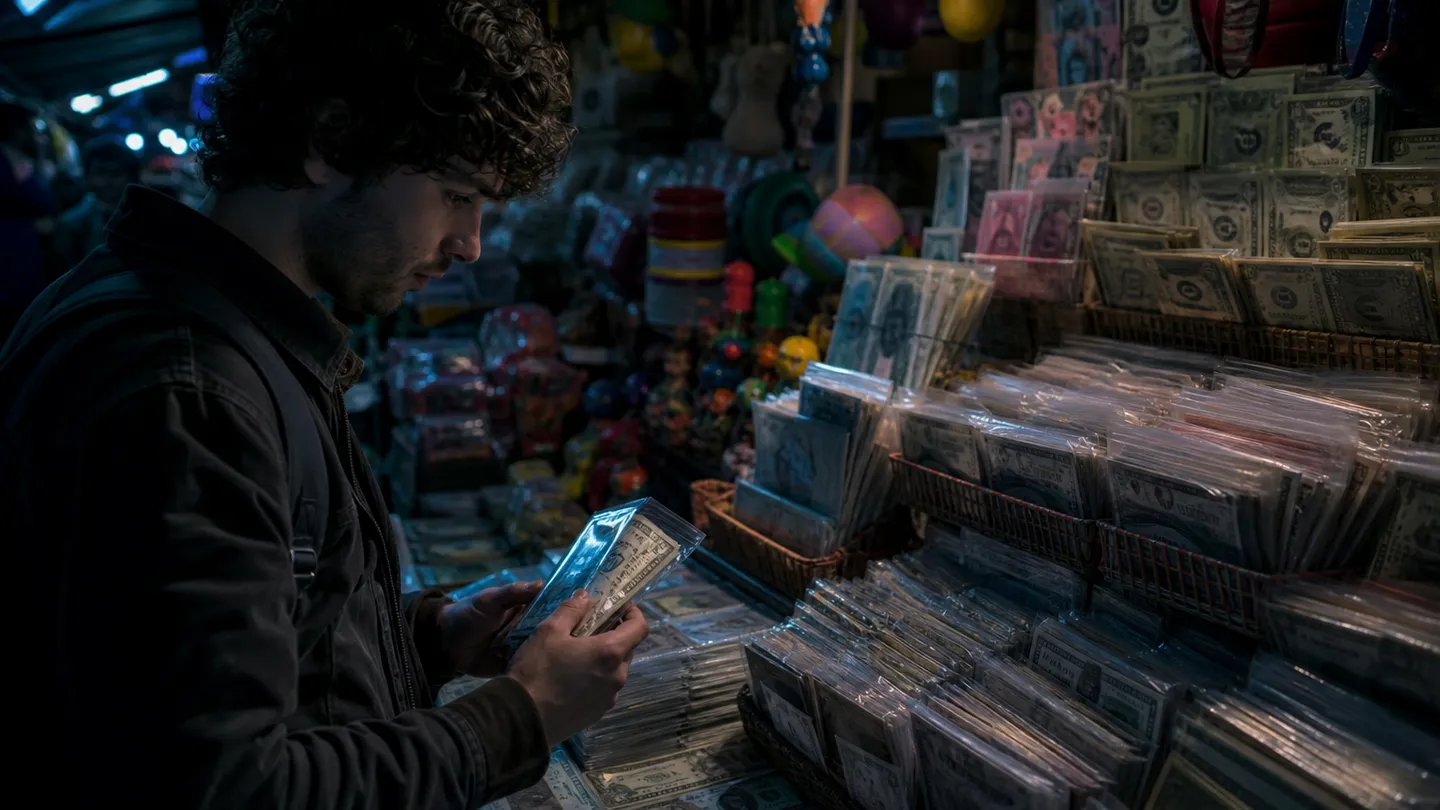
Fake dollar prices depend on material, print quality, pack size, design, and customisation. For legal purchases, we recommend comparing the total cost, including delivery, and choosing clearly marked prop, play, or novelty money; counterfeit currency intended to pass as genuine has no legitimate retail price and may expose buyers to serious legal consequences.
Fake Dollar Prices at a Glance
Understanding the prices associated with fake dollars can help consumers make informed decisions when purchasing prop money, play money, or novelty items. Here’s a quick overview of typical pricing for various types of fake currency available on the market:
| Type of Fake Money | Typical Total Price | Quantity | Estimated Cost per Bill | Shipping Included |
|---|---|---|---|---|
| Printable Play Money | Free | Varies | Free | Yes |
| Miniature Bills | $1.79 | 10 | $0.18 | Yes |
| Basic Novelty Packs | $15.00 | 50 | $0.30 | Yes |
| Production-Grade Prop Money | $55.00 - $75.00 | 100 | $0.55 - $0.75 | No |
| Presentation Sets | $100.00+ | 200+ | $0.50+ | Varies |
Printable play money is often available for free online, allowing users to print their own bills at no cost. Miniature bills, typically around $1.79, serve as great novelties and are often sold in packs of ten. For those seeking something more substantial, basic novelty packs under $15 usually contain around 50 bills, making them an affordable choice for events or educational purposes.
Production-grade prop money, which is designed for use in films and television, can range from $55 to $75 for a pack of 100 bills. This type of money is often more realistic but may not include shipping in the total price. Presentation sets, often used for showcases or displays, can start at $100 and include a larger quantity of bills, sometimes exceeding 200.
When considering your purchase, it's essential to verify that the product is clearly marked as prop or play money. This ensures compliance with regulations set by the U.S. Secret Service and relevant laws, such as 18 U.S.C. § 504 and 31 CFR § 411.1, which govern the use of replica currency and prohibit counterfeit currency intended to pass as genuine. Always check the specifications and ensure that the items are made with appropriate markings to avoid any legal issues.
What Does “Fake Dollar” Mean?
The term "fake dollar" encompasses a range of products, each serving different purposes and adhering to various legal standards. It's crucial to distinguish between these categories to ensure compliance with laws and to avoid any unintended consequences.
Legal prop money is designed for theatrical productions, film, or educational purposes. This type of currency is clearly marked as "prop money" and is not intended for actual transactions. Play money is often used for children's games and educational activities, featuring playful designs and vibrant colours. Miniature currency, while similar, is typically smaller and may be used as collectibles or for display. Printable educational money can be downloaded and printed for free, offering an accessible way to teach concepts related to currency.
On the other hand, replica banknotes are crafted to imitate real currency closely, often used in film or photography but must also be marked to indicate they are not legal tender. Counterfeit currency, however, is illegal and intended to deceive; it can lead to severe penalties under laws such as 18 U.S.C. § 504 and 31 CFR § 411.1. The U.S. Secret Service actively investigates counterfeit currency, making it essential for consumers to avoid such products.
While the stated denomination or face value may suggest a certain price point, the actual selling price of these products varies based on factors like material, print quality, and pack size. For example, production-grade prop money can cost between $55 and $75 for a pack of 100 bills, while basic novelty packs may be available for under $15. It is important to note that all legal products should be clearly marked to avoid confusion with counterfeit currency, which has no legitimate retail price. Always ensure that the items you purchase comply with relevant regulations to prevent any legal issues.
Typical Prices by Type and Pack Size
When considering the purchase of fake dollars, it's important to understand the typical prices associated with various types of products. Each category serves different needs, and prices can vary significantly based on factors like pack size and intended use.
Downloadable Files
Printable money is one of the most accessible options, often available for free online. This type allows users to print their own bills, making it ideal for educational purposes or simple play. Since there are no costs associated with the bills themselves, this option is budget-friendly.
Children’s Play Money
Miniature bills designed for children's games usually come in packs of ten, with prices around $1.79. These bills are colourful and engaging, making them perfect for educational activities or playtime. This budget-friendly option provides a tangible way for kids to learn about money.
Small Novelty Bundles
For events or small gatherings, basic novelty packs are a popular choice. Typically priced under $15, these packs contain around 50 bills, making them an affordable option for those in need of a larger quantity without breaking the bank. The cost per bill in these packs tends to be around $0.30, which is reasonable for novelty items.
Bulk Prop-Money Packs
Production-grade prop money is designed for use in films and television, offering a more realistic appearance. These packs usually contain 100 bills and can range from $55 to $75, depending on the quality. It's essential to note that shipping costs may not always be included in this price, so checking the total landed cost is advisable.
Film-Ready Products
Presentation sets, often used in showcases or displays, typically start at around $100. These sets can include over 200 bills and are designed for a professional appearance. The cost per bill in these sets can be more economical, often falling below $0.50 per bill when purchasing in bulk.
Before making a purchase, we recommend ensuring that the money is clearly marked as prop or play money to comply with regulations set by the U.S. Secret Service and relevant laws, such as 18 U.S.C. § 504 and 31 CFR § 411.1. This is crucial to avoid any legal issues associated with counterfeit currency, which carries no legitimate retail price and can lead to serious consequences.
What Influences the Price of Prop Money?
The price of prop money is influenced by several key factors, each playing a role in determining its overall cost. Understanding these elements can help consumers make informed choices when purchasing fake currency for various uses.
Quantity is a significant factor; larger packs often offer a lower cost per bill. For example, a pack of 100 production-grade prop money bills may range from $55 to $75, while smaller novelty packs containing around 50 bills can be priced under $15. This price difference highlights the importance of assessing the quantity needed for your specific application, whether for theatrical production, educational purposes, or events.
The quality of the paper and print also affects pricing. Higher-quality materials generally result in more realistic-looking bills, which are crucial for film and television use. However, it’s essential to note that higher realism does not automatically equate to higher legality. Products must comply with regulations, such as those outlined in 18 U.S.C. § 504 and 31 CFR § 411.1, which require replica markings to prevent confusion with genuine currency.
One-sided versus two-sided designs can influence costs as well. Two-sided replicas tend to be more expensive due to the additional printing required. Furthermore, the mix of denominations offered in a pack can also affect the price; a varied selection may cost more than a uniform set of bills.
Customization options, such as adding logos or specific designs, can lead to higher costs. Packaging plays a role too; professionally presented sets may command a premium price compared to basic bundles. Finally, the reputation of the seller can influence pricing, as established vendors may charge more for their products due to perceived reliability and quality assurance.
Before purchasing, it's essential to ensure that the prop money complies with legal standards and is clearly marked to avoid any issues related to counterfeit currency. This diligence helps protect buyers from potential legal ramifications while ensuring they receive a product suitable for their intended use. For more information on what to look for when buying prop money, check our guide on Fake Money Website: Identifying Reliable Sources.
How to Compare Fake Dollar Prices
To effectively compare fake dollar prices, we can use a simple formula: total landed cost divided by the number of bills equals cost per bill. This approach allows us to assess the true value of different products, factoring in shipping and other costs.
Let's consider a few hypothetical comparisons. Imagine you find two options for prop money. The first is a pack of 50 bills priced at $15 with free shipping. This gives us a total landed cost of $15, leading to a cost per bill of $0.30 ($15 divided by 50). The second option is a pack of 100 bills priced at $55, but it has a shipping fee of $10, bringing the total landed cost to $65. This results in a cost per bill of $0.65 ($65 divided by 100). In this scenario, the first option is more cost-effective despite the larger quantity in the second option.
Another example could involve a cheaper pack that seems appealing at first glance. Suppose a seller offers a pack of 20 bills for $8, but the shipping fee is an additional $12, resulting in a total landed cost of $20. This would lead to a cost per bill of $1.00 ($20 divided by 20), making it less attractive compared to other options.
When comparing prices, we recommend considering additional factors beyond just the cost per bill. Check the minimum order requirements, as some sellers may impose restrictions that could affect your purchase. Review the return policy, especially if you are unsure about the quality of the product. Delivery time is also crucial; ensure that it aligns with your needs, especially for events or educational uses. Finally, think about the intended viewing distance of the prop money. If it will be seen up close, investing in higher-quality products may be worthwhile.
By carefully evaluating these aspects, you can make a more informed decision when purchasing fake dollars, ensuring you get the best value for your needs.
Where to Find Legal Fake Dollars
Finding legal fake dollars, whether for theatrical productions, educational purposes, or events, can be straightforward if you know where to look. Established prop suppliers, theatrical and film-supply stores, craft or party retailers, and educational-resource shops are excellent starting points. Major online marketplaces also offer a wide variety of options, making it easier to compare products and prices.
When exploring these sources, we recommend using a checklist to evaluate each listing. Here are some key factors to consider:
- Clear Replica Markings: Ensure that the product is clearly marked as prop or play money, as this is crucial for compliance with laws such as 18 U.S.C. § 504 and 31 CFR § 411.1.
- Seller Identity: Research the seller's reputation. Established vendors are more likely to provide quality products and reliable service.
- Exact Quantity: Confirm the number of bills included in the pack to ensure it meets your needs.
- Product Dimensions: Check the size of the bills, as this can affect their suitability for your intended use.
- Current Photos: Look for listings with up-to-date images of the product to gauge quality.
- Shipping Cost: Factor in shipping fees to understand the total landed cost.
- Stated Purpose: Ensure the listing specifies that the product is intended for entertainment or educational use.
By keeping these criteria in mind, you can confidently navigate the market for fake dollars, ensuring your purchases are both legal and appropriate for your needs. We advise against any dealings with counterfeit sellers, as these transactions can lead to serious legal repercussions. For more insights on identifying reliable sources, consider our guide on Fake Money Website: Identifying Reliable Sources.
Legal Rules and Safety Checks
Understanding the legal boundaries surrounding prop money is essential for anyone looking to incorporate fake dollars into their projects. The U.S. Secret Service provides clear guidance on the distinction between lawful reproductions and counterfeit U.S. currency. According to 18 U.S.C. § 504, it is illegal to create, pass, or use counterfeit currency with the intent to deceive. This law is supported by regulations in 31 CFR § 411.1, which delineates specific requirements for replica banknotes to avoid confusion with genuine currency.
Legal prop money must be distinctly marked to indicate its purpose, often featuring labels such as "for motion picture use only" or "movie money." However, these labels do not guarantee compliance with legal standards. It is crucial to ensure that any prop money you consider meets the requirements set forth in the aforementioned regulations. For instance, replica markings should be clearly visible and the design must not closely resemble valid currency.
Before purchasing prop money, we recommend verifying local laws outside the United States, as regulations can vary significantly by country. Some regions may have stricter rules regarding the use and distribution of replica banknotes, which could affect your ability to use them legally.
When shopping for prop money, always check for these essential factors to avoid potential legal issues:
- Clear markings indicating the product is for entertainment use only.
- Compliance with U.S. regulations, including 18 U.S.C. § 504 and 31 CFR § 411.1.
- Verification of local laws if you are outside the U.S.
Ensuring these criteria are met will help you navigate the complexities of using prop money safely and legally, allowing your projects to proceed without legal complications.
Price Myths and Listing Red Flags
When searching for prop money, it's easy to come across common misconceptions that can lead to poor purchasing decisions. One prevalent myth is that “the most realistic option is always best.” While realism is important, the legality and intended use of the product are crucial factors. For example, a highly realistic prop note that lacks proper markings could cause legal issues if mistaken for real currency. Always ensure that the product complies with legal standards, as outlined in 18 U.S.C. § 504 and 31 CFR § 411.1.
Another misconception is that “all printable money is legal.” This is misleading; while some printable money options are lawful for educational or entertainment purposes, others may infringe on copyright laws or be considered counterfeit if they closely resemble real currency without proper markings. It’s essential to verify that any printable money you consider is clearly labelled as prop or play money.
Additionally, there's a belief that “a $100 denomination should cost more than a $20 denomination.” Pricing does not always correlate directly with denomination; factors such as pack size, quality, and seller reputation often play a more significant role in determining cost. For instance, a pack of 50 $20 bills may be priced lower than a pack of 10 $100 bills due to differences in production costs and demand.
When browsing listings, be cautious of red flags that may indicate a questionable product. Look out for sellers who emphasise passing inspection without providing clear details about replica markings. Listings that omit dimensions or the number of pieces included can also be suspicious. Misleading images that do not accurately represent the product can further complicate your decision-making.
To protect yourself from scams, always check for the following:
- Replica Markings: Ensure bills are clearly marked as prop or play money.
- Transparency: Listings should provide exact dimensions, quantity, and any additional costs.
- Authentic Images: Look for genuine product images rather than stock photos.
- Clear Purpose: The listing should specify that the money is intended for entertainment or educational use.
By being aware of these myths and red flags, we can make informed decisions when purchasing prop money, ensuring that our choices align with both our needs and legal requirements.
Fake Dollar Price Comparison (as of October 2023)
| Pack Size | Price | Shipping Cost | Total Cost | Cost per 100 Bills | Legality Checklist |
|---|---|---|---|---|---|
| 50 bills | $15 | Free | $15 | $30 | Clear markings, intended for entertainment use |
| 100 bills | $55 | $10 | $65 | $65 | Clear markings, seller reputation verified |
| 20 bills | $8 | $12 | $20 | $100 | Clear markings, check dimensions |
| Varied denominations | Depends on selection | Varies | Depends on seller | Depends on pack size | Compliance with 18 U.S.C. § 504 |
Common Mistakes and Misconceptions
Price tags can mislead.
Treating Every "Fake Dollar" Product as the Same Thing
Shoppers often use "prop money", "play money", "replica money", and "counterfeit currency" interchangeably because listings mix these terms. In practice, they describe products with different purposes, designs, and risks, while counterfeit currency is intended to deceive and should never be considered a purchasable alternative. We suggest choosing by intended use—such as classroom activity, stage decoration, or a film scene—rather than searching only for the cheapest "fake dollars".
Comparing Packs Without Checking the Usable Quantity
A large-looking bundle may contain fewer separate notes than its photographs suggest, particularly when packaging, filler paper, or decorative wrappers are involved. This can leave a Seattle event organiser or creator without enough usable pieces, even when the advertised price appeared competitive. Before ordering, confirm whether the stated quantity refers to individual notes, sheets, bundles, or mixed-denomination pieces.
Assuming the Checkout Price Covers the Whole Project
Buyers may budget only for the advertised item and overlook sales tax, expedited delivery, custom artwork, printing supplies, cutting tools, or replacement sheets. Printable products can seem especially inexpensive until suitable paper, colour ink, and finishing materials are added, while customised orders may carry setup charges or minimum quantities. We recommend listing every required material and service before deciding whether a ready-made pack or printable design offers better value.
Choosing Realism Without Considering the Setting
Highly detailed designs attract attention because sellers present realism as a sign of quality, but that does not make them suitable for every use. Notes handled by guests, displayed near tills, or scattered in a public Seattle venue can create confusion even when the buyer intended them only as decoration. We advise matching the design to the viewing distance, audience, venue rules, and level of supervision rather than paying extra for realism alone.
Ignoring Delivery Terms and Minimum Orders
A low advertised price may apply only when purchasing a larger quantity, selecting slower delivery, or accepting a standard design rather than a customised version. This becomes costly when a production deadline requires rush shipping or when the minimum order leaves many notes unused. Before paying, make sure the listing clearly states:
- the minimum quantity;
- the contents of each pack;
- customisation charges;
- delivery method and estimated arrival;
- applicable tax and collection costs;
- the seller’s cancellation and return terms.
Conclusions
- Start by defining the intended setting, audience, and required quantity; these factors matter more than the printed denomination.
- Compare the full order cost, including tax, delivery, materials, customisation, and any minimum purchase requirement.
- Choose designs that cannot be confused with spendable currency, especially for public events, classrooms, or productions near retail areas.
- Before paying, we suggest confirming pack contents, arrival estimates, cancellation terms, and whether the product photographs match the supplied version.
- Avoid sellers whose descriptions focus on deceiving cashiers, bypassing checks, or using replica notes as payment.
Next, use our guide to Realistic Fake Money for Sale: Where to Find It to compare suitable products without treating realism as the only measure of value.
Straight answers
How much does fake money cost?
There is no single fake dollar price because the term covers play notes, film props, printable designs, and illegal counterfeits. We recommend comparing lawful products by usable note, print quality, customisation, and final checkout cost; counterfeit currency should not be bought or sold.
Is realistic fake money from Amazon legal?
An Amazon listing is not automatically legal simply because the marketplace permits it. We advise checking the supplied product—not only the photographs—for obvious prop markings, a design that cannot reasonably be confused with spendable currency, and seller language that never suggests using it as payment.
Why do fake dollar prices vary so much?
Prices change with material, print detail, two-sided production, ageing effects, custom artwork, pack contents, and order volume. A higher price may reflect production work or seller markup, so we suggest comparing the actual notes supplied and their suitability for the intended scene rather than realism claims alone.
What is the most realistic prop money for film?
The best film prop is the least detailed lawful design that still looks convincing in the planned shot. For wide scenes, clearly marked notes may be sufficient, while close-ups often need purpose-made artwork, controlled handling, and framing that preserves visible prop features; we recommend having the production's legal adviser review any design that closely resembles currency.