A suspected counterfeit Series 1996 $100 bill should not be spent or passed on. We advise checking the paper’s feel, portrait watermark, embedded security thread, colour-shifting ink, and fine printing against a genuine note of the same design; if any feature is missing or unclear, ask a bank to examine it and report suspected counterfeits to local police.
What a Genuine Series 1996 $100 Bill Looks Like
A genuine Series 1996 $100 bill features several distinct elements that set it apart from counterfeits. At the forefront is the large, off-center portrait of Benjamin Franklin, which is a key identifying feature. Below this portrait, you will find the vignette of Independence Hall, providing a historical context that adds to the bill's authenticity.
The design includes both the Federal Reserve seal and the U.S. Treasury seal, which are crucial for verification. The Federal Reserve seal is located on the left side of the bill, while the Treasury seal can be found on the right. These seals are printed in a specific way that is difficult to replicate, and their colours are an essential part of the bill’s overall design. The green-and-black colour scheme is another hallmark of this series, contributing to its recognisability.
It is important to note that "Series 1996" refers to a design designation and does not necessarily indicate that the note was printed in that year. The actual printing of these notes began in 1996 and continued for several years, which may lead to confusion. In contrast, the blue-ribbon $100 note introduced in 2013 features significant design changes, including a different security thread and a larger portrait of Franklin, making it easily distinguishable from the Series 1996 bill.
To verify the authenticity of a Series 1996 $100 bill, you can use several methods. Look for the security thread embedded within the paper, which is visible when held up to the light. Additionally, the Franklin watermark should be visible when the bill is held up against a light source. The use of colour-shifting ink is another feature; when you tilt the bill, the numeral in the lower right corner changes colour.
For further verification, consider using a counterfeit-detection pen, which can help determine if the bill is printed on the correct cotton-linen paper. Always compare these features against a genuine note to spot any discrepancies. If you suspect a bill is counterfeit, we recommend contacting your bank or the U.S. Secret Service for assistance.
Quick Check: Feel, Tilt, Hold to Light, and Magnify
To effectively check the authenticity of a Series 1996 $100 bill, we recommend a straightforward four-step checklist. This process requires no specialist equipment and can be performed by anyone.
Feel the Paper and Raised Printing
Begin by feeling the note. A genuine Series 1996 $100 bill is made from a unique cotton-linen blend, giving it a distinct texture. The raised printing is also a key feature; you should be able to feel the raised elements, particularly in the portrait of Benjamin Franklin. If the surface feels smooth or the printing is flat, it may indicate a counterfeit.
Tilt the Lower-Right Corner
Next, tilt the bill to examine the lower-right corner where the numeral "100" is located. Genuine bills use colour-shifting ink, which changes from copper to green when tilted. If you notice that the ink does not shift colour or appears dull, this could be a sign of a counterfeit.
Hold to Light for Watermark and Security Thread
After that, hold the bill up to a bright light. Look for the Franklin watermark, which should be visible from both sides of the note. Additionally, check for the embedded security thread that runs vertically through the bill. This thread is embedded in the paper itself and should be visible when held to light. If either of these features is missing or unclear, it's a cause for concern.
Inspect for Microprinting
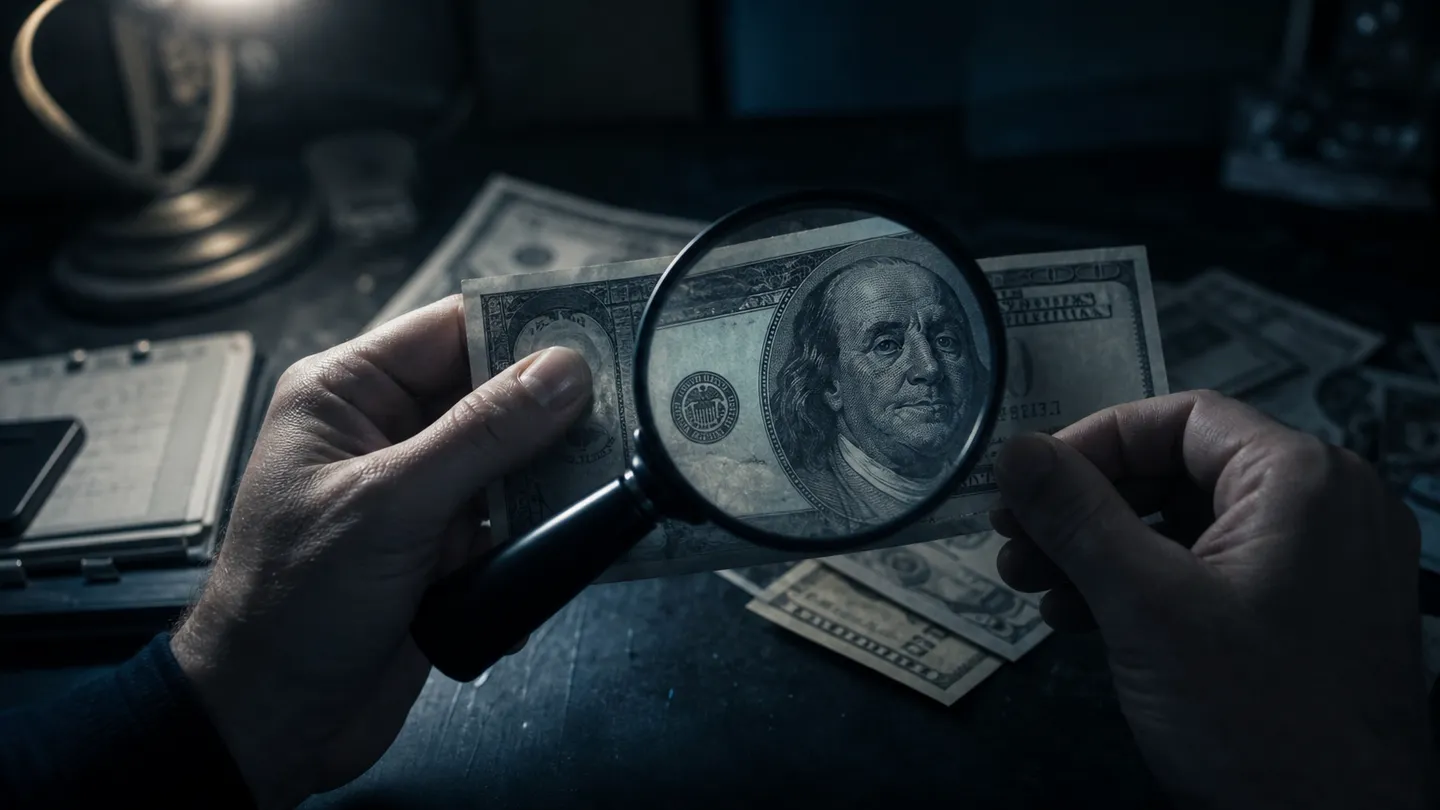
Finally, use a magnifying glass or your smartphone’s camera to inspect the microprinting on the note. Genuine Series 1996 $100 bills contain fine microprinting in several areas, such as around the portrait and the security thread. This printing should be crisp and clear. If it appears blurred or absent, the bill may not be authentic.
By checking multiple independent features instead of relying on a single sign, we can enhance our chances of accurately identifying a counterfeit. If any aspect raises suspicion, we suggest consulting with a bank or reporting to the U.S. Secret Service for further examination.
Security Features on the 1996-Series $100 Note
To authenticate a Series 1996 $100 bill, it is essential to recognise its key security features. One of the most prominent is the Franklin watermark, which should be located in the blank area to the right of Benjamin Franklin's portrait. This watermark is visible from both sides of the note and can be observed by holding the bill up to a light source. If the watermark appears absent or unclear, it raises the possibility of a counterfeit.
Another critical feature is the embedded security thread, which is positioned to the left of the portrait. This thread should read "USA 100" and is designed to glow pink under ultraviolet light. When examining this feature, using a UV light can quickly confirm its authenticity. If the thread is not present or does not exhibit the expected glow, the bill may not be genuine.
The lower-right corner of the bill features a colour-shifting numeral that changes from green to black when tilted. This effect is created using special ink that is difficult to replicate. If the numeral does not shift colour or is dull, it suggests the bill could be counterfeit.
In addition to these features, genuine Series 1996 $100 notes are printed on a unique cotton-linen blend, which gives the bill a distinct texture. Raised intaglio printing is another hallmark; you should be able to feel the raised printing, especially around the portrait and other detailed areas. Fine-line detail and the presence of genuine embedded red and blue fibres are also important aspects to check.
When verifying the authenticity of a Series 1996 $100 bill, we recommend using multiple methods to cross-check these features. If any discrepancies arise, it is wise to consult with your bank or the U.S. Secret Service. Recognising these security features can help protect you from accepting counterfeit notes. For more insights on spotting fake currency, consider checking our guide on Fake US Dollars: How to Spot Them.
Common Counterfeit Warning Signs
When assessing a Series 1996 $100 bill, it's crucial to be aware of common counterfeit warning signs. Several key features can help distinguish a genuine note from a counterfeit.
Blurry Borders and Flat Paper
One of the first things to check is the quality of the printing. Genuine bills have sharp, clear borders, while counterfeit notes may display blurry or indistinct edges. Additionally, the paper used in authentic Series 1996 notes has a unique texture due to its cotton-linen composition. If the bill feels flat or waxy, it is likely counterfeit.
Printed-on Fibers and Watermark Issues
Authentic $100 bills contain red and blue security fibers embedded throughout the note. If you notice that these fibres appear printed on the surface rather than embedded, this is a red flag. Furthermore, the Franklin watermark should be clearly visible when held up to light. A missing or incorrect watermark, such as one displaying the wrong portrait or a security thread marked for a denomination other than $100, may indicate a bleached and reprinted genuine note.
Security Strip and Ink Quality
Another critical feature to examine is the security strip, which should be embedded in the paper and not just printed on the surface. If the strip appears flat, it raises suspicion. Additionally, genuine bills use colour-shifting ink that changes hue when tilted. If the ink does not shift or looks smeared, this could signal a counterfeit.
Microprinting and Serial Numbers
Microprinting on genuine Series 1996 notes is clear and crisp, often found around the portrait and security features. If the microprinting appears smeared or indistinct, this is another indicator of counterfeit currency. Lastly, check the seals and serial numbers. Inconsistent seals or serial numbers may suggest that the bill is not authentic.
By keeping these warning signs in mind, we can better protect ourselves from counterfeit currency. If any of these features raise doubts, we recommend consulting a bank or the U.S. Secret Service for further examination.
Serial Numbers, Seals, and Series Details: What They Can and Cannot Prove
Serial Numbers, Seals, and Series Details: What They Can and Cannot Prove
When verifying the authenticity of a Series 1996 $100 bill, one of the key aspects to examine is the serial numbers. Each genuine note features two serial numbers, both of which must match exactly. These numbers should be evenly spaced and aligned; any discrepancies can indicate a counterfeit. It's essential to pay attention to the placement and consistency of these numbers, as they are part of the overall design integrity.
In addition to the serial numbers, the Federal Reserve seal and the U.S. Treasury seal must be examined closely. Both seals should be clear and correctly positioned, contributing to the bill's authenticity. The Federal Reserve indicator, which is located on the left side of the bill, can also provide information on the issuing bank. It's important that these elements are consistent with each other and the overall design of the note.
However, it is a common misconception that an unusual, repeated, or searchable serial number can prove a bill's authenticity. While it might seem logical, this is not the case. There is no complete public database that validates every genuine $100 bill, meaning that a unique serial number alone cannot confirm authenticity. For example, even if a serial number appears in online searches as "valid," it does not guarantee that the bill in hand is genuine.
To ensure a thorough assessment, we recommend checking multiple features of the bill rather than relying solely on serial numbers or seals. Cross-referencing these elements with known authentic notes can provide a clearer picture. If any feature raises suspicion, it is advisable to consult with your bank or the U.S. Secret Service for further verification.
Counterfeit-Detection Pen, UV Light, and Other Test Myths
The counterfeit-detection pen is often hailed as a quick solution for identifying fake currency, but its effectiveness is overstated. These pens use iodine to react with starch, which is present in many counterfeit bills. However, genuine Series 1996 $100 notes can also be made from bleached paper, which may not contain starch. This can lead to false confidence when a pen indicates a bill is genuine, even when it is not. Thus, relying solely on a counterfeit pen can be misleading.
A UV light, on the other hand, can be useful in verifying certain features of the Series 1996 $100 note. Under ultraviolet light, the security thread embedded in the bill should fluoresce pink, which is a good sign of authenticity. However, this test should not be the only method employed. While the UV light can confirm the presence of the security thread, it does not replace the need to check other critical features such as the Franklin watermark, the quality of the print, and the colour-shifting ink. Each of these elements provides additional layers of verification.
What to Check with UV Light
When using a UV light, here are some points to keep in mind:
- Security Thread: The thread should glow pink; if it does not, the bill may be counterfeit.
- Watermark: The watermark is not visible under UV light, so always check it with natural light.
- Print Quality: Genuine notes have a distinct texture and clarity; UV light does not reveal this.
Conclusion on Testing Methods
In conclusion, while a counterfeit-detection pen and UV light can serve as helpful tools in the authentication process, they should never be used in isolation. We advise checking multiple features of the Series 1996 $100 bill, including the watermark, the embedded security thread, and the overall print quality. By taking a comprehensive approach, we can significantly reduce the risk of accepting counterfeit currency. If any doubts arise during your assessment, consulting with your bank or the U.S. Secret Service is a prudent step to ensure authenticity.
Is a Series 1996 $100 Bill Worth More Than $100?
Most circulated genuine Series 1996 $100 bills are worth their face value and remain legal tender. This means that if you possess one, you can use it to make purchases just like any other $100 bill. However, the value of a specific note can exceed $100 under certain conditions. Factors such as the bill's condition, whether it is a star note, and the presence of rare serial-number patterns or authenticated printing errors can significantly influence its collector's premium.
For instance, a Series 1996 $100 note in pristine condition may fetch a higher price among collectors. Star notes, which are replacement notes issued when a bill is damaged during production, can also command a premium, especially if they are in excellent condition. Additionally, notes with unique or rare serial numbers, such as those with repeating digits or patterns, can be more valuable. Printing errors, if authenticated, can further increase a note's worth.
It's crucial to note that asking prices on marketplaces do not necessarily establish a bill's true value. Prices can vary widely based on demand and seller perceptions. Moreover, what may appear to be a misprint could simply be damage or a defect from the counterfeit process, rather than an authentic printing error. Therefore, it is essential to verify the note's authenticity before assuming it has a higher value.
Before deciding to sell or purchase a Series 1996 $100 bill, we recommend conducting thorough research on recent sales of similar notes. Consulting with a reputable currency dealer or numismatic expert can provide insight into the bill's actual market value. Always check multiple sources and be cautious of inflated claims, as the market can sometimes be misleading.
What to Do If You Suspect the Bill Is Counterfeit
If you suspect that a Series 1996 $100 bill is counterfeit, the first thing to remember is to avoid spending, returning to circulation, altering, or destroying the note. Confronting anyone about the bill could lead to uncomfortable or dangerous situations. Instead, keep handling of the bill to a minimum to preserve any potential evidence.
We recommend contacting a bank, your local police department, or the nearest U.S. Secret Service office for further examination. These institutions are equipped to handle such situations and can provide a thorough analysis of the bill. It's important to note that an online photo or a single test, such as using a counterfeit-detection pen or UV light, cannot definitively authenticate the bill. Authenticating currency requires a comprehensive examination of its multiple security features, including the Franklin watermark, security thread, and microprinting.
When you approach a bank or law enforcement, be prepared to hand over the bill for analysis. They may use various methods to check its authenticity, including examining the texture, colour-shifting ink, and embedded security fibers. Remember that genuine Series 1996 notes have distinct characteristics, such as being printed on a unique cotton-linen blend and featuring raised intaglio printing.
In summary, if you suspect a bill is counterfeit, do not attempt to spend it or confront anyone. Keep it safe and reach out to professionals who can assist in verifying its authenticity. By doing so, you help protect yourself and others from the risks associated with counterfeit currency.
Authentication Matrix for Series 1996 $100 Bill
| Test | Genuine Result | Counterfeit Signs | Limitations |
|---|---|---|---|
| Touch | Unique texture | Flat or waxy feel | Depends on handling |
| Tilt | Colour-shifting ink | No shift or smeared ink | Lighting conditions affect visibility |
| Transmitted Light | Visible Franklin watermark | Missing or incorrect watermark | Depends on light angle |
| Magnification | Clear microprinting | Smeared or indistinct microprinting | Requires good magnification tool |
| UV Light | Security thread glows pink | No glow or incorrect colour | Depends on UV light quality |
| Wrong-Denomination Feature | Correct security thread | Wrong thread for denomination | Depends on paper source |
Common Mistakes and Misconceptions
Letting One Successful Test Decide
One passing result proves very little. Counterfeiters may reproduce an individual feature convincingly, so we advise following the same sequence each time rather than stopping after the easiest check. Before accepting a Series 1996 $100 bill, work through:
- paper and raised-print feel;
- transmitted-light features and their denomination match;
- tilt-dependent details;
- fine printed detail;
- consistency between all visible design elements.
Treating a Pen Mark as Proof
A counterfeit-detection pen checks the paper’s chemical response, not the complete note. A counterfeit printed on bleached genuine currency paper may produce a reassuring mark, leaving the holder with a false sense of certainty. We recommend treating the pen as a screening tool and continuing with the full feature checklist.
Searching the Serial Number Online
People often search a serial number because a matching result feels like official confirmation. In reality, counterfeiters can copy serial numbers from genuine notes, while search results may simply repeat marketplace listings, photographs, or unverified reports. We use serial details to spot inconsistencies, never to establish authenticity by themselves.
Checking for a Watermark or Thread Without Checking the Denomination
Finding an embedded feature is not enough. A bleached lower-denomination note may retain its original watermark or security thread while carrying a counterfeit $100 design, creating a mismatch that a quick inspection misses. We advise identifying what the embedded feature represents and confirming that it belongs with the printed denomination.
Confusing an Asking Price With Collector Value
Marketplace sellers can request any amount, which often makes an ordinary note appear rare or valuable. Face value, an advertised asking price, and a price supported by a completed sale are different concepts, while collector value also depends on authenticity, condition, and genuine collectable characteristics. We suggest authenticating the bill before comparing equivalent sold examples or seeking a reputable currency dealer’s assessment.
Assuming Odd Printing Means a Valuable Error
Blurred ink, uneven borders, misplaced details, or surface damage can look unusual without being a legitimate production error. The same appearance may result from circulation wear, alteration, poor storage, or counterfeit manufacture, so rarity should not be the starting assumption. We recommend confirming authenticity first, then having the suspected error assessed in person before assigning a premium.
Conclusions
Start with the note itself.
- Check several security features in a consistent sequence; no pen mark, UV response, or online serial-number search settles authenticity alone.
- Compare the watermark and embedded thread with the printed denomination, since genuine paper can be altered and reused.
- Treat unusual printing or an ambitious marketplace price cautiously; authenticate the note before considering any collector premium.
- If concerns remain, stop handling or circulating the bill and arrange an in-person assessment through a bank or the appropriate authorities.
For a broader checklist covering other denominations, continue with Fake US Dollars: How to Spot Them.
Straight answers
How to tell if a $100 bill from 1996 is real?
We advise comparing it side by side with a known genuine note of the same design, checking that the portrait, seals, borders and fine lines are sharp and correctly positioned. Hold it to the light, tilt it and feel the printing; the watermark, embedded thread, colour-changing numeral and raised texture should agree rather than producing one isolated "pass".
How can I tell if a fake old $100 bill is real or fake?
An older design is not suspicious merely because it differs from current currency. We suggest checking the note's security features against its own series design, watching especially for flat printing, simulated watermarks, surface-printed threads and embedded features that belong to another denomination.
What does a series 1996 $100 bill look like?
The front carries a large Benjamin Franklin portrait, with a watermark area beside it and a colour-shifting denomination numeral near the lower corner. The reverse shows Independence Hall, while genuine fine-line engraving should look crisp rather than fuzzy, pixelated or composed of inkjet dots.
Can a serial number prove that a Series 1996 $100 bill is genuine?
No; a counterfeiter can copy a valid serial number from a genuine note. We use the serial number only as a supporting check, looking for matching characters, even spacing, consistent ink and agreement with the note's printed issuing details.
Where is the security thread on a 1996 $100 bill?
Viewed from the front, the embedded security thread runs vertically to the left of Franklin's portrait. Hold the note against ordinary light and confirm that the thread sits inside the paper rather than appearing as a line printed on either surface.
Are old Series 1996 $100 bills still legal tender?
Yes, a genuine Series 1996 $100 note remains spendable at face value even though its design looks older. A shop may still decline a note under its payment policy or because staff cannot authenticate it, in which case we suggest taking it to a bank rather than trying repeatedly to spend it.