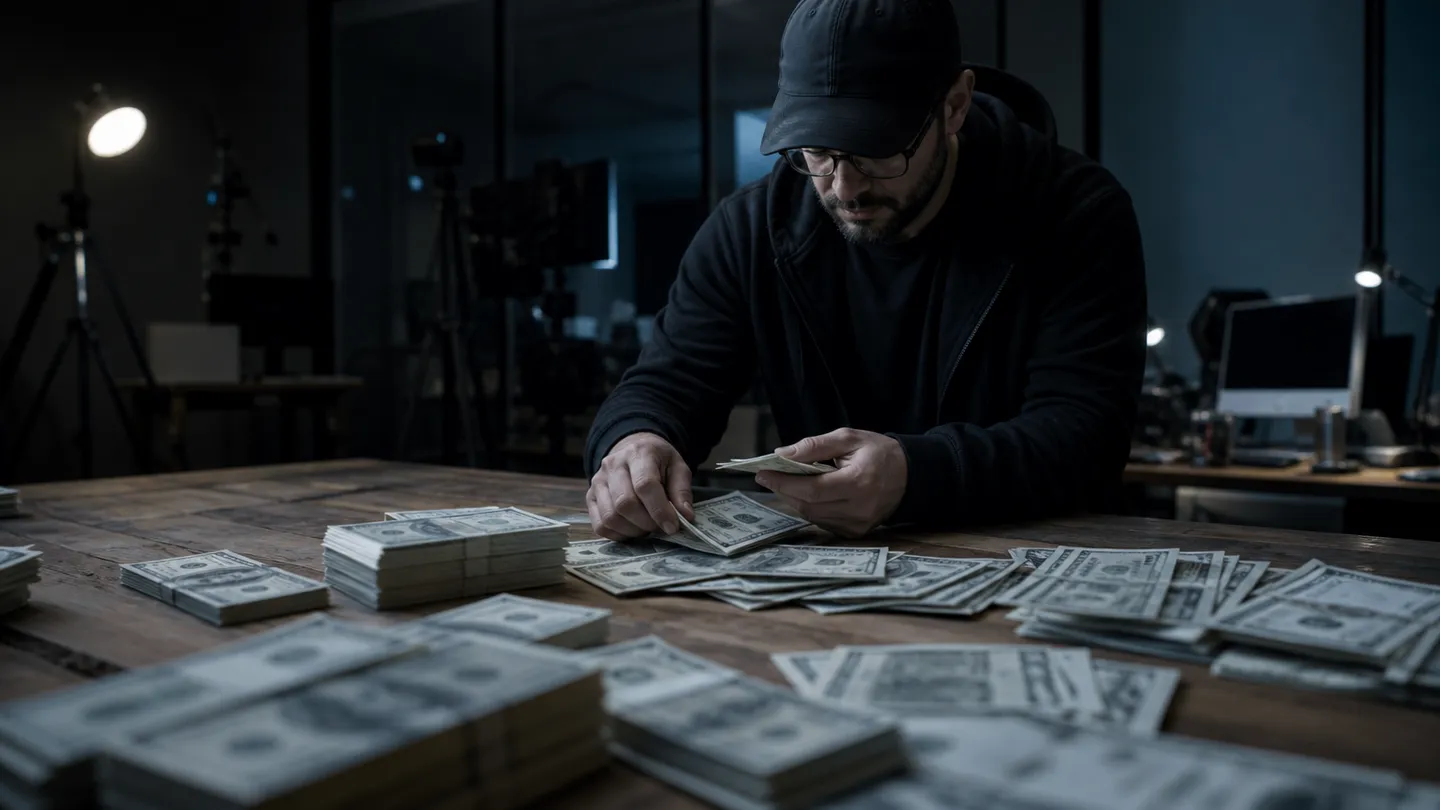
We begin with the outcome because it explains why the early ATM deposits were misleading. People often think that money accepted by a machine has passed every check — in Derek’s case, acceptance did not mean the transaction was final. This was not harmless prop money dollars or a search for prop money for sale nearby; the source describes fake counterfeit money deliberately placed into the banking system. By following the purchase, the four ATM encounters and the bank’s response, we can see where Derek’s supposedly perfect scheme fell apart.
What did Derek intend to do?
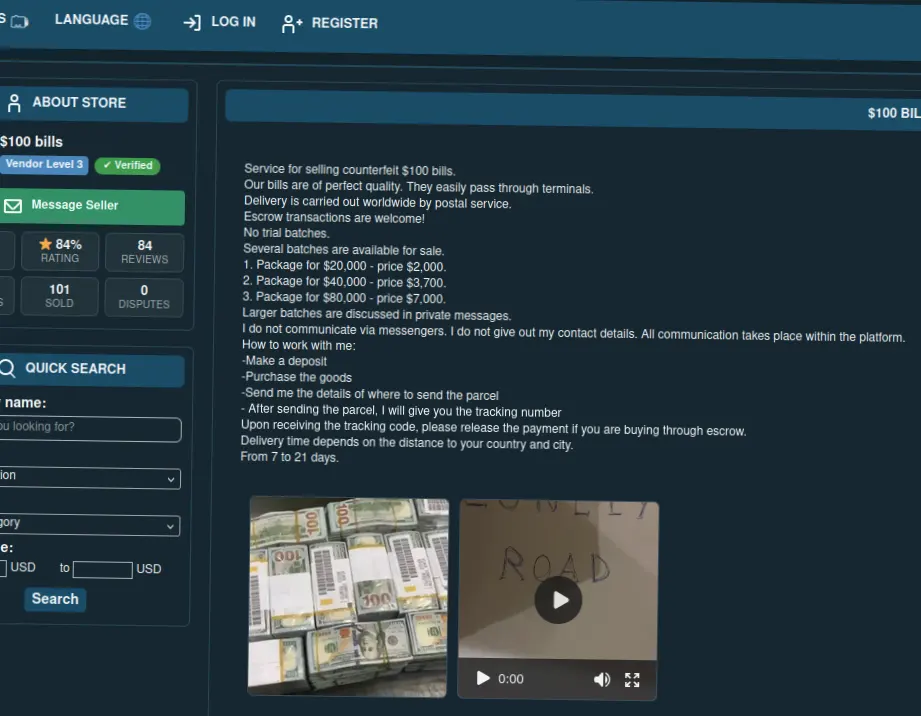
Derek had an uncomplicated scheme in mind. He made a purchase in January 2025, acquiring 40 counterfeit $100 bills from the 2009 series, which cost him $1,200 in cryptocurrency on a darknet site. His intention was to feed these bills into an ATM that accepted cash, anticipating that the equivalent amount would be credited to his account shortly after. He believed that once the funds appeared online, he would have the freedom to withdraw or transfer them without any issues. Yet, it's important to remember that just because an ATM takes a bill doesn’t mean everything will go smoothly later on. Derek underestimated the likelihood of facing further investigation after the acceptance of those counterfeit notes.
How did the four ATMs respond?
The ATMs showed different reactions. The first two machines took the bills without any problems, leading to Derek's account being credited with $800. The third machine rejected one bill and returned it due to an error, while the fourth accepted a note but labeled the transaction as “pending review.” This created a clear pattern: two successful transactions, one rejection, and one deposit under scrutiny. Often, those looking to obtain fake dollars or utilize $100 counterfeit bills may concentrate on the initial successful deposit — yet in this case, the subsequent warning was significantly more important.
What exactly had the seller promised?
The vendor gave a specific assurance about the notes, calling them "superdollar quality" and saying they were almost impossible to distinguish from genuine currency. The asserted characteristics included UV protection, a magnetic strip, and a watermark. Available accounts place the transaction on a darknet marketplace but provide no specific .onion address, so terms such as counterfeit $100 dollar bill or fake money darknet should not be linked to any particular service. This summary reflects the supplied account without presenting unsupported statements as verified facts.
- Settlement channel: Cryptocurrency
- Vendor’s quality characterization: “Superdollar quality”
- Stated visual resemblance: Described as visually indistinguishable from genuine notes
- Stated security elements: Working UV protection, magnetic strip, and watermark
- Acquisition timing: January of 2025
- Banknote issue year: 2009
- Total transaction amount: USD 1,200
- Banknote bundle: 40 counterfeit USD 100 notes
- Purchaser profile: Derek H., age 29, from Denver, Colorado
In conclusion, the seller constructed a convincing narrative, making the counterfeit notes seem almost credible—this is something we should consider when faced with sales pitches that appear overly persuasive.
The source identifies the website where the purchase was made only as a darknet marketplace.
When did the scheme finally collapse?
The situation escalated quickly. Following the morning when the fourth ATM initiated a transaction review, Derek found out that the bank had halted access to his account. Just three weeks later, he was apprehended by the United States Secret Service. Although the source does not delve into the specifics of the bank's internal processes, the discrepancies in ATM transactions and the immediate account freeze illustrate how the scheme began to fall apart. Before considering terms like counterfeit $20 dollar bills or the notion of purchasing fake currency, we must grasp the key takeaway: the amount credited did not shield Derek from being detected.
What should we take from Derek’s mistake?
Derek was under the impression that he had discovered an ideal method for converting forged notes into legitimate bank funds. However, he quickly found that only the first two ATMs worked as intended. The third machine raised suspicions, while the fourth prompted a review, leading to the account being frozen by the bank the next day. His apprehension by the U.S. Secret Service took place three weeks after these events. We should not interpret this incident as an indication that seeking counterfeit $100 bills or methods to acquire fake currency can yield positive results; the supposed $800 gain was merely a fleeting moment before the inevitable enforcement actions began.
Questions readers ask
How many counterfeit notes did Derek buy?
He purchased 40 counterfeit $100 bills from the 2009 series in January 2025.
How much did Derek pay for the batch?
He paid $1,200 in cryptocurrency through a darknet marketplace.
How much money reached his account initially?
The first two ATMs accepted notes and credited $800 to his account. A later ATM returned a bill, and another marked the deposit as pending review.
What happened after the bank reviewed the activity?
The bank froze Derek’s account the next morning. Three weeks later, the U.S. Secret Service arrested him.