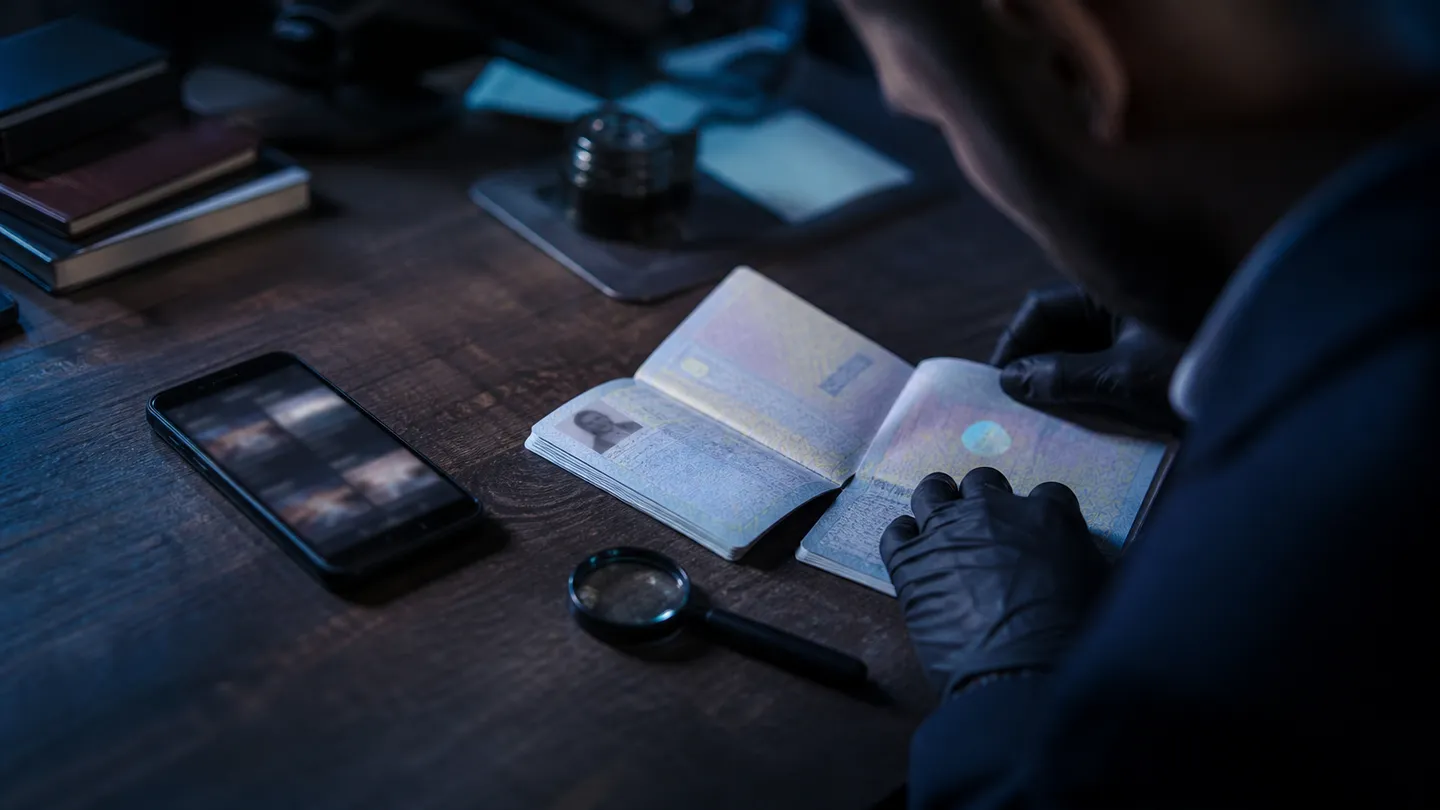
Fake passports on the dark web are listings for counterfeit, altered, or stolen travel documents; many may also be scams designed to steal money or personal data. We advise against contacting sellers, paying, or sharing identification, because doing so can expose you to identity theft, financial loss, and serious criminal liability.
What “Fake Passports on the Dark Web” Actually Refers To
When we talk about "fake passports" on the dark web, it encompasses a range of documents that can be misleading or outright fraudulent. Understanding the distinctions between these document types is crucial for anyone researching this topic. The main categories include counterfeit passports, altered genuine documents, stolen genuine passports, and fictitious or prop documents.
Counterfeit passports are completely fabricated documents designed to mimic real passports. These often include features like a machine-readable zone (MRZ) and may even attempt to replicate biometric elements, though they typically fall short in quality compared to genuine passports. Altered genuine documents involve legitimate passports that have been modified to change the identity of the holder. This can include changing names, dates of birth, or other personal details while retaining the original document's structure.
Stolen genuine passports are actual passports that have been illegally obtained from their rightful owners. These documents can be used for identity theft or various forms of fraud. Lastly, fictitious or prop documents are created for entertainment or educational purposes, lacking any legal standing. They may be used in films or theatrical productions but are often misrepresented in illicit listings as genuine documents.
These listings can appear on various illicit marketplaces, forums, or impersonator sites. It's vital to be cautious, as many of these listings are scams. Engaging with these sellers can lead to identity theft, financial loss, or legal repercussions. We recommend avoiding any transactions or communications with these sellers.
| Document Type | Typical Claim | Primary Risk |
|---|---|---|
| Counterfeit Passport | "100% undetectable, real features" | Legal consequences, identity theft |
| Altered Genuine Document | "Just a name change" | Legal issues, fraud |
| Stolen Genuine Passport | "Authentic passport available" | Identity theft, legal liability |
| Fictitious Document | "Perfect for movies" | Misrepresentation, potential scams |
Understanding these differences can help you navigate the complexities of the dark web and avoid potential pitfalls. If you're interested in related topics, you might want to explore our guide on Fake Money Darknet: What You Need to Know.
What Sellers Claim—and What Can Actually Be Verified
What Sellers Claim—and What Can Actually Be Verified
Sellers of fake passports on the dark web often make bold claims about the legitimacy and functionality of their products. Common assertions include the presence of database registration, working biometric chips, guaranteed border passage, and even claims of diplomatic status. However, it is crucial to differentiate between these claims and what can be independently verified.
Many sellers boast that their counterfeit passports are registered in government databases, which implies that they can be verified by border control. In reality, there is no evidence to support that any counterfeit documents can be registered in legitimate government databases. Law enforcement agencies, such as Europol, have consistently reported that counterfeit documents lack any genuine registration and are easily detectable by trained officials.
Another frequent claim is that these documents feature advanced biometric elements, including RFID chips. While some counterfeit passports may include RFID technology, they often fail to meet the standards set by the International Civil Aviation Organization (ICAO) in Document 9303. Genuine biometric passports contain secure encrypted data that is difficult to replicate, making it improbable that a counterfeit version would function as intended at border crossings.
Sellers may also assert that their passports guarantee successful passage through borders. This is misleading; while some individuals have reportedly used counterfeit documents to cross borders, the risks involved are significant. Border control personnel are trained to identify forgeries, and the consequences of attempting to use a fake passport can include arrest and prosecution for identity theft.
In terms of pricing, advertised prices for these counterfeit passports can vary widely, often ranging from a few hundred to several thousand dollars. However, these figures should be viewed with skepticism, as they do not guarantee a completed sale or a legitimate product. Many listings are scams designed to extract payment without delivering anything of value, which is a common tactic in advance-fee fraud schemes prevalent on the dark web.
Before considering any engagement with sellers, it's essential to remember that the risks far outweigh any potential benefits. We advise against any transactions or sharing of personal information, as the repercussions can be severe and long-lasting.
How Much Do Dark-Web Passport Listings Claim to Charge?
Pricing for fake passports on the dark web varies significantly, often influenced by the type of document and its perceived quality. Reports indicate that counterfeit passports can range from several hundred to several thousand dollars. For instance, a counterfeit passport might be advertised for around $500, while a more sophisticated version, such as a forged biometric passport, could demand prices upwards of $2,000. The discrepancies in pricing often reflect the seller's claims regarding the document's features, such as database registration or advanced security elements like an RFID chip. However, these claims are rarely substantiated and should be approached with caution.
The variation in prices can also stem from the origin of the documents. For example, counterfeit passports that mimic those from countries with stringent border control measures may be priced higher due to the assumed difficulty in replicating their security features. Conversely, documents from countries with less rigorous identification protocols might be cheaper. It's important to note that listings for stolen passports often appear at lower price points, typically because they lack the complexities of forgery but carry the risk of identity theft and legal consequences.
Media figures surrounding these listings can mislead potential buyers. Many sellers use enticing language to promote their products, claiming high-quality features and guaranteed success at border crossings. However, these claims are not reliable indicators of the product's actual quality or the likelihood of successful delivery. Reports from law enforcement and organisations like Europol indicate that many dark web listings are scams designed to exploit individuals' desires for quick solutions, often resulting in financial loss without any tangible product.
Before considering any interaction with sellers of fake passports, it is crucial to realise that the risks involved far outweigh any perceived benefits. Engaging in these transactions can lead to severe repercussions, including identity theft and criminal charges. We recommend avoiding any dealings in this area, as the potential consequences can be significant and long-lasting.
Can a Fake Passport Pass Modern Identity Checks?
The effectiveness of a fake passport in passing modern identity checks largely depends on the type of inspection being conducted. There are two main forms of checks: visual inspections and more sophisticated checks that involve the machine-readable zone (MRZ), issuing-authority records, watchlists, biometrics, and ePassport chips.
Visual inspections rely on the ability of border control personnel to identify obvious signs of forgery, such as poor quality printing, incorrect fonts, or inconsistent holograms. However, this method is limited, as skilled forgers may create documents that appear convincing at first glance. In contrast, checks involving the MRZ and biometric elements delve deeper, using technology to verify the document against government databases and identity records. For example, the MRZ contains encoded information that can be scanned to retrieve data about the passport holder. If the passport is counterfeit, discrepancies will likely arise when cross-referenced with official records.
The International Civil Aviation Organization (ICAO) outlines standards for passport security in Document 9303, which specifies features that must be present in genuine travel documents. A convincing-looking booklet does not equate to a valid identity in government systems; inconsistencies in data, such as mismatched names or birth dates, can trigger alerts. Additionally, biometric passports embed RFID chips that store encrypted data about the holder. These chips are designed to be difficult to replicate, making it improbable for a counterfeit passport to pass advanced checks that utilise this technology.
Common inconsistencies that authorities may detect include variations in the passport's physical characteristics, such as the placement of security features or the quality of the laminate. For instance, a genuine ePassport will feature a specific type of chip that adheres to ICAO standards, while a counterfeit may lack this or use subpar technology that can be easily identified by scanning devices.
To summarise, while some counterfeit passports may initially appear convincing, modern identity checks employ a range of methods that can uncover discrepancies and lead to detection. Engaging in the purchase or use of fake passports carries significant risks, including legal consequences and potential identity theft.
Why Most Listings Create Serious Scam and Identity-Theft Risks
Purchasing fake passports on the dark web comes with significant risks, even when no document is delivered. Many listings are designed to exploit buyers through various fraudulent tactics, leading to identity theft and financial loss. Common scams include non-delivery of products, advance-fee fraud, extortion, and malware, all of which can leave buyers vulnerable.
Non-delivery is a prevalent issue where buyers pay for a counterfeit passport but receive nothing in return. This is often coupled with advance-fee fraud, where sellers request a payment upfront with promises of a high-quality document that never materialises. Even if a passport is produced, it may be forged and easily detectable, leading to further legal complications. Extortion can also arise if sellers threaten to expose buyers' personal information if they do not comply with additional demands for money.
Another major concern is malware. Some sellers may use deceptive tactics to gain access to a buyer's device, installing malicious software that can steal sensitive data, such as bank details or personal identification. Payment theft is also a risk, especially when transactions are conducted through untraceable methods like cryptocurrency, making it challenging to recover lost funds.
Additionally, buyers often submit personal portraits or identification documents, which may be reused for further fraudulent activities. This can lead to serious identity theft, as the information can be sold on the dark web or used to create additional counterfeit documents.
To help you identify potential scams, we have compiled a checklist of red flags to watch for when considering a purchase:
- Unverifiable guarantees: Claims of "100% success" or "guaranteed delivery" should raise suspicion, as no legitimate service can offer such assurances.
- Requests for excessive personal data: Be wary of sellers asking for unnecessary information beyond what would be required for a legal transaction.
- Pressure tactics: If a seller is rushing you to make a decision or complete a payment, it's a strong indicator of a scam.
- Demands for irreversible payment: Be cautious if a seller insists on payment methods that cannot be traced or reversed, such as cryptocurrency.
Understanding these risks can help you navigate the dark web more safely and avoid potential pitfalls associated with counterfeit passports. Always remember that engaging in these transactions can have severe repercussions, including identity theft and legal consequences.
Legal Consequences of Buying, Possessing, or Using a Fake Passport
Legal Consequences of Buying, Possessing, or Using a Fake Passport
Engaging with counterfeit passports on the dark web can lead to severe legal repercussions. The consequences vary widely depending on jurisdiction and can encompass various offenses, including the manufacture, purchase, possession, identity theft, fraud, and attempted use of a fake passport. For instance, in the United States, possession of a counterfeit passport is a federal crime that can result in penalties of up to 15 years in prison, depending on the severity of the offense. In the UK, under the Identity Documents Act 2010, it is illegal to possess or use a false identity document, which can lead to a maximum sentence of 10 years imprisonment.
It's important to note that merely ordering a counterfeit document can expose individuals to legal risks, even if the document never arrives. In many jurisdictions, the act of attempting to procure a fake passport is sufficient for prosecution. For example, in Australia, the Australian Passport Act 2005 criminalizes the solicitation of a passport that one knows is false, with penalties including substantial fines and imprisonment.
Examples of Legal Penalties
- United States: Up to 15 years for possession of a counterfeit passport.
- United Kingdom: Maximum sentence of 10 years under the Identity Documents Act 2010.
- Australia: Criminalizes solicitation of false passports with fines and potential imprisonment.
The legal landscape surrounding counterfeit documents is complex and varies by location. Engaging in these activities not only jeopardises personal freedom but also poses risks of identity theft and fraud. We strongly advise against any involvement with counterfeit passports, as the potential consequences can be profound and long-lasting. Understanding these risks is essential for making informed decisions and staying within the bounds of the law.
What to Do If You Already Paid or Shared Personal Information
If you have already paid for a counterfeit passport or shared personal information, taking immediate action is crucial to mitigate potential risks. Here’s a checklist to guide you through the necessary steps.
Urgent Steps After Sharing a Passport Scan
Stop All Contact: Cease communication with the seller immediately. Continuing to engage may expose you to further risks, including harassment or extortion.
Preserve Evidence: Keep all messages, transaction records, and any other correspondence related to the transaction. This documentation may be essential for any future investigations.
Secure Your Accounts: Change passwords for your email and financial accounts. Enable two-factor authentication where possible to enhance security.
Monitor for Identity Theft: Regularly check your financial statements and credit reports for any unusual activity. Be vigilant for signs of identity theft, such as unfamiliar transactions or accounts in your name.
Report the Incident: Contact local authorities or consumer protection agencies to report the fraud. In the USA, you can report identity theft to the Federal Trade Commission (FTC) and file a report with your local police department.
Steps After Sending Cryptocurrency or Card Details
If you sent cryptocurrency or credit card information, the situation requires additional caution:
Notify Your Bank or Financial Institution: If you used a credit card, contact your bank immediately to report the transaction as fraudulent. They may be able to reverse charges or provide additional security measures.
Monitor Cryptocurrency Transactions: If you used cryptocurrency, track the transaction on the blockchain. While it is challenging to reverse these transactions, alerting the relevant exchanges might help if the funds are transferred there.
Seeking Legal Advice
We recommend consulting a qualified legal professional, especially if you feel there may be criminal exposure. A lawyer can provide tailored advice based on your specific circumstances and help you navigate the complexities of the situation. Keep in mind that while legal counsel can assist you, there are no guarantees of anonymity or immunity from prosecution.
Taking these steps can help you regain control and protect your identity after a potentially damaging transaction on the dark web. Always approach these situations with caution and consider the long-term implications of sharing personal information.
Legitimate Options When You Need a Passport or Identity Document
If you find yourself in need of a passport or identity document, there are legitimate avenues to explore. The first step is to check with your country's issuing authority for guidelines on replacing or renewing your passport. In the United States, for example, the Department of State provides options for both regular renewals and emergency travel documents. You can visit their official website to find specific instructions based on your circumstances.
For those who have lost their passport or had it stolen, it's essential to report this to the police and your country's issuing authority. This not only helps in preventing identity theft but also allows you to apply for a replacement. In the UK, for instance, you can report a lost or stolen passport to the Passport Office, which will guide you through the process of obtaining a new one.
Emergency Travel Documents
In cases where you need to travel urgently and lack proper documentation, emergency travel documents can be issued by embassies or consulates. These documents are typically valid for a limited time and are meant to facilitate immediate travel needs. It's crucial to contact your nearest embassy or consulate to understand the requirements and the application process.
Distinguishing Lawful Prop Documents
While there are lawful prop documents available for various purposes, it's vital to understand that these should never be represented or used as government-issued identification. Prop documents can be useful for activities such as film production or theatre, but they must be clearly marked as such and not misrepresented. Using them as fake identification can lead to serious legal repercussions.
When exploring options for identity documents, always rely on recognised institutions. Engaging with counterfeit documents from the dark web can lead to identity theft, legal challenges, and financial loss. Instead, we encourage you to reach out to appropriate authorities, such as local police, embassies, and consulates, for assistance and guidance. Remember, your safety and legality are paramount, so always choose legitimate pathways for obtaining identity documents.
Evidence Rating for Fake Passport Seller Claims
| Claim | Evidence Rating | Notes |
|---|---|---|
| Database Registered | Unsupported | No verification available. |
| Working Chip | Misleading | Often not functional. |
| Guaranteed Entry | Impossible to Confirm | No legitimate guarantee exists. |
| 100% Success Rate | Unsupported | No service can assure this. |
| High-Quality Document | Verifiable | Depends on seller's skill. |
| Fast Delivery | Misleading | Many buyers report delays. |
| Refund Policy | Unsupported | Most sellers do not honour refunds. |
| Privacy Protection | Depends on Seller | Risk of data misuse. |
| Secure Payment Options | Verifiable | Only if using trusted methods. |
| Customer Support | Unsupported | Often non-responsive. |
Common Mistakes and Misconceptions
These listings encourage easy assumptions. Before assessing any offer, separate the seller’s claims into distinct questions:
- What type of document is actually being advertised?
- Is the quoted price merely an asking price?
- Can any technical claim be independently verified?
- What should stop immediately if personal information has already been disclosed?
Treating Advertised Prices as Real Market Prices
People often repeat a listing price as though it proves that a sale occurred. An asking price shows only what the seller requests, not what buyers paid, whether anything was delivered, or whether the listing was genuine. We suggest treating price comparisons as unverified unless independent evidence confirms a completed transaction.
Calling Every Suspicious Passport a "Fake"
The label "fake passport" can hide major differences between a wholly counterfeit document, an altered passport, a stolen genuine passport, and a prop. These items may involve different forms of deception, ownership issues, and legal exposure, while a lawful prop must never be presented as official identification. Before evaluating any claim, make sure the document category is clear rather than relying on the seller’s wording.
Assuming a Working Chip Makes the Passport Genuine
Sellers may claim that a biometric chip works, but a readable chip does not establish that the document belongs to its holder or matches official records. Often people focus on whether a phone or reader detects something — in practice, border checks can involve several separate identity and document checks. We advise treating claims about chips, database registration, or cloned data as unsupported unless an authorised issuing body can verify them.
Believing "Database Registration" Can Be Privately Arranged
A listing may suggest that the seller can place passport details in a government database. Such claims are not proven by screenshots, tracking pages, videos, or messages supposedly showing an internal system. Before believing this language, ask whether an authorised passport agency provides any legitimate way to verify the claimed record; a seller-controlled demonstration is not independent confirmation.
Thinking Payment Creates a Reason to Continue
After paying, some buyers feel that sending another photograph, signature, or document might rescue the transaction. Further participation can instead create additional evidence, increase personal exposure, or provide more material that could be misused. We advise not using, forwarding, or attempting to collect any document received, and seeking confidential advice from a qualified Seattle attorney if there may be legal exposure.
Conclusions
- Do not proceed. Dark-web passport offers expose buyers to fraud, identity misuse, financial loss, and possible criminal liability.
- Treat technical promises sceptically. A detected chip, polished video, or seller-controlled screenshot cannot confirm official validity or database status.
- Limit further harm. Stop communicating, send no additional money or documents, preserve transaction records, and secure affected financial and email accounts.
- Use lawful channels. We recommend contacting the relevant passport authority, embassy, or consulate for replacement documents or urgent travel needs.
- Get tailored help when needed. If legal exposure or identity theft is possible, speak with a qualified Seattle lawyer and report suspicious account activity promptly.
Next, read International ID Card Fake: Risks and Implications to understand similar warning signs across other identity documents.
Straight answers
Are fake passports really sold on the dark web?
Dark-web marketplaces do contain passport listings, but a listing does not prove that the seller possesses or delivers the advertised document. The item could be counterfeit, altered, stolen, a misrepresented prop, or simply bait for payment and personal data.
Is it illegal to buy a fake passport if you never use it?
Not using the passport does not automatically make the purchase lawful. In the USA, ordering or possessing a counterfeit identity document may create criminal exposure depending on the document, intent, communications, payment, and applicable federal or state law; we recommend discussing the facts confidentially with a qualified Seattle criminal defence lawyer.
Can a prop passport legally be used as identification?
A prop passport should not be presented as government-issued identification, even if it looks convincing. Possessing a clearly marked prop for theatre, film, or display is different from showing it to a bank, employer, police officer, airport employee, or another person to establish identity, which may create fraud or false-document exposure.