Buy compliant prop imagery, not spendable money. A lawful colour illustration must be one-sided and under 75% or over 150% of a genuine note in each linear dimension; production files must be deleted after final use[1]. Buying counterfeit bills to pass as genuine can mean a fine and up to 20 years in prison[2]. We suggest checking seller contacts, recent reviews, returns and actual-item photos first[3].
Counterfeit Money for Sale: What to Know
| Options | Price | Timeframe | Requirements | Restrictions |
|---|---|---|---|---|
| Counterfeit Currency | Legal penalties include fines and up to 20 years in prison for buying or selling with intent to defraud [2][4]. | Immediate upon transaction. | None; however, intent to defraud is illegal [2][4]. | Illegal to buy or sell; cannot be exchanged for genuine currency [5]. |
| Prop Money | Prices vary; check seller for specifics. | Immediate upon transaction. | Seller must comply with federal regulations on size and one-sidedness [1]. | Must not be used to defraud; should be marked as prop money. |
| Motion-Picture Currency | Costs depend on production; check with specific providers. | Varies based on production time. | Must comply with federal laws regarding size and disposal of production files [1][6]. | Cannot be used for transactions; intended for film use only. |
How to Get Lawful Prop Money
- 1. Define the intended use
Set the boundary first. Buy only for a lawful purpose such as display, photography, theatre, or screen production, never to spend or present as genuine currency. Buying, receiving, or delivering counterfeit U.S. obligations with that intent can bring a fine, imprisonment for up to 20 years, or both[2]. Before searching, write down where the item will appear and who will handle it so it cannot enter a till, payment exchange, or bank deposit.
- 2. Check the product format
Inspect the specifications closely. For a colour illustration of U.S. currency to meet the federal authorisation, each linear dimension must be under 75% or over 150% of the genuine item, the image must be one-sided, and image-containing production materials must be deleted or destroyed after final use[1]. Ask the seller for exact dimensions, clear photographs of both sides, and written confirmation about production-file disposal. The words "For Motion Picture Use Only" do not replace those conditions, and the federal rule does not require that particular wording[1].
- 3. Vet the seller and listing
Check the seller before ordering. Our pre-purchase checklist is: working contact details, recent reviews, return terms, actual-item photographs, exact dimensions, images of both sides, and clear marketplace buyer protection[3]. Avoid listings that show only edited promotional images or refuse to confirm what will arrive. A screen-production exception permits films, microfilms, and slides containing currency images for projection or telecasting, but it should not be treated as blanket permission for realistic printed notes[6].
- 4. Confirm payment and delivery
Put every term in writing. Before paying, obtain the total price, dispatch date, expected delivery window, tracking policy, return deadline, and procedure for an item that differs from its photographs. There is no single delivery period to rely on, so judge the wait by the written estimate shown for that specific order. Pay by credit card or another protected method, not by wire transfer, gift card, or cryptocurrency[3], and retain the listing, receipt, messages, and payment record.
- 5. Inspect the order before use
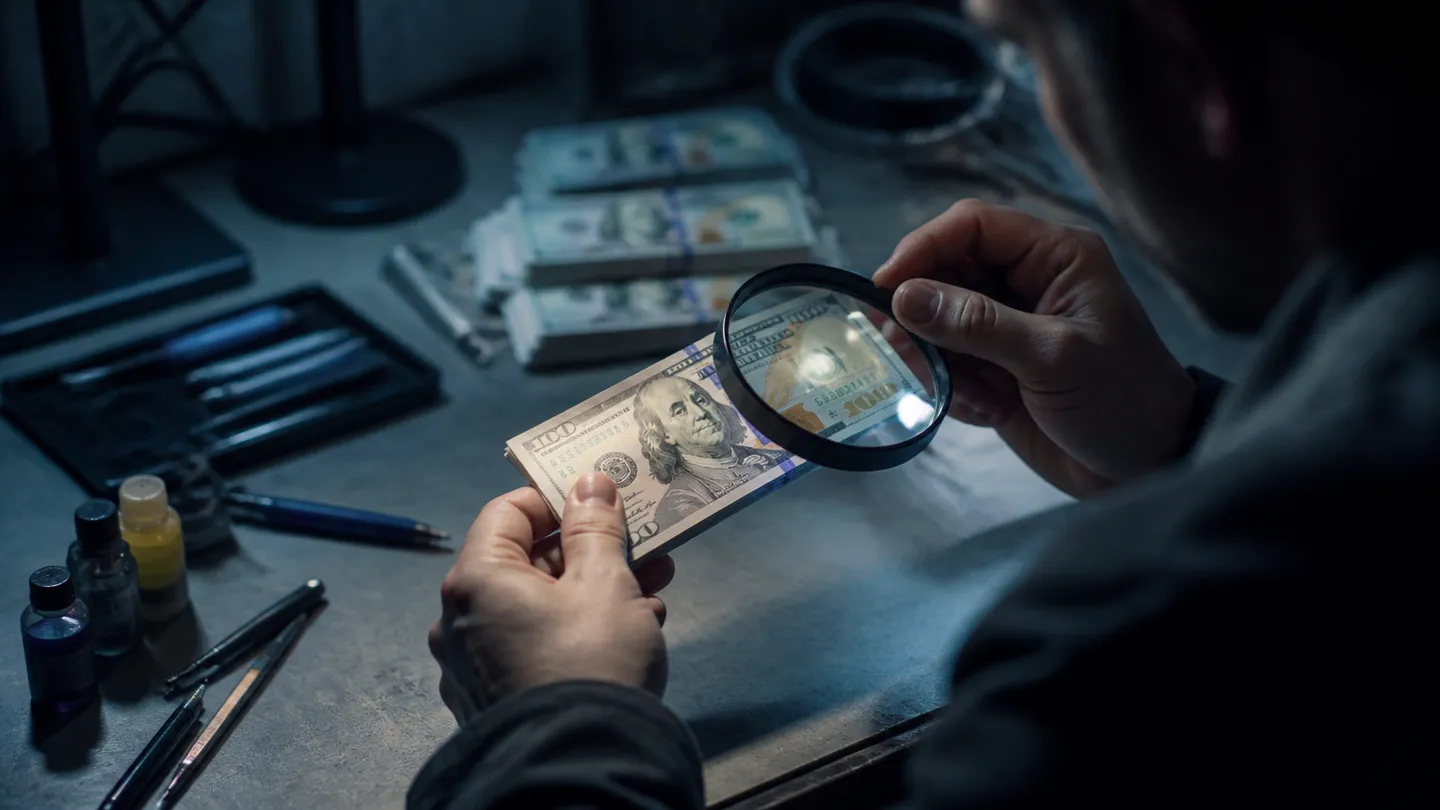
Open and compare it carefully. Measure both dimensions, confirm that the currency image is one-sided, and compare the delivered item with the listing photographs and written specifications. If a note appears unexpectedly genuine, do not rely on a counterfeit-detection pen because such pens can produce false results; authentication should focus on features such as the watermark and embedded security thread[5]. On a genuine current-design $100 note, the paper is 75% cotton and 25% linen, while the blue 3-D Security Ribbon is woven into the paper rather than printed on top[7].
- 6. Isolate and report a suspicious note
Do not spend a suspicious note. Write your initials and the date in its border, minimise handling, place it in an envelope or similar protective covering, and surrender it only to an identified police officer or Secret Service agent[8]. In Seattle, individuals should contact the local Secret Service field office; electronic submissions through USDollars ended on November 1, 2024, while businesses and financial institutions may use Form SSF 1604[9]. A counterfeit note cannot be exchanged for genuine currency, so the recipient bears the loss[5].
Risks, Limitations, and Guarantees
Engaging with counterfeit money poses significant legal risks. Under 18 U.S.C. § 473, buying or selling counterfeit U.S. obligations with the intent to use them as genuine is punishable by a fine and up to 20 years in prison[2]. Similarly, knowingly passing or possessing counterfeit currency can also result in severe penalties, including imprisonment[4]. It's crucial to understand that counterfeit notes cannot be exchanged for genuine currency, meaning any financial loss falls on the recipient if they unknowingly accept a counterfeit bill[5].
When considering prop money, we must ensure that it complies with federal guidelines. A lawful colour illustration must be one-sided and either under 75% or over 150% of a genuine note in size[1]. Failure to adhere to these regulations can lead to legal repercussions. Before making a purchase, we recommend verifying the seller's contact information, recent reviews, and return policies[3].
If we receive a suspicious note, we should not attempt to spend it. Instead, it’s advisable to write our initials and the date on the note, minimise handling, and place it in a protective covering before surrendering it to an identified police officer or Secret Service agent[8]. This proactive approach can help mitigate potential losses and legal issues associated with counterfeit currency.
Straight answers
Where can I buy the realest fake money?
We cannot direct you to sellers of spendable-looking counterfeit notes. For lawful production use, look at established theatrical-prop suppliers, Seattle film or theatre rental houses, and online marketplaces with buyer protection; require actual photographs, seller contact details, return terms, and written product specifications before paying[3].
Is it illegal to buy counterfeit money?
The decisive issue is intent: buying, receiving, or possessing counterfeit US obligations intending to pass them as genuine is a federal crime[2][4]. Describing the notes as "novelty money" or "props" does not make an intended fraud lawful.
What is the most realistic fake money available?
We do not recommend any imitation designed to pass close inspection or function as genuine currency. For filming or photography, choose visibly non-spendable props and create realism through framing, lighting, or lawful screen imagery rather than copying security features; for example, a genuine current-design $100 note has a blue 3-D Security Ribbon woven into its cotton-and-linen paper[7].
Can I buy realistic prop money without “motion picture” printed on it?
Federal currency-illustration rules do not require the specific phrase "For Motion Picture Use Only"[1]. Before buying an unmarked product, we would still require written confirmation that its size, one-sided format, and production-file handling satisfy the applicable federal conditions[1].
What should I do if a seller sends me counterfeit bills?
Do not return the notes through ordinary post or try to recover your money by spending them. Preserve the listing, packaging, receipt, and seller messages, open a marketplace or card-payment dispute, then contact the local Secret Service field office; minimise handling and surrender the protected note only to an identified officer or agent[9][8].
Can prop money legally be used in films, photoshoots, or live theater?
Certain currency images in motion-picture films, microfilms, or slides are expressly permitted for projection or telecasting[6]. That permission does not automatically cover loose, realistic printed notes used on a photoshoot or Seattle stage, so we advise using non-spendable props that meet the relevant size, one-sidedness, and production-file requirements[1].
Links and references
- 1. 31 CFR § 411.1 — Color illustrations authorized
- 2. 18 USC 473: Dealing in counterfeit obligations or securities
- 3. Buying From an Online Marketplace
- 4. 18 USC 472: Uttering counterfeit obligations or securities
- 5. How do I determine if a banknote is genuine? What should I do if I think I have a counterfeit note?
- 6. 18 USC 504: Printing and filming of United States and foreign obligations and securities
- 7. Decoding Dollars: The $100
- 8. How To Check Your Money Training Presentation
- 9. Report a Counterfeit