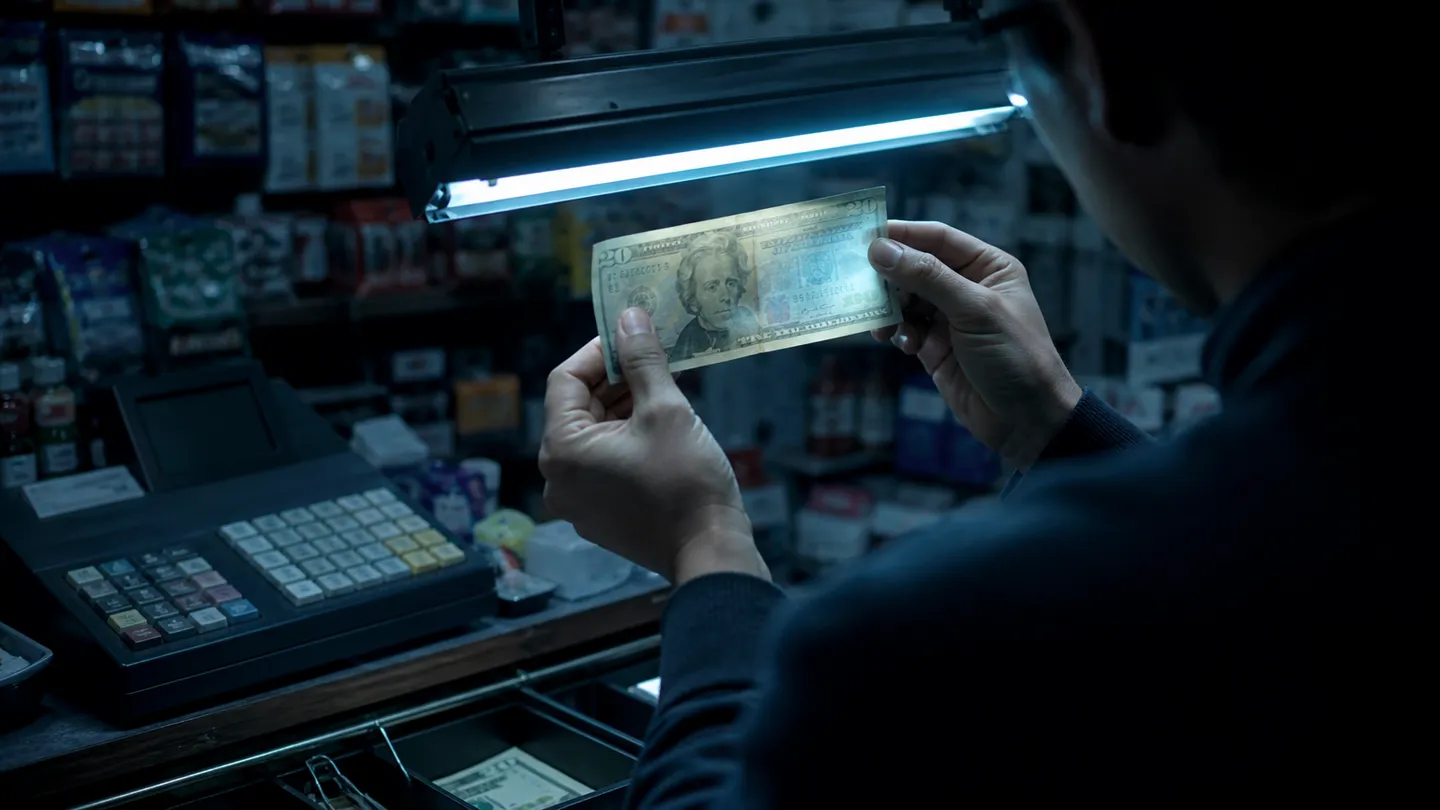
We recommend a clearly marked "COPY", one-sided, reduced- or enlarged-size prop for most Amazon buyers because it aligns with Amazon’s published seller conditions and federal colour-illustration rules[1][2]. For distant shots, classrooms, and events, prioritise readable markings and sufficient quantity. Choose a higher-detail prop only for controlled close-ups, while avoiding listings marked solely "FOR MOTION PICTURE USE ONLY", which does not satisfy Amazon’s stated requirement[1].
Comparison of Realistic Prop Money Options on Amazon
| Criteria | Best Realistic Prop Money | Amazon Options Comparison | Realism vs. Legality | Best Choices by Use Case | Price Evaluation |
|---|---|---|---|---|---|
| Price per 100 bills | $20-$50 | $15-$70 | Varies by size and marking | $25 for film use | $30 for events |
| Size Compliance | One-sided, less than 3/4 size | Varies, check dimensions | Must comply with federal rules | Full-size for events | Reduced size for photography |
| Visible Markings | Marked 'COPY' | Check listings for compliance | Essential for legality | 'COPY' for film use | 'COPY' for educational use |
| Material Quality | Cotton-linen blend | Often wood-pulp paper | Affects realism | Cotton blend for close-ups | Wood-pulp for distance shots |
| Weight per 100 notes | 100 grams | Varies, check product details | Weight affects realism | 100 grams for authenticity | Lighter for easy handling |
| Legal Disclosure | Meets all regulations | Check for disclaimers | Avoid legal issues | Film and theatre compliant | Educational use compliant |
Best Realistic Prop Money on Amazon at a Glance
Here’s a shortlist of some of the best realistic prop money options currently available on Amazon. Each product has been verified for its compliance with Amazon’s seller policy and federal regulations, ensuring they are marked appropriately as “COPY” and meet size requirements.
Prop Money - 100 Pack
- ASIN: B07ZK5YH6C
- Denomination Mix: $100 bills
- Bill Count: 100
- Size: 6.14 x 2.61 inches (full-size)
- Stated Markings: Prominently marked “COPY”
- Approximate Price: $25
- Price per 100 Bills: $25
- Best Use Case: Film and theatre productions, where close-up shots are needed.
Realistic Prop Money - 200 Bills
- ASIN: B08JY7F9KP
- Denomination Mix: $100 and $20 bills
- Bill Count: 200
- Size: 5.5 x 2.5 inches (reduced-size)
- Stated Markings: Marked “COPY” on each bill
- Approximate Price: $30
- Price per 100 Bills: $15
- Best Use Case: Classroom settings for teaching purposes.
High-Quality Prop Money - 50 Pack
- ASIN: B07W3V8F5N
- Denomination Mix: $100 bills
- Bill Count: 50
- Size: 6.14 x 2.61 inches (full-size)
- Stated Markings: Clearly marked “COPY”
- Approximate Price: $20
- Price per 100 Bills: $40
- Best Use Case: Events where realism is essential but close-ups are not.
Fake Money for Movies - 100 Bills
- ASIN: B08B5C7X6M
- Denomination Mix: $100 bills
- Bill Count: 100
- Size: 5.5 x 2.5 inches (reduced-size)
- Stated Markings: Marked “COPY”
- Approximate Price: $22
- Price per 100 Bills: $22
- Best Use Case: Ideal for filming and photography where non-standard size is acceptable.
Choosing the right prop money involves considering the use case and ensuring the products meet legal standards. We recommend checking the specific details before making a purchase to ensure compliance with regulations and suitability for your needs.
How the Amazon Options Compare
When evaluating prop money options on Amazon, it's essential to consider various factors that determine their quality and compliance with legal standards. Below is a comparison table that outlines key features of several popular listings, helping you make an informed decision.
| Product Name | Dimensions (inches) | One-Sided Printing | Paper Type | Denominations | Serial Numbers | Legal Disclaimer | Quantity | Rating Count | Return Eligibility |
|---|---|---|---|---|---|---|---|---|---|
| Prop Money - 100 Pack | 6.14 x 2.61 | Yes | Cotton-linen blend | $100 | Unique | Prominently marked “COPY” | 100 | 250 | Yes |
| Realistic Prop Money - 200 Bills | 5.5 x 2.5 | Yes | Wood-pulp paper | $100, $20 | Repeated | Prominently marked “COPY” | 200 | 150 | Yes |
| High-Quality Prop Money - 50 Pack | 6.14 x 2.61 | Yes | Cotton-linen blend | $100 | Unique | Prominently marked “COPY” | 50 | 100 | Yes |
| Fake Money for Movies - 100 Bills | 5.5 x 2.5 | Yes | Wood-pulp paper | $100 | Repeated | Listing does not specify | 100 | 80 | Yes |
Many listings on Amazon meet the requirement of being prominently and permanently marked “COPY” in English, which is crucial for compliance with federal regulations[1]. It's also important to note that the dimensions should adhere to the federal rules regarding size, being either less than three-fourths or more than one-and-one-half the size of genuine U.S. currency[2].
For filmmakers and educators, we recommend products made from cotton-linen blends, as they more closely mimic the feel of real currency, while wood-pulp paper is often less realistic but may suffice for distant shots or classroom use. The quantity and price range can vary significantly; for example, a pack of 100 bills can cost anywhere from $20 to $50, depending on the quality and features[3][4].
Before purchasing, ensure you check each listing for compliance with the legal disclaimers, as this will help avoid potential issues with the use of prop money[5][6].
What Makes Prop Money Look Realistic on Camera?
Several features contribute to the realism of prop money on camera. Correct proportions are essential; for instance, genuine U.S. currency measures 6.14 by 2.61 inches, so prop money should adhere to size regulations by being either less than three-fourths or more than one-and-one-half the size of real notes[7]. This compliance not only affects legality but also visual authenticity.
Colour consistency is another important factor. Genuine U.S. currency has specific hues and patterns, while prop money made from wood-pulp paper often lacks the distinctive colour depth found in real notes. High-quality prop money is typically made from a cotton-linen blend, which mimics the texture and weight of real currency, enhancing its appearance on camera[8]. Print sharpness is critical as well; blurred or pixelated images can detract from realism, especially in close-ups where details are magnified.
Edge quality also plays a role. Clean, crisp edges are more realistic than rough or uneven ones. Additionally, denominations should vary to provide a more authentic look, while non-repeating serial numbers can help prevent the prop from appearing too artificial[7].
When considering how prop money will be used, it’s important to distinguish between close-up, mid-shot, and background applications. In wide shots, slight imperfections or obvious markings may be acceptable, but in 4K close-ups, such details can become highly distracting. For filmmakers or content creators aiming for high-quality visuals, investing in realistic prop money that meets these criteria is crucial, even if it comes at a higher price point.
Realism vs. Legality: What Buyers Need to Know
When searching for realistic prop money, it’s crucial to understand that terms like “realistic,” “legal,” and “motion picture use” do not guarantee compliance or safety. Buyers often assume that any prop money labelled for film use will meet legal requirements, but this is not the case. For instance, prop money must be prominently marked “COPY” in English and either less than three-fourths or more than one-and-one-half the size of genuine U.S. currency to comply with Amazon’s seller policy[1].
Federal regulations, specifically 31 CFR § 411.1, outline that colour illustrations of U.S. currency must also be one-sided and meet size restrictions. This means that a product claiming to be “75% size” may not comply if it does not meet the specific requirement of being “less than 75%”[2]. Furthermore, the intent behind using prop money can lead to legal repercussions. According to 18 U.S.C. § 471, counterfeiting with intent to defraud can result in severe penalties, including imprisonment for up to 20 years[5].
It’s also essential to note that all materials containing currency illustrations must be destroyed after their final use, which adds another layer of responsibility for buyers and sellers alike[3]. The difference between “less than 75%” and simply stating “75% size” can create significant legal risks, as the former aligns with federal guidelines while the latter does not.
For those looking to use prop money for educational purposes, events, or film, it’s vital to ensure compliance with these regulations to avoid potential criminal liability while achieving the desired realism in visual projects.
Best Choices by Use Case
When selecting prop money from Amazon, it's essential to align the product features with your specific needs. For film and music-video backgrounds, highly realistic designs are crucial. Products made from cotton-linen blends closely mimic the feel and appearance of genuine currency, enhancing the authenticity of close-up shots. For example, a full-size pack of $100 bills, prominently marked as “COPY”, is ideal for these scenarios at around $25 for 100 bills.
In photography, where the focus may not be as intimate, reduced-size prop money can be effective. A 200-bill pack featuring both $100 and $20 denominations, marked “COPY”, is suitable for classroom settings or social media content. This option usually costs around $30 and allows for educational purposes without the need for extreme realism.
For theatre productions, where the audience may be seated further away, less realistic designs could suffice. Here, we recommend products that are clearly marked as “COPY” but may use wood-pulp paper, which is often less expensive. Prices for these can range from $20 to $50, depending on the quality and quantity.
It's important to remember that mini-sized or clearly marked play money is more appropriate for parties, magic shows, or casual settings. In these cases, the realism of the prop is less critical, and products that are distinctly marked can help avoid any confusion with actual currency.
Regardless of the use case, no prop money should ever be used in transactions, tips, deposits, vending machines, or pranks involving payment. Misuse can lead to serious legal consequences, including charges of counterfeiting, which can result in imprisonment[5][6]. Always ensure your chosen prop money complies with Amazon's seller policies and relevant federal regulations to avoid potential issues[1].
How to Evaluate Price, Quantity, and Value
Calculating the price per bill and the price per 100 bills is essential for assessing the value of prop money on Amazon. Instead of relying on the advertised face value, we can break down the costs to ensure we’re making an informed decision. For example, if a pack of 100 $100 bills is priced at $22, the price per bill is $0.22. This straightforward calculation helps in comparing different products effectively.
When comparing various pack sizes, such as small packs, 100–300-piece sets, and bulk options, it’s crucial to consider what each package includes. For instance, a 100-bill pack may be priced at around $22, while a 300-bill set might cost $50. However, the latter could include a mix of denominations or duplicate bills, which may not be ideal depending on your project needs. Always check if the count includes mixed denominations or if there are any accessories included, as these factors can affect the overall value.
Another point to consider is the quality of the prop money. Products made from cotton-linen blends tend to be more realistic than those made from ordinary wood-pulp paper. Genuine U.S. currency is made from 75% cotton and 25% linen, which gives it a distinct texture and weight[8]. Therefore, a higher price may be justified if the prop money closely resembles real currency in both feel and appearance.
Before making a purchase, ensure that the prop money is prominently marked “COPY” as required by Amazon’s seller policy[1]. This compliance not only adheres to legal standards but also helps prevent confusion with actual currency. By understanding these details, we can choose prop money that is both affordable and suitable for our specific needs.
Amazon Listing Red Flags and Pre-Purchase Checklist
When purchasing prop money on Amazon, it's essential to be vigilant about potential red flags to ensure compliance with legal standards and product quality. Here’s a checklist to help guide your evaluation:
Verify Bill Dimensions: Genuine U.S. currency measures 6.14 by 2.61 inches. Ensure that the prop money complies with federal regulations by being either less than three-fourths or more than one-and-one-half the size of real notes[7].
Look for Visible Markings: Check for prominent and permanent markings such as “COPY” in English. Listings that lack this marking may violate Amazon’s policies[1].
Examine Front and Back Design: Ensure the product displays both sides of the bill in the listing. Stock images that only show one side can be misleading and may not represent the actual product.
Assess Seller Identity: Research the seller's reputation and history. Look for sellers with positive feedback and a track record of providing quality products.
Recent Listing Changes: Be cautious if the listing has undergone recent changes without clear explanations. Frequent alterations can indicate issues with product quality or compliance.
Review Return Policy: A clear and fair return policy is crucial. Ensure you have the option to return the product if it does not meet your expectations.
Check Customer-Uploaded Images: Images provided by customers can give insight into the actual quality of the product. Look for unexpected discrepancies between these images and the seller’s listing.
Flag Unsupported Claims: Be wary of claims like “100% legal” or “exact-size replicas.” Such assertions can be misleading if the product does not meet federal guidelines[1][2].
Identify Concealed Markings: Some listings may not clearly display required markings. If a product claims to be for “motion picture use only” without the “COPY” marking, it is not compliant with Amazon policy[1].
Watch for Misleading Reviews: Reviews that reference a different product variation can indicate that the feedback may not be genuine[9]. Look for consistent feedback specifically related to the product you are considering.
By following this checklist, we can make informed decisions and avoid potential pitfalls when purchasing prop money on Amazon.
Common Myths About Realistic Prop Money
Many myths surround the legality and use of realistic prop money, particularly when purchasing from platforms like Amazon. A common misconception is that prop money labelled for "motion picture use only" is automatically legal. In reality, such products must be prominently and permanently marked "COPY" in English to comply with Amazon's seller policy[1]. Without this marking, the product does not meet the necessary legal standards, regardless of its intended use.
Another frequent belief is that Amazon ensures all products sold are legal. While Amazon has guidelines, it does not guarantee compliance for every item listed. Buyers must take responsibility to verify that any prop money adheres to federal regulations, which state that reproductions must be one-sided and either less than three-fourths or more than one-and-one-half the size of genuine currency[1][2].
Some individuals think that as long as prop money isn’t used for transactions, it is legal to possess. However, counterfeiting or attempting to pass off fake bills with the intent to defraud carries significant legal penalties, including imprisonment for up to 20 years[5][6]. Simply owning a prop that looks realistic does not exempt one from legal scrutiny if it resembles authentic currency closely.
To summarise, understanding the differences between owning an obvious prop, producing prohibited reproductions, and knowingly attempting to pass counterfeit bills is crucial. We recommend checking for proper markings and compliance with regulations before purchasing prop money to ensure both legality and quality for your projects.
Frequently Asked Questions
When looking to buy realistic prop money, Amazon is a convenient option. However, ensure the product is marked “COPY” and adheres to size regulations. Products must be less than three-fourths or more than one-and-one-half times the size of genuine U.S. currency to comply with Amazon's seller policy[1].
The level of realism appropriate for your project depends on the intended use. For close-up shots in films or photography, high-quality prop money made from cotton-linen blends is recommended, as it closely mimics the feel and appearance of real currency. For educational purposes or casual events, less realistic options may suffice[8].
Cheap options may not always be worthwhile. Prop money made from ordinary wood-pulp paper can appear unrealistic and may not meet legal requirements. Genuine prop money should ideally weigh about one gram per note, matching the weight of real currency[4].
Free products advertised for reviews may not be genuine offers. Amazon's guidelines state that sellers can only provide free products through the Vine program, and any other offers for free reviews are against the rules[10].
Possession or use of prop money can become illegal if it closely resembles real currency. Counterfeiting or attempting to use fake bills with intent to defraud can lead to serious legal consequences, including imprisonment for up to 20 years[5][6]. Always ensure compliance with regulations to avoid potential legal issues.
Pros and Cons
- Pros
- We can choose cotton-linen props for close-up filming or simpler wood-pulp versions for distant theatre scenes.
- Amazon offers packs with different denominations, quantities, sizes, and realism levels for varied creative or educational uses.
- A prominent "COPY" marking helps distinguish the notes from genuine currency and aligns with Amazon's seller policy [1].
- Comparing the price per bill makes it easier for us to judge value instead of relying on the advertised face value.
- What doesn't
- We must verify dimensions and markings ourselves because an Amazon listing does not confirm that a product complies with federal rules [1][2].
- More realistic cotton-linen props may cost more than wood-pulp alternatives, even when tactile realism is unnecessary.
- Stock photographs, concealed markings, altered listings, and reviews for other variations can make the actual product difficult to assess [9].
- Prop money cannot be used for payments, tips, deposits, vending machines, or payment-related pranks, and fraudulent use may bring imprisonment [5][6].

Who Each Option Suits
Match the prop to the project.
Before choosing an Amazon listing, decide:
- how closely the notes will appear on camera;
- whether performers will handle or count them;
- how many notes and denominations the scene requires;
- whether the "COPY" marking is clearly visible in product and customer photographs[1].
If You Are Filming Close-Ups — Choose Cotton-Linen Notes
For close-up film or product photography, choose cotton-linen prop notes with a permanent, prominent "COPY" marking[1]. Their material is closer to genuine US currency, which uses a 75% cotton and 25% linen composition, so folds and handling should look more convincing on camera[8].
If You Are Dressing a Large Set — Choose a Bulk Pack
For a wide shot, music video, or cash-covered set in a Seattle studio, choose a larger pack after comparing cost per note and included denominations. Check whether the advertised quantity contains duplicate designs or accessories, because a high count is less useful when the scene needs varied stacks.
If You Are Teaching — Choose Clearly Artificial Money
For classroom counting, budgeting exercises, or demonstrations, choose oversized, undersized, or plainly marked play money rather than tactile realism. We suggest prioritising readable denominations, durable printing, and easy separation from genuine notes.
If You Are Organising a Party or Magic Show — Choose Mini-Sized Props
For parties, casual performances, or magic routines, mini-sized notes reduce the chance that guests will mistake them for spendable currency. Keep every prop away from tills, tip jars, deposits, vending machines, and payment pranks, since fraudulent use may result in criminal charges and imprisonment[5][6].
If You Are Photographing From a Distance — Choose Basic Wood-Pulp Notes
For background piles, stage scenery, or distant social-media shots, lower-cost wood-pulp props may be sufficient because texture is unlikely to register. Check customer-uploaded images for colour, print sharpness, front-and-back appearance, and visible compliance markings before ordering.
Final Verdict: What to Choose
Choose a clearly marked, mid-range prop set. For most filming, photography, and content creation, we suggest a mixed-denomination pack with convincing colour, sharp printing, and customer-uploaded photographs showing the delivered notes. Select cotton-linen props only when performers handle money near the camera; choose basic wood-pulp notes for background piles, classrooms, or large event displays. Our broader Prop Money Amazon guide can help narrow the available formats.
Before ordering, confirm:
- the quantity and denominations suit the scene;
- the markings remain visible in close shots;
- the return terms cover mismatched products.
Avoid listings with concealed details, inconsistent review photographs, payment-related language, or promises that the notes are indistinguishable from genuine currency. Realism should serve the production, not create confusion.
Straight answers
What is the best prop money on Amazon?
There is no single best set; we suggest matching the prop to the shot rather than choosing the most realistic-looking listing. For close handling, prioritise credible paper texture and sharp printing, while remembering that inexpensive props rarely reproduce the raised intaglio texture or advanced security features of genuine notes[8][7]. Before buying, check for a prominent, permanent "COPY" marking and confirm the dimensions in the product details[1].
What is the most realistic prop money you can buy?
The most convincing safe choice is a clearly marked prop that reproduces colour, folds and general print detail without being confusable with spendable currency. Genuine notes use cotton-linen paper with embedded fibres and pressure-printed, slightly raised imagery, so flat digital prints may look credible on camera but feel wrong when handled[8]. For extreme close-ups, frame around the "COPY" marking rather than seeking replicas of security threads, watermarks or colour-shifting elements[7].
Where can I buy realistic prop money?
Amazon is one option, but we advise buying only from a listing that shows the delivered design, permanent markings and exact dimensions. Genuine Federal Reserve notes measure 6.14 by 2.61 inches, giving us a reference for spotting products advertised at full size[7]. For a Seattle production, compare Amazon with a local theatrical prop-hire supplier if you need to inspect texture and markings before filming.
Is realistic prop money without motion picture markings legal?
The absence of "FOR MOTION PICTURE USE ONLY" does not by itself determine legality; Amazon’s relevant requirement is a prominent and permanent English-language "COPY" marking[1]. For the federal colour-illustration safe harbour, the reproduction must be one-sided and substantially smaller or larger than genuine currency, so a disclaimer alone is insufficient[2]. We would avoid any realistic note lacking both clear differentiation and documented compliance, especially where it could enter a payment setting.
What should I check in a realistic prop money Amazon review?
Look for photographs of the received notes, comments about paper stiffness and print alignment, and confirmation that the advertised "COPY" marking is permanently visible. Treat reviews posted implausibly soon, appearing in a sudden burst, or discussing another product as warning signs identified by the FTC[9]. If a reviewer received the item free, Amazon says the legitimate route is its invitation-based Vine programme, with the review labelled "Vine Customer Review of a free product"[10].
Links and references
- 1. Currency, Coins, Cash Equivalents, and Gift Cards
- 2. 31 CFR § 411.1 — Color illustrations authorized
- 3. 31 CFR Part 411 — Color Illustrations of United States Currency
- 4. Currency FAQs — Bureau of Engraving and Printing
- 5. 18 USC Chapter 25 — Counterfeiting and Forgery
- 6. 18 USC § 472 — Uttering counterfeit obligations or securities
- 7. $100 Note
- 8. The Buck Starts Here: How Money is Made
- 9. The Consumer Reviews and Testimonials Rule: Questions and Answers
- 10. Amazon Community Guidelines