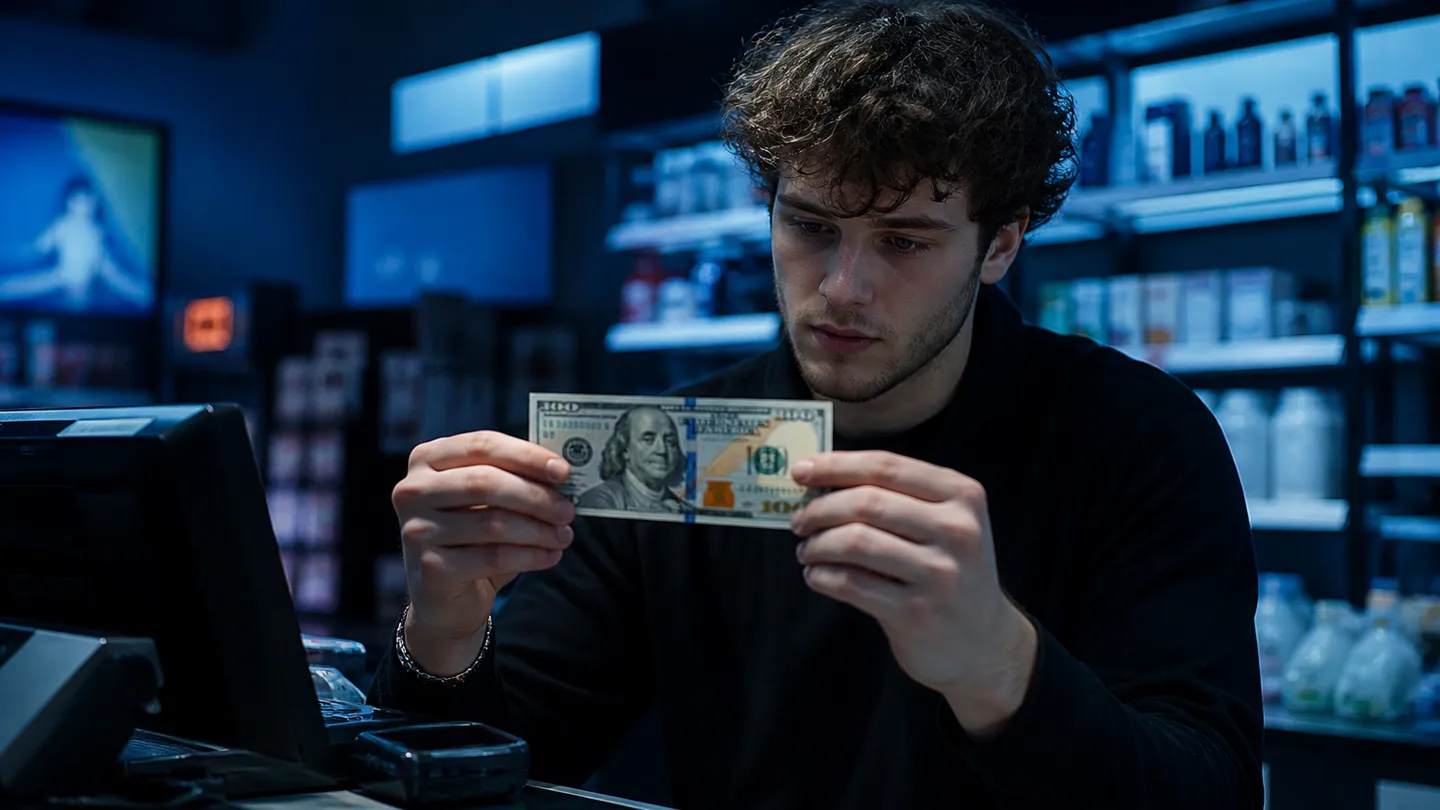
For most buyers, we recommend clearly marked, one-sided prop notes: they suit filming, photography, events, and classroom activities without closely resembling spendable cash. For close-ups, choose higher-detail notes, but check size and one-sidedness rather than relying on "For Motion Picture Use Only"[1]. Bulk packs work better for distant stacks, while fictional or custom designs suit branded scenes. For children under three, choose paper bills instead of small imitation coins, which may present a choking risk[2].
Best Fake Money Comparison Table
| Intended Use | Finish | Format | Pack Size | Unit Price | Compliance Disclosure |
|---|---|---|---|---|---|
| Best Fake Money at a Glance | Realistic | Various denominations | Varies | $20 - $50 | Complies with federal reproduction rules |
| Best Realistic Prop Money for Film and Photo Close-Ups | Highly realistic | Single note | 50 notes | $30 | One-sided, under 75% size |
| Best Bulk Prop Money for Stacks and Background Scenes | Moderately realistic | Single note | 1,000 notes | $100 | One-sided, under 75% size |
| Best Vintage, Fictional, and Custom Prop Money | Customisable | Single note | Varies | $50 - $100 | May not comply with all regulations |
| Best Fake Money for Kids and Classroom Activities | Child-safe | Single note | 100 notes | $15 | Marked 'COPY', meets safety standards |
| How to Choose the Right Prop Money | N/A | N/A | N/A | N/A | N/A |
| Is It Legal to Buy and Use Fake Money? | N/A | N/A | N/A | N/A | Depends on compliance with federal laws |
| Fake Money Myths and Frequently Asked Questions | N/A | N/A | N/A | N/A | Clarifies common misconceptions about fake money |
Best Fake Money at a Glance
When selecting the best fake money, it’s essential to consider various factors such as intended use, finish, and compliance with legal standards. Below is a comparison table summarising our current recommendations from established prop money sellers, along with key details.
| Intended Use | Finish | Format | Pack Size | Unit Price | Price per 100 Bills | Compliance Disclosure |
|---|---|---|---|---|---|---|
| Best Fake Money at a Glance | Realistic | Various denominations | Varies | $20 - $50 | Varies | Complies with federal reproduction rules[1] |
| Best Realistic Prop Money for Film and Photo Close-Ups | Highly realistic | Single note | 50 notes | $30 | $60 | One-sided, under 75% size[1] |
| Best Bulk Prop Money for Stacks and Background Scenes | Moderately realistic | Single note | 1,000 notes | $100 | $10 | One-sided, under 75% size[1] |
| Best Vintage, Fictional, and Custom Prop Money | Customisable | Single note | Varies | $50 - $100 | Varies | May not comply with all regulations[3] |
| Best Fake Money for Kids and Classroom Activities | Child-safe | Single note | 100 notes | $15 | $15 | Marked 'COPY', meets safety standards[4][2] |
These options cater to a variety of needs, whether for filmmaking, photography, educational purposes, or events. The prices listed reflect current market conditions as of October 2023. For instance, bulk packs are ideal for creating the illusion of large sums without the risk of resembling actual currency too closely. However, it’s crucial to ensure that any prop money used adheres to federal regulations, including the requirement for one-sided notes and specific size limitations[1].
Choosing the right product ultimately depends on your specific requirements, such as whether you need realistic detail for close-ups or simply a non-threatening alternative for children.
Best Realistic Prop Money for Film and Photo Close-Ups
For filmmakers and photographers looking for prop money that holds up under close scrutiny, realistic options from Prop Movie Money, Prop Money Inc., and BuzzProps are notable. These products are designed specifically for production use, ensuring that they meet federal regulations while providing a convincing appearance on camera.
Prop Movie Money offers high-quality notes that come with a matte finish, which helps reduce glare and enhances realism in close-up shots. Their notes are printed in consistent colours and feature legal markings, making them compliant with federal reproduction standards. Prices for a pack of 50 notes typically range around $30, which is reasonable given the quality. The notes are one-sided and sized to comply with the under 75% rule, ensuring they cannot be mistaken for real currency[1].
In contrast, Prop Money Inc. provides a more glossy finish, which can sometimes create reflections that may detract from the realism in certain lighting conditions. However, their print consistency is commendable, and they offer options for aged looks, which can be crucial for period pieces. Their pricing is similar, with packs of 50 notes also around $30. The handling durability is high, making them suitable for repeated use on set[5].
BuzzProps rounds out the selection with notes that are highly rated for detail and authenticity. They offer a range of denominations and are particularly noted for their ageing options, which allow creators to depict various time periods effectively. These notes are also priced competitively, often around $30 for 50 notes, and maintain compliance with legal requirements[1].
When selecting prop money for close-ups, consider the finish, handling durability, and whether the notes maintain a realistic appearance under various lighting conditions. Each of these options has unique strengths, making them suitable for different production needs.
Best Bulk Prop Money for Stacks and Background Scenes
When it comes to creating the illusion of large sums of money in films, events, or educational settings, bulk prop money is often the most economical choice. We recommend considering full-print bundles and blank filler stacks, which can effectively enhance wide shots, briefcases, tables, and crowd scenes. For instance, a pack of 100 notes might cost around $20, while 1,000 notes can be obtained for approximately $100. If you need an even larger quantity, packs of 10,000 notes are typically available for about $1,000, allowing for impressive visual effects without the need for actual currency[1].
It's important to note that when using prop money, only the top and edge bills usually require full printing for visibility in wide shots. This approach saves costs while still providing the necessary realism. For example, if you are using a stack of 1,000 notes, you might only need to print the top 10 to 20 notes fully, while the others can remain blank, reducing printing expenses significantly[1].
For filmmakers, photographers, and event planners, bulk prop money allows for flexibility in staging scenes where large amounts of cash are needed. However, it’s crucial to comply with federal laws regarding reproduction, ensuring that the notes are one-sided and within size limitations of less than 75% or more than 150% of actual currency dimensions[1]. This compliance not only avoids potential legal issues but also ensures that the prop money is clearly distinguishable from real currency, maintaining authenticity in your production while avoiding any implications of counterfeiting[6][7].
In summary, bulk prop money is ideal for those needing large quantities for background scenes or staging. By understanding the specifics of printing requirements and costs, we can better select the right product for our needs.
Best Vintage, Fictional, and Custom Prop Money
Vintage, fictional, and custom prop money options provide unique choices for filmmakers and content creators looking to enhance their productions or events. Vintage prop money can reflect various historical periods, while fully fictional currency offers a safer alternative, avoiding any resemblance to current legal tender. This is particularly beneficial when the design should not mimic actual currency, as fictional bills mitigate potential legal issues under federal law[3].
When exploring these options, we should consider several factors such as minimum order quantities, customization limits, lead times, and proofing requirements. Many suppliers offer vintage designs that cater to specific eras, with prices typically ranging from $50 to $100 per pack, depending on the complexity and detail involved. Customisable bills, which can feature branding or unique story elements, may also fall within this price range but often come with higher minimum order requirements and longer lead times due to the production process involved[4].
While custom and fictional options can be appealing, it’s crucial to remember that any currency created with the intent to defraud falls under stringent legal scrutiny. For example, creating or possessing fictional currency that purports to be a legitimate financial instrument can lead to severe penalties[3]. Therefore, ensuring compliance with federal regulations is essential, especially when designing custom notes.
For those looking to utilise prop money in educational settings or events, we recommend opting for clearly marked bills with the word "COPY" prominently displayed. This ensures compliance with safety standards and protects against potential legal repercussions[4][8]. Ultimately, vintage, fictional, and custom prop money can effectively enhance storytelling and authenticity in various contexts, but careful consideration of the associated legalities and production requirements is essential for successful implementation.
Best Fake Money for Kids and Classroom Activities
When selecting fake money for children, it's essential to differentiate between realistic prop money and clearly fictional, age-appropriate sets. For classroom activities, we recommend using play money that is designed specifically for children. These sets are typically marked as "COPY," ensuring compliance with federal regulations and safety standards.
Children's play money often comes in various denominations, with sets including both coins and bills. For example, a popular choice features 100 notes with printed values like $1, $5, $10, and $20. These notes are generally made from durable paper or plastic, ensuring they withstand frequent handling. The suggested age range for these products is usually from three years and up, as they are designed to be safe and engaging for young learners[2].
One of the significant advantages of using play money is its educational value. It can be utilised for counting exercises, budgeting lessons, and pretend store setups, allowing children to practise basic math and financial concepts in a fun way. However, we must be cautious with the size and design of the money; it should not resemble real currency closely, as this could lead to confusion or legal issues[1].
While the price of these sets can vary, a typical pack of 100 notes is priced around $15, making it an affordable option for teachers and parents. In contrast, realistic prop money used in films or photography is often more expensive and designed for different purposes, making it unsuitable for young children[3].
In summary, when choosing fake money for kids, we should focus on clearly marked, fictional sets that enhance learning while ensuring compliance with safety regulations. This approach not only promotes educational activities but also provides a safe and enjoyable experience for children.
How to Choose the Right Prop Money
Selecting the right prop money involves considering various factors to ensure it meets your specific needs. We suggest using the following checklist to guide your decision-making process:
- Shooting Distance: Determine if you need close-up detail or if the money will be viewed from a distance.
- Resolution: High-resolution prints are crucial for close-ups to maintain realism.
- Lighting: Consider how the money will appear under different lighting conditions.
- Handling: Ensure the material can withstand repeated use without damage.
- Denomination Mix: Decide if you need a variety of denominations for different scenes.
- Historical Period: Choose designs that reflect the appropriate time frame for your project.
- Quantity: Assess how many notes you will need for your scenes.
- Budget: Set a budget that aligns with your production costs.
When choosing between full-print versus one-sided or blank filler bills, full-print options provide a more realistic appearance but can be more expensive. One-sided notes are required to comply with federal regulations, which state that colour illustrations must be less than 75% or more than 150% of the note's actual dimensions[1].
Matte finishes reduce glare, making them ideal for close-ups, while glossy finishes might reflect light and detract from realism. Standard finishes are suitable for most uses, but aged finishes can enhance authenticity for period pieces.
For example, in a close-up scene, we might choose matte, full-print notes with a realistic appearance. In a music video, glossy notes may work better under dynamic lighting, while for a briefcase scene, a mix of full-print for the top and blank filler for the rest can create the illusion of a large sum without the cost of printing every note[1].
Ultimately, understanding these aspects helps us select the right prop money that meets our production requirements while remaining compliant with legal standards.
Is It Legal to Buy and Use Fake Money?
Understanding the legality of purchasing and using fake money is essential for filmmakers and content creators. The distinction between lawful prop or play money and counterfeit currency hinges on design, intended use, and jurisdiction rather than merely the product's name. In the U.S., federal laws regulate these aspects to prevent fraud. For instance, 18 U.S.C. § 504 allows for the creation of motion-picture materials depicting U.S. currency, provided they adhere to specific guidelines, such as being one-sided and either less than 75% or more than 150% of the original note's size[1][5].
The rules further clarify that simply marking fake money with "For Motion Picture Use Only" does not automatically exempt it from legal scrutiny. Instead, compliance with size and destruction requirements is critical[1]. Notably, attempting to use prop money as actual currency is illegal and can lead to severe penalties under 18 U.S.C. § 471, which addresses the counterfeiting of U.S. obligations[6].
Moreover, even wholly fictional currency can be problematic if created with the intent to defraud, as outlined in 18 U.S.C. § 514[3]. The Federal Trade Commission also mandates clear marking for imitation currency, requiring the word "COPY" to be displayed prominently on any reproduction[4].
For those outside the U.S., we advise checking local regulations, as laws can vary significantly. Understanding these legal frameworks is crucial for anyone involved in using fake money for creative or educational purposes, ensuring compliance and avoiding potential legal issues.
Fake Money Myths and Frequently Asked Questions
Several myths surround the use of fake money, particularly regarding its legality. A common misconception is that anything marked "Motion Picture Use Only" is automatically legal. However, federal regulations specify that such items must meet particular criteria, including being one-sided and not exceeding size limits of 75% or less than 150% of genuine currency dimensions[1]. Therefore, simply adding this label does not guarantee compliance with federal laws.
Another frequent claim is that buying realistic prop money is always illegal. In fact, prop money can be legally acquired and used, provided it adheres to federal guidelines. For example, 18 U.S.C. § 504 allows for the creation of motion-picture materials depicting U.S. currency, as long as they follow the established rules[5]. However, using prop money as actual currency can lead to serious legal consequences, including fines or imprisonment[6][7].
When considering products advertised without clear prop markings, it is crucial to exercise caution. These items might not comply with legal standards and could potentially lead to accusations of counterfeiting. The Federal Trade Commission requires imitation currency to be distinctly marked with the word "COPY" to avoid confusion with real money[4]. Additionally, the guidelines set forth by platforms like Amazon also stress the importance of clear markings for prop money[8].
While we cannot recommend specific counterfeit suppliers, we encourage thorough research and understanding of federal regulations to ensure compliance and safety in using fake money for creative projects.
Pros and Cons of Clearly Marked Prop Money
- Pros
- We can reduce confusion with genuine currency by choosing fictional notes prominently marked "COPY" [4][8].
- Play-money sets support counting, budgeting and pretend-store activities without requiring realistic film props [2].
- Custom designs can include branding, fictional denominations or story-specific details for productions and events [4].
- For large cash scenes, we can place detailed notes on top and use blank filler bills underneath to control costs [1].
- What doesn't
- A "COPY" or "For Motion Picture Use Only" label does not by itself make a note compliant with U.S. federal requirements [1].
- Custom prop money may involve higher minimum orders, proofing requirements and longer production lead times [4].
- Realistic film props are unsuitable for young children because they may cause confusion and are designed for different uses [1][3].
- Glossy notes can reflect production lighting, while inexpensive filler bills may look unconvincing in close-up shots.

Who Each Type Suits
If you are filming close-ups — choose detailed notes with a matte finish
Small details matter here. Matte surfaces reduce lighting glare, while high-resolution printing helps notes remain convincing on camera; separately, confirm that the design follows federal reproduction rules[1].
If you are building a briefcase or cash-pile scene — combine hero notes with filler
Use detailed prop notes where the camera can see them, then place blank filler bills deeper in the stack. This creates visible volume without paying for detailed printing throughout, but any recognisable currency reproduction must still meet federal requirements[1].
If you are teaching children — choose clearly fictional play money
Pick an age-appropriate set with prominent "COPY" markings rather than realistic production props[4][8]. Sets intended for children aged three and over may include coins and notes in several denominations; a pack of 100 notes costs around $15[2].
If you are organising an event — choose branded fictional currency
For a Seattle fundraiser, party or themed activity, we suggest notes with invented denominations and unmistakable event branding. Before ordering custom artwork, ensure that it cannot be mistaken for a legitimate financial instrument and that "COPY" appears prominently where required[3][4].
Before buying, make sure the product matches:
- the camera distance and lighting;
- the expected amount of handling;
- the required denominations and quantity;
- the audience’s age;
- applicable U.S. federal reproduction rules[1][5].
Verdict: What to Choose
Choose a clearly marked matte prop set. For most Seattle productions, it offers convincing camera detail without the glare associated with glossy notes, provided it follows U.S. reproduction rules[1][5]. Choose fictional play money for children or branded event currency, while wide cash-pile scenes can use detailed hero notes above inexpensive filler. Avoid highly realistic, unmarked products and sellers that conceal note dimensions, reverse-side designs, or compliance details[4][8].
Before ordering, we suggest checking:
- "COPY" or other prominent prop markings;
- finish, camera distance, and visible sides;
- seller photographs and complete specifications.
Our guide to choosing a reliable fake money website can help assess unfamiliar shops.
Straight answers
What is the most realistic fake money?
For close-ups, the most convincing legal prop money suggests authentic texture and security details without reproducing a spendable note. Genuine U.S. currency contains 75% cotton and 25% linen with red and blue fibres, while intaglio printing creates slightly raised ink that ordinary flat printing cannot convincingly reproduce[9]. Choose camera-safe props that approximate these visual cues but remain unmistakably marked and compliant.
Where can I buy the most realistic fake money?
We suggest buying from a film-prop retailer or marketplace seller that discloses the note dimensions, markings, printed sides and reverse design before purchase. Amazon permits imitation currency only when permanently marked "COPY"; colour versions must also be one-sided and either below 75% or above 150% of genuine size[8]. Avoid listings that show only distant product photographs or hide compliance details.
Who makes the best counterfeit money?
We cannot identify or rank counterfeit-money producers. Making or altering U.S. obligations with intent to defraud can bring a fine, imprisonment for up to 20 years, or both under 18 U.S.C. § 471[6]. Instead, use a legitimate prop supplier whose products are visibly marked and cannot reasonably enter circulation.
Is it illegal to buy fake money?
Buying clearly identified prop or play money is not the same as purchasing counterfeit currency, but design and intent matter. Knowingly buying, possessing, importing or selling counterfeit U.S. currency with intent to defraud can carry up to 20 years in prison under 18 U.S.C. § 472[7]. Before paying, confirm that the listing shows permanent markings, dimensions and both sides of every note.
What is the best fake money for kids?
We recommend brightly coloured, clearly fictional paper notes that teach counting without resembling spendable currency. For children under age three, paper bills are safer than imitation coins or other pieces that fit entirely inside the CPSC small-parts cylinder, which present choking, aspiration or ingestion risks[2]. Reproduction play money should also be plainly and permanently marked "COPY"[4].
Is fake money from Amazon suitable for film productions?
Sometimes, but suitability depends on the shot rather than the marketplace. Amazon requires prop currency to be permanently marked "COPY", while colour reproductions must be one-sided and below 75% or above 150% of genuine size[8]. These products may work for background piles, but we would inspect full-resolution listing images before relying on them for close-ups.
Can realistic prop money be legal without the words “Motion Picture Use Only”?
Yes, because that exact phrase is not a standalone federal safe harbour. Federal reproduction rules focus on one-sidedness, permitted size and destruction or erasure of image-making files and media after final use[1]. A note bearing "Motion Picture Use Only" can still be non-compliant, while a properly designed reproduction may be lawful without that wording.
Links and references
- 1. Currency Image Use | U.S. Currency Education Program
- 2. Small Parts Ban and Choking Hazard Labeling | CPSC.gov
- 3. 18 USC 514: Fictitious obligations
- 4. Regulatory Reform Update: Hobby Protection Act Rules | Federal Trade Commission
- 5. 18 USC 504: Printing and filming of United States and foreign obligations and securities
- 6. 18 USC 471: Obligations or securities of United States
- 7. Legal Implications of Counterfeit Acceptance | U.S. Currency Education Program
- 8. Currency, Coins, Cash Equivalents, and Gift Cards | Amazon Seller Central
- 9. The Buck Starts Here: How Money is Made | Bureau of Engraving and Printing