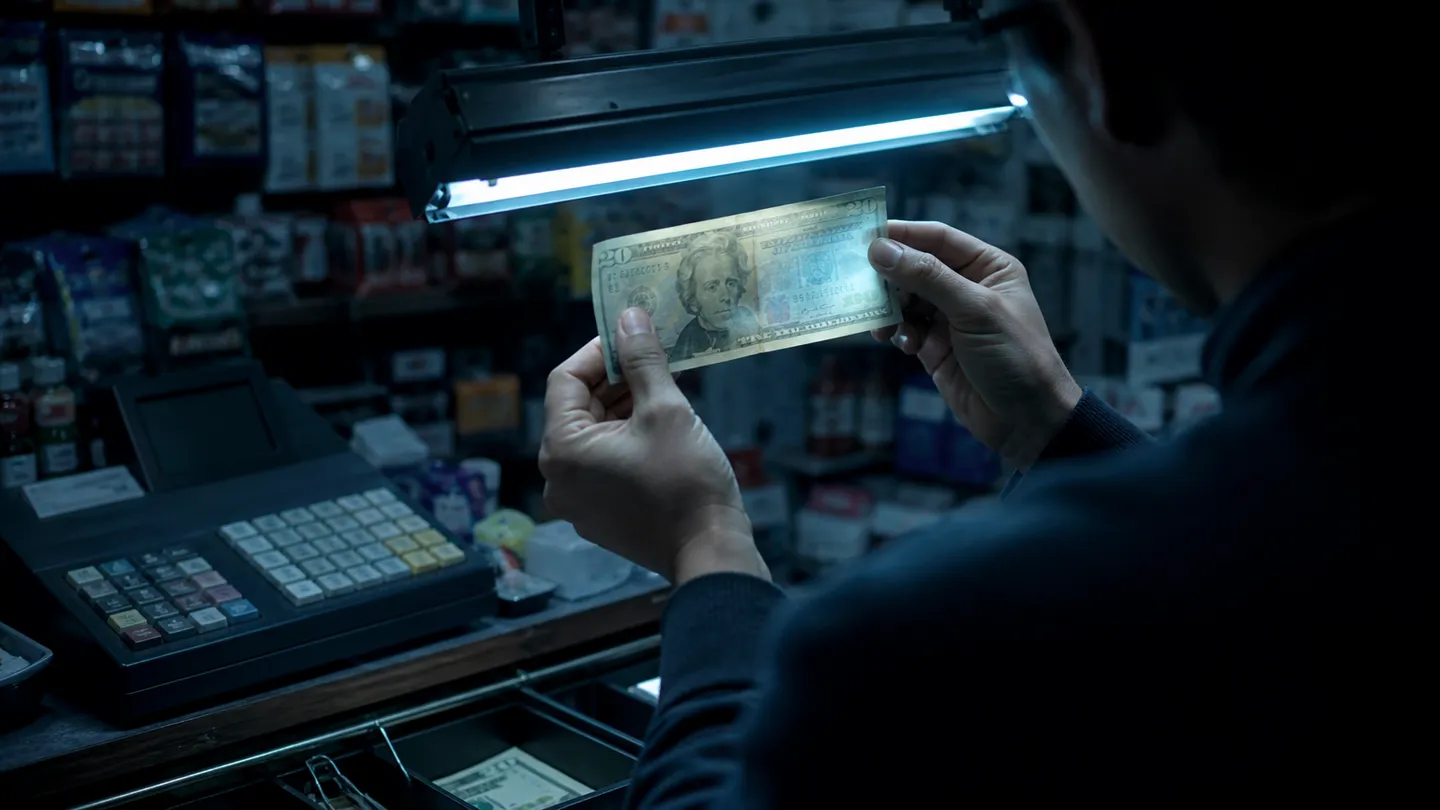
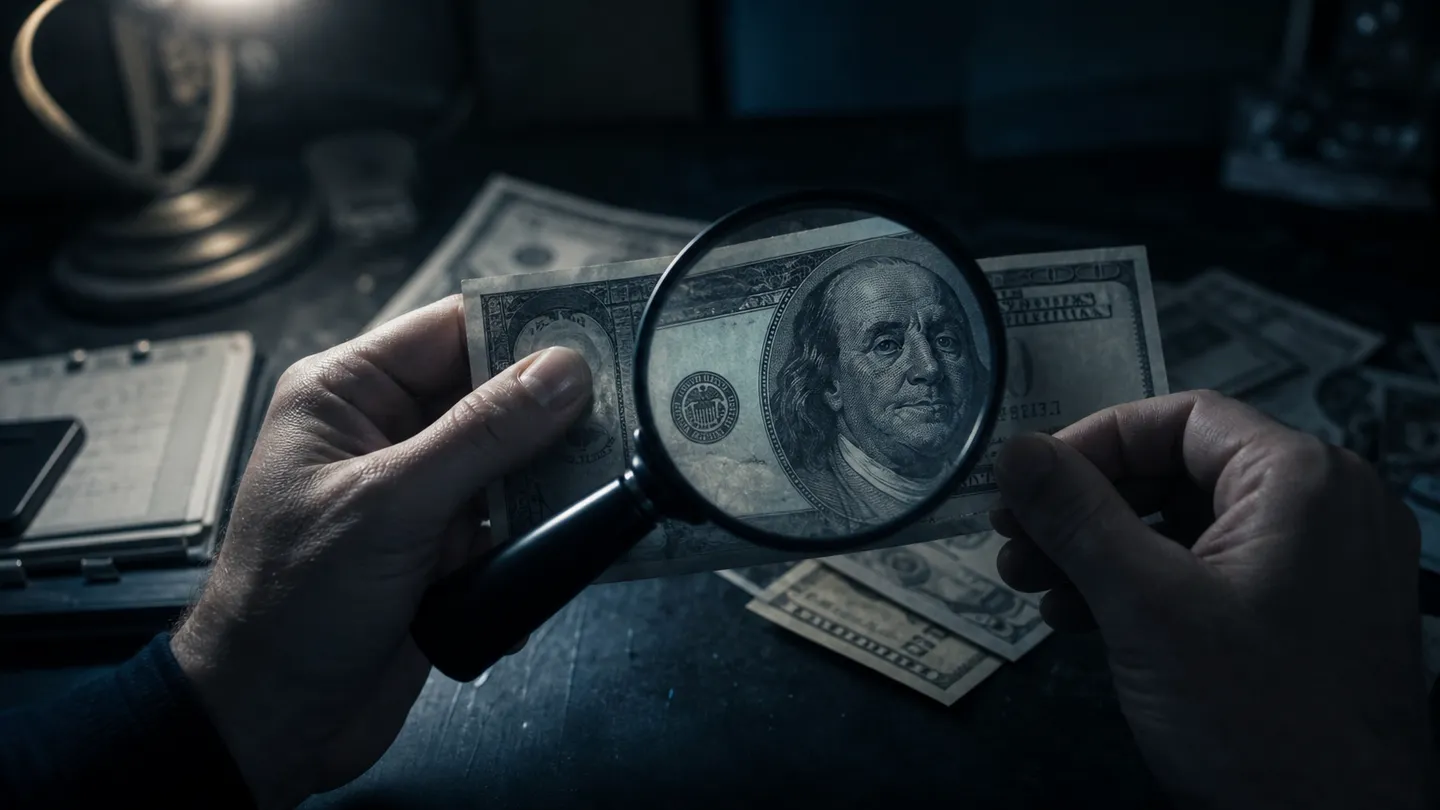
"Real counterfeit money" means fake currency made to imitate genuine banknotes and deceive someone into accepting it as payment; it has no legitimate monetary value, and knowingly possessing or passing it can cause legal and financial harm. If a U.S. note seems suspicious, do not spend it, limit handling, and contact local police or the U.S. Secret Service.
What “Real Counterfeit Money” Actually Means
The term “real counterfeit money” is misleading as it does not represent an official classification. Instead, it generally refers to unauthorized imitations designed to resemble genuine U.S. currency. These counterfeit bills are created with the intent to deceive individuals into accepting them as legitimate payment. It is essential to differentiate between counterfeit money and genuine currency that may be damaged, altered, or merely suspected.
In legal terms, the U.S. Secret Service defines counterfeit as any currency that has been unlawfully produced and is intended to be used as if it were real money. Under U.S. law, specifically 18 U.S.C. §§ 471–472, producing or distributing counterfeit currency is a serious federal offense. For example, a $20 bill that has been altered to appear as a $100 bill is considered counterfeit if the original denomination is modified without proper authorization.
To further understand the implications, consider the various security features that genuine U.S. currency possesses, such as a security thread, watermark, color-shifting ink, and microprinting. These features are designed to prevent counterfeiting and are often the first checks we should conduct when examining a note. A counterfeit detection pen can also help identify fake currency, as it reacts differently to the paper used in genuine notes compared to that used in counterfeits.
When faced with a suspicious bill, it is crucial to refrain from spending it. Instead, limit handling and report the incident to local law enforcement or the U.S. Secret Service. Understanding these distinctions can help protect you from legal and financial repercussions associated with counterfeit money.
Genuine Currency vs. Counterfeit Bills vs. Prop Money
Understanding the differences between genuine currency, counterfeit bills, and prop money is essential for anyone handling cash. Each type of note serves a specific purpose and carries distinct legal implications.
| Type | Issuer | Intended Use | Legal-Tender Status | Identifying Labels | Legal Risk |
|---|---|---|---|---|---|
| Genuine Currency | U.S. Department of the Treasury | Legal transactions | Yes | Security features (watermark, thread) | Criminal charges for counterfeiting |
| Counterfeit Bills | Unknown | Deceptive transactions | No | Lacks security features | Criminal charges for counterfeiting |
| Prop Money | Not applicable | Film, theatre, or training | No | “For Motion Picture Use Only” | Can lead to legal issues if misused |
Genuine U.S. currency, such as a $100 note, is issued by the U.S. Department of the Treasury and is considered legal tender. It features various security elements, including a security thread, watermark, and color-shifting ink, which help verify its authenticity. In contrast, counterfeit bills are produced unlawfully and lack these security features, making them illegal to possess or distribute. If someone attempts to use a counterfeit bill, they risk facing serious legal consequences under 18 U.S.C. §§ 471–472.
Prop money, on the other hand, is designed for specific uses, such as in film or theatre. While it may resemble genuine currency, it is clearly marked with phrases like “For Motion Picture Use Only.” However, this does not automatically exempt all reproductions from legal scrutiny. If prop money is used in a way that could deceive others into thinking it is real currency, it can also lead to legal issues.
For example, a genuine $100 note will have distinct security features that can be verified under ultraviolet light, while a deceptive imitation may appear similar at first glance but will lack these critical elements. A clearly marked film prop, however, should never be mistaken for real currency, as its use is confined to specific contexts. Understanding these differences can help us avoid legal pitfalls and ensure we are using currency appropriately.
How to Check Whether Money Is Real or Fake
To determine if a U.S. banknote is genuine or counterfeit, we can follow a straightforward inspection sequence. First, feel the paper and check for raised printing. Genuine U.S. currency is printed on a unique blend of cotton and linen, giving it a distinct texture. Next, tilt the note to observe any colour-shifting ink; this feature changes colour when viewed from different angles, a hallmark of authentic notes.
Holding the bill up to the light is another critical step. We should look for the security thread embedded in the paper, which is visible as a vertical stripe. Additionally, a watermark should be present, often depicting a portrait similar to that on the front of the bill. Comparing the suspect note with a known genuine bill of the same denomination and series can also help identify discrepancies.
It's important to note that no single failed check definitively proves a note is counterfeit, especially if it shows signs of wear or damage. Many legitimate bills can be worn down or altered over time, which may affect their security features. Therefore, we should consider multiple aspects rather than relying on one indicator alone.
For comprehensive guidance, we recommend consulting materials from the U.S. Currency Education Program, which provides official resources for identifying genuine currency. Relying solely on image searches for comparisons can be misleading, as the quality and accuracy of online images can vary significantly. To avoid potential legal or financial harm, it's best to use verified sources and methods when assessing the authenticity of money.
Front-and-Back Security Features by Denomination
Understanding the security features of U.S. currency is essential for identifying genuine notes and avoiding counterfeits. Each denomination has specific visible and embedded features that can help verify authenticity. Below is a matrix outlining the notable security features for the $1, $2, $5, $10, $20, $50, and $100 notes.
| Denomination | Front Features | Back Features | UV Thread Colour |
|---|---|---|---|
| $1 | - Portrait of George Washington | - Large denomination numeral | N/A |
| - Security thread (printed in the paper) | |||
| - Microprinting (e.g., "One" in the border) | |||
| $2 | - Portrait of Thomas Jefferson | - Large denomination numeral | N/A |
| - Security thread (printed in the paper) | |||
| - Microprinting (e.g., "Two" in the border) | |||
| $5 | - Portrait of Abraham Lincoln | - Large denomination numeral | Blue |
| - Security thread (visible under UV light) | |||
| - Colour-shifting ink (changes from black to green) | |||
| $10 | - Portrait of Alexander Hamilton | - Large denomination numeral | Orange |
| - 3-D security ribbon (holographic) | |||
| - Microprinting (e.g., "Ten" in the border) | |||
| $20 | - Portrait of Andrew Jackson | - Large denomination numeral | Green |
| - Security thread (visible under UV light) | |||
| - Colour-shifting ink (changes from green to black) | |||
| $50 | - Portrait of Ulysses S. Grant | - Large denomination numeral | Yellow |
| - Security thread (visible under UV light) | |||
| - Microprinting (e.g., "Fifty" in the border) | |||
| $100 | - Portrait of Benjamin Franklin | - Large denomination numeral | Pink |
| - 3-D security ribbon (holographic) | - Security thread (visible under UV light) | ||
| - Colour-shifting ink (changes from green to black) |
It is important to note that the $1 and $2 notes lack some of the advanced features found in higher denominations. For instance, the $100 note includes a 3-D security ribbon and a bell in the inkwell, which are not present in lower denominations. Additionally, design changes and series years can affect the features present on a note, so always refer to the most current information from the U.S. Currency Education Program.
When examining notes, we should use multiple verification methods, such as checking for raised printing and observing features under ultraviolet light. This comprehensive approach helps us accurately identify genuine currency and avoid potential legal issues associated with counterfeit money. For further guidance on spotting counterfeit notes, we recommend reviewing our article on Fake US Dollars: How to Spot Them.
Can Fake Money Look Real on the Front and Back?
High-resolution printing techniques can create counterfeit money that appears remarkably realistic on both the front and back. However, while these imitations may replicate visible artwork and designs, they often fail to reproduce the complete array of security features present in genuine U.S. currency. Authentic banknotes include a combination of substrate, raised printing, embedded security threads, watermarks, microprinting, and colour-shifting elements, which are difficult to accurately replicate. For example, the $100 note features a 3-D security ribbon and a colour-shifting ink that changes appearance depending on the angle, elements that counterfeits typically lack.
One common misconception is that a realistic appearance alone guarantees authenticity. In reality, counterfeit bills can look convincing at first glance but may not hold up under closer scrutiny. Online photos may also misrepresent important factors such as scale, texture, duplicated serial numbers, or incorrect security features. For instance, counterfeit notes might lack the distinct feel of genuine currency or fail to display the proper security thread when viewed under ultraviolet light.
Myth vs. Fact
| Myth | Fact |
|---|---|
| Realistic appearance means it’s authentic. | Authenticity requires verification of multiple security features beyond appearance. |
| All counterfeit money looks fake. | High-quality counterfeits can closely resemble real currency but often lack key features. |
To protect ourselves from legal or financial harm, it is essential to conduct a thorough examination of any banknote we suspect might be counterfeit. We recommend using a counterfeit detection pen, comparing the note to a verified genuine bill, and checking for the presence of security features like watermarks and embedded threads. By employing these methods, we can better safeguard against the risks associated with counterfeit currency. For more detailed guidance on identifying fake notes, we suggest reviewing our article on Fake US Dollars: How to Spot Them.
What to Do If You Receive a Suspicious Bill
If you find yourself in possession of a suspicious bill, it’s crucial to act quickly and carefully to avoid legal or financial repercussions. Here’s a concise action checklist to follow:
Do Not Spend or Return the Bill: Avoid using the note for any transactions. Spending or returning it can lead to serious legal consequences, as knowingly passing counterfeit currency is a crime under 18 U.S.C. §§ 471–472.
Minimise Handling: Limit contact with the bill to preserve any potential evidence. The less you touch it, the better.
Record Its Origin: Make a note of where and how you received the bill. This information can be useful for law enforcement investigations.
Contact Authorities: Reach out to your local police department or a field office of the U.S. Secret Service. They are responsible for investigating counterfeit currency.
It’s also important to note that banks and businesses may choose to retain or reject suspicious currency. If you attempt to deposit or use a questionable note, reimbursement is generally not guaranteed.
Scenarios to Consider
Receiving as Change: If you get a suspicious bill as change from a store, do not return it to the cashier. Instead, report the incident to the management and follow the steps mentioned above.
Finding a Bill: If you discover a questionable note on the street or in another location, do not attempt to spend it. Treat it as evidence and report your finding to the local police.
Encountering at Work: If you receive a suspicious bill while working in cash-handling, immediately inform your supervisor and follow your workplace's procedures for handling counterfeit currency.
By following these steps, we can protect ourselves and assist in combating the circulation of counterfeit money. Always remain vigilant and informed about the characteristics of genuine U.S. currency to better identify potential counterfeits. For more details on spotting fake bills, consider reviewing our article on Fake US Dollars: How to Spot Them.
Counterfeit-Money and “Realistic Prop Money” Scams
We must be cautious when encountering offers for "real counterfeit money wholesale," "undetectable bills," or prop notes that claim to pass retail checks. These offers often raise significant red flags. Scammers frequently require advance payment and may use stolen product photos to entice buyers. If the product fails to arrive, victims are left with no recourse. Moreover, attempting to purchase or use deceptive notes can create evidence of intent to commit a crime, putting individuals at risk of legal consequences under 18 U.S.C. §§ 471–472.
To help identify potential scams, we recommend a red-flag checklist. Be wary if:
- Payment Methods: The seller insists on cryptocurrency-only payments, as this can make it difficult to trace transactions.
- Guaranteed Acceptance: Claims that the notes will be accepted without question should raise suspicion; no legitimate currency can guarantee acceptance everywhere.
- Usage Instructions: If you're instructed to use the notes for small purchases to obtain change, it’s likely a scam designed to mislead both you and the retailer.
Additionally, we should remain vigilant about offers that seem too good to be true, as they often are. Realistic prop money is legal to own and use for film, theatre, or entertainment purposes, but it must not be confused with counterfeit currency intended for deception.
When considering any purchase of money-related products, especially online, we should always verify the legitimacy of the source. Look for established sellers and ensure they comply with legal standards regarding prop money. For further guidance on identifying reliable sources, check our article on Fake Money Website: Identifying Reliable Sources.
By staying informed and recognizing these warning signs, we can better protect ourselves from scams and avoid potential legal troubles associated with counterfeit money.
What the Law Says About Counterfeit and Prop Money
Understanding the legal implications of counterfeit and prop money is crucial to avoid potential criminal charges. The distinction between accidental possession of counterfeit currency and knowing possession with intent to defraud is significant. Under 18 U.S.C. §§ 471–472, individuals can face severe penalties, including up to 20 years in prison for specific federal counterfeiting offences. Accidental possession may not lead to prosecution, but demonstrating intent to use counterfeit money for deceitful purposes can result in serious legal consequences.
The law varies by state, and local regulations may impose additional penalties or requirements. It's important to be aware of the specific laws in your jurisdiction. For instance, while federal law outlines penalties for counterfeiting, state laws may differ in terms of enforcement and prosecution. Therefore, individuals should familiarize themselves with both federal and state statutes regarding counterfeit currency.
When it comes to reproducing currency, 18 U.S.C. § 504 and 31 C.F.R. § 411.1 provide guidance on the legal use of currency reproductions. These regulations stipulate that while reproducing currency is permissible, it must be done under strict conditions. A critical point to note is that a disclaimer stating "not legal tender" on reproduced money does not serve as a universal legal safe harbour. If the reproduction is deemed too similar to real currency, it might still lead to legal issues.
In summary, while we may not intend to commit a crime, the possession of counterfeit money—especially with intent—can lead to significant legal repercussions. It is essential to handle any suspicious currency with care and to understand both federal and state laws governing counterfeit and prop money to avoid unintended legal troubles.
Common Counterfeit-Money Myths, Fact-Checked
Several misconceptions about counterfeit money can lead to misunderstandings and potential financial risk. One common myth is that counterfeit detection pens are conclusive tools for identifying fake currency. In reality, these pens primarily react to specific paper properties and can yield misleading results. They often fail to detect high-quality counterfeits that may use similar paper, leading users to mistakenly believe a bill is genuine. It’s essential to use multiple verification methods, including checking for security features like watermarks, microprinting, and colour-shifting ink, rather than relying solely on a pen.
Another widespread belief is that repeated serial numbers on currency automatically indicate a counterfeit note. While genuine U.S. currency is designed to have unique serial numbers, counterfeits can sometimes replicate these numbers. Therefore, seeing a repeated serial number should prompt further investigation rather than immediate dismissal of the bill’s authenticity.
Many people also think that counterfeit notes always feel obviously wrong. High-resolution printing techniques can create counterfeits that closely mimic the texture and feel of real currency. Although genuine notes have distinct features, such as raised printing and security threads, counterfeiters are becoming increasingly sophisticated, making it challenging to rely solely on touch for verification.
Lastly, the notion that one currency can be definitively ranked as the hardest to counterfeit is a myth. The U.S. Secret Service does not maintain a stable, authoritative global ranking of currencies based on counterfeiting difficulty. Currency designs, series, and counterfeiting methods evolve, meaning what might be difficult to replicate today could change in the future. Instead, we should stay informed about the current security features of currencies, as outlined by the U.S. Currency Education Program, to understand the landscape of counterfeiting better.
By being aware of these myths, we can enhance our ability to identify counterfeit currency and protect ourselves from potential legal and financial harm.
Denomination Verification Matrix for U.S. Currency
| Denomination | Front Features | Back Features | Action Checklist |
|---|---|---|---|
| $1 | No security features | No security features | Check for unusual texture |
| $5 | Watermark, security thread | Microprinting, colour-shifting ink | Do not spend, report to authorities |
| $10 | Watermark, security thread | Microprinting, colour-shifting ink | Minimise handling, record origin |
| $20 | Watermark, security thread | Microprinting, colour-shifting ink | Contact local police, do not return |
| $50 | Watermark, security thread | Microprinting, colour-shifting ink | Follow workplace procedures if received at work |
| $100 | Watermark, security thread | Microprinting, colour-shifting ink | Treat as evidence if found, report immediately |
Common Mistakes and Misconceptions
These mix-ups are avoidable. Before classifying a questionable note or money-like product, we suggest checking:
- what the item claims to be;
- whether its features match that denomination and series;
- what appears on both the front and back;
- whether the seller promotes display use or deceptive spending.
Treating "Real Counterfeit Money" as Genuine Currency
The phrase is self-contradictory. "Real counterfeit money" usually means an imitation presented as spendable currency, not genuine cash issued for circulation. We should judge the item by its purpose and physical features rather than treating the seller’s wording as a recognised category.
Using "Counterfeit", "Prop", "Replica", and "Novelty" Interchangeably
These labels do not mean the same thing. Counterfeit currency is intended to imitate genuine money deceptively, while prop, replica, and novelty products may be designed for filming, collecting, education, or play. Before buying, we should examine the complete design and intended use instead of relying on a reassuring product title.
Applying One Security Checklist to Every Denomination
Not every U.S. note has the same features. One-dollar and two-dollar bills differ from higher denominations, so expecting identical threads, watermarks, inks, or design elements can produce a false alarm. We recommend matching the note’s denomination and series to the correct front-and-back reference before reaching a conclusion.
Inspecting Only the Portrait Side
The front alone tells only part of the story. A suspicious note may reproduce the portrait convincingly while showing incorrect layout, colour, wording, or printing details on the reverse. We should compare both sides under good lighting and check whether all visible elements belong together.
Assuming a Realistic Appearance Proves Legitimacy
Realism is a sales claim, not evidence of authenticity or lawful use. Commercial images may hide markings, show only one side, or use genuine currency photographs that do not represent the delivered product. Before a prop purchase in Seattle or elsewhere, we advise requesting clear images of the exact item’s front and back and avoiding sellers who promote retail acceptance.
Key Takeaways
Start with the note itself.
- Set suspicious currency aside: do not spend it, return it to the customer, or test whether another business will accept it.
- Check the correct design: compare the denomination and series under good lighting, examining both sides and several security elements.
- Treat detection pens as supporting tools: paper reaction, texture, or a repeated serial number cannot settle authenticity alone.
- Separate props from genuine cash: before buying, inspect clear product images, stated use, and markings rather than trusting labels such as "replica" or "novelty".
- Escalate unresolved concerns: we suggest following workplace procedures or contacting local police, while recording where the note came from.
Next, use Fake US Dollars: How to Spot Them for a practical inspection walkthrough.
Straight answers
How to check if the money is real or fake?
We suggest comparing the note with an official reference for the same denomination and design series. Examine it in transmitted light, tilt it to observe changing elements, and check whether the portrait, borders, serial numbers, printing texture, watermark, and embedded features agree; no single test settles authenticity.
Is prop money legal to own?
Prop money is generally lawful to own for filming, theatre, education, display, or collecting, provided it complies with currency-reproduction rules. We should keep it separate from genuine cash and never offer it as payment, because a label such as "for motion picture use" does not excuse deceptive use or an otherwise unlawful reproduction.
How illegal is counterfeit money?
Counterfeiting is a serious offence when someone makes, alters, possesses, sells, or passes imitation currency with fraudulent intent. Accidentally receiving a fake note is different from knowingly trying to spend it after discovering the problem, so we advise stopping its circulation immediately.
Can fake money look real on the front and back?
Yes, a counterfeit can reproduce convincing artwork on both sides, especially in photographs or at a quick glance. We should still check whether the paper, printing method, serial numbers, denomination-specific security elements, and front-to-back alignment form one coherent genuine design.
What should I do if I receive a counterfeit bill?
Set the note aside, minimise handling, and do not return it to the person or pass it elsewhere. We suggest noting when and where it was received, preserving any receipt or transaction details, notifying a supervisor if it happened at work, and contacting local police if the suspicion remains; avoid confronting the customer or seller.