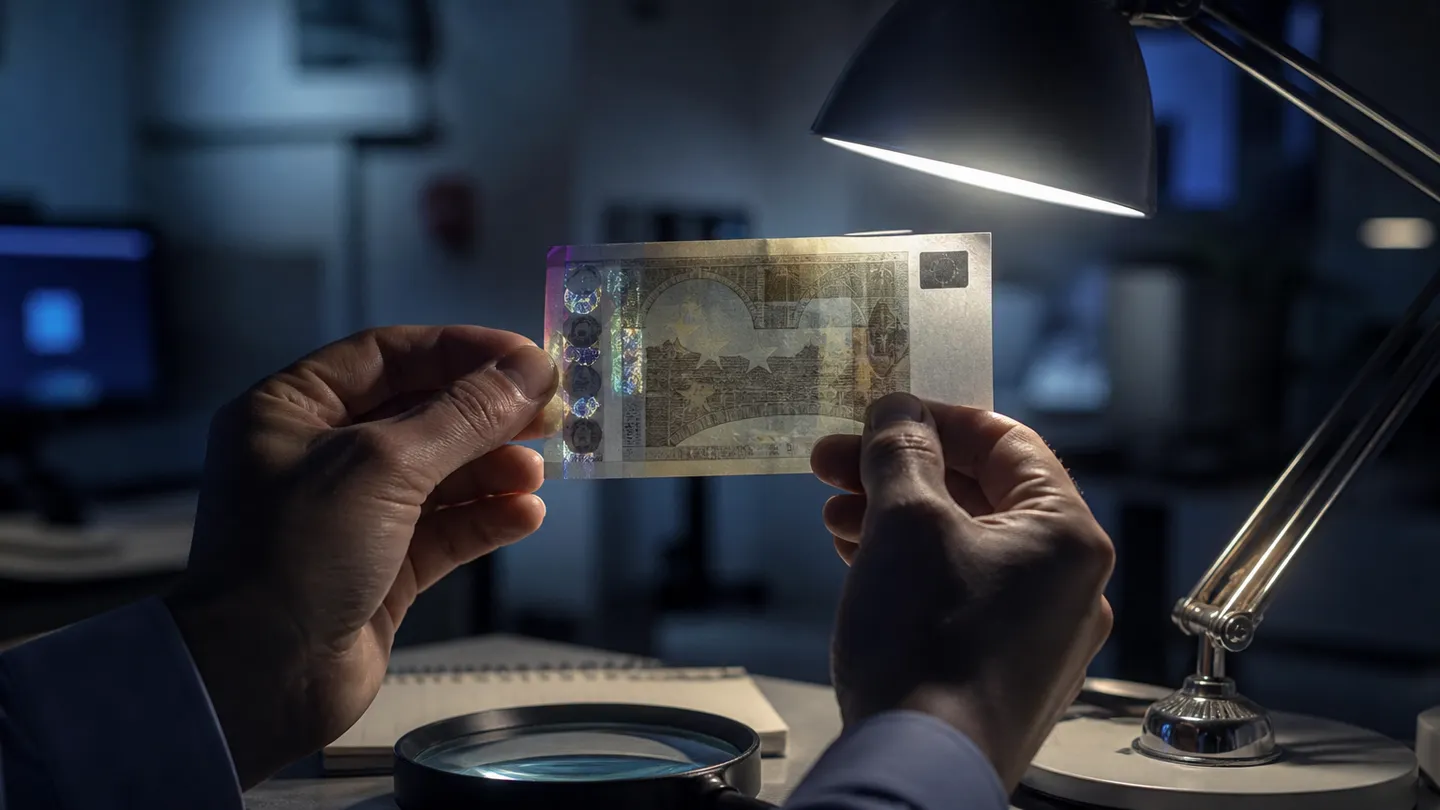
"Premier bills" is not an official U.S. currency class.[1] We recommend a quick hands-on check: identify the denomination and design, then inspect its texture, watermark, security thread, and colour-shifting features instead of relying on a counterfeit pen.[2][3][4] Success depends on matching features to the correct design, since older notes may remain legal tender.[5]
Step-by-Step Guide to Assessing Premier Bills
- Identify the Bill Type
First, confirm that the bill in question is indeed a U.S. currency note. Remember, 'premier bills' is not an official denomination; only notes of $1, $2, $5, $10, $20, $50, and $100 are recognised as legal tender[1]. If the bill does not fall into one of these categories, it may not be legitimate.
- Examine the Paper Quality
Genuine U.S. currency is made from a blend of 75 percent cotton and 25 percent linen, giving it a unique texture. Run your fingers over the bill; it should feel distinctively different from regular paper[2]. If it feels too smooth or flimsy, it may be counterfeit.
- Check Security Features
Look for the security features specific to the denomination. For instance, the current $100 note has a blue 3-D ribbon woven into the paper and a watermark of Benjamin Franklin that should be visible when held to the light[3]. Make sure these features are present and correctly positioned.
- Use the Tilt Test
Tilt the bill to see if the numeral changes colour, which is a feature of the current $100 note. The numeral should shift from copper to green[3]. If it does not change colour, this could be an indication of a counterfeit.
- Inspect Under UV Light
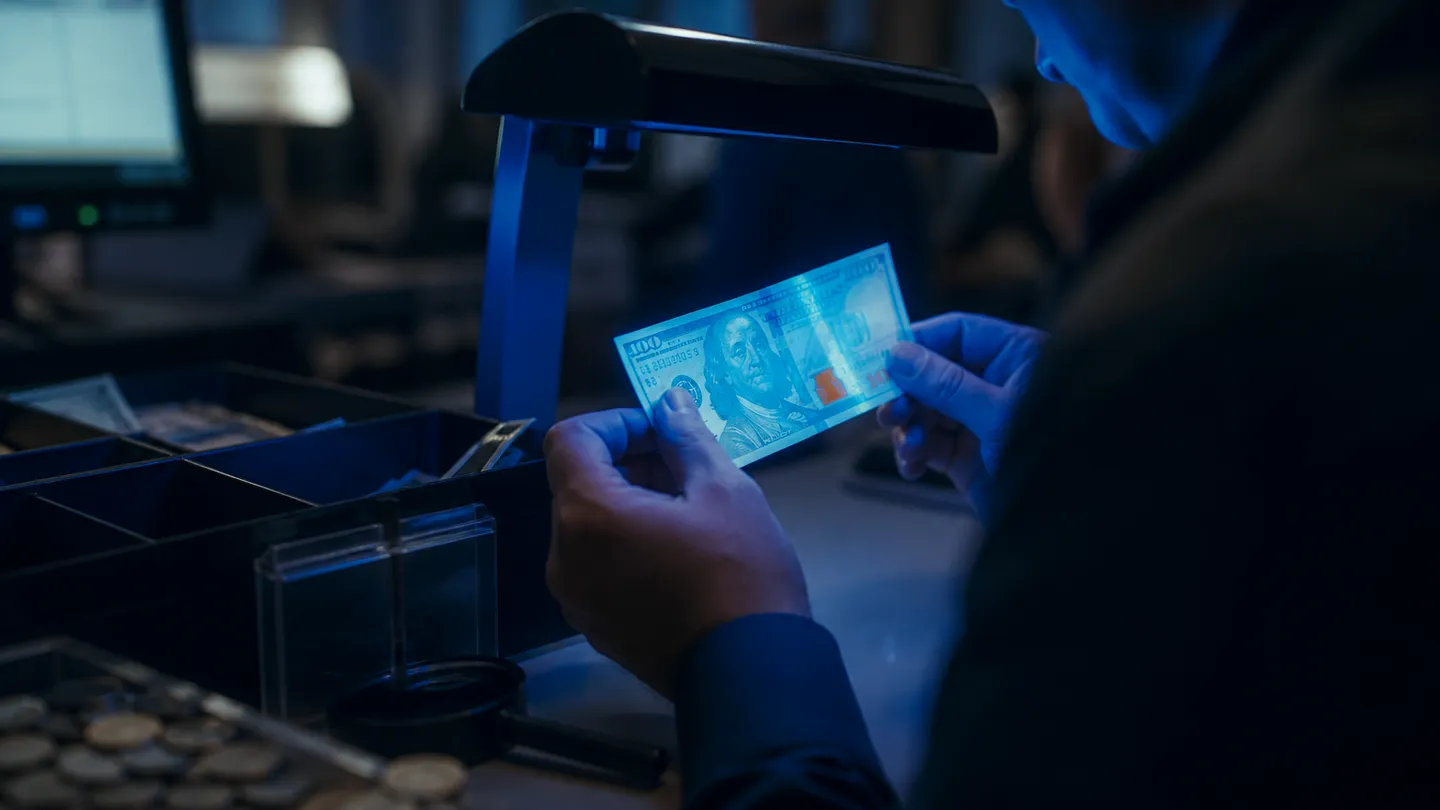
If possible, use a UV light to check the bill. Genuine notes will show glowing security threads specific to their denomination; for example, the $100 note should glow pink[6]. If there is no glow, the bill may not be genuine.
- Look for Raised Printing
Feel for raised printing on the bill. Genuine U.S. currency has a distinct texture due to the raised printing process used[2]. If the bill feels flat with no texture, it’s likely counterfeit.
- Separate and Report Suspicious Bills
If you suspect the bill is counterfeit, keep it separate from genuine currency. Notify local police and record any details about the person who passed the bill or the vehicle they used[4]. This information can be vital for further investigation.
- Know the Legal Implications
Understand that knowingly passing counterfeit currency is illegal and can result in severe penalties, including fines and imprisonment[7]. Always act responsibly if you suspect a bill is counterfeit.
What Does “Premier Bills” Mean?
“Premier bills” is not an official classification recognised by the U.S. Treasury, Federal Reserve, or Secret Service. Instead, it is an informal term often used in online discussions or listings to describe certain types of currency that may appear more sophisticated or convincing than typical counterfeit notes. This terminology can lead to misconceptions, particularly when claims such as “undetectable,” “ATM-safe,” or “identical to genuine currency” are made. Such assertions should not be treated as verified characteristics, as they often lack substantiation and can mislead consumers.
In contrast to genuine banknotes, premier bills may not feature the distinct qualities that authentic U.S. currency possesses. Genuine notes are made from a specific blend of 75 percent cotton and 25 percent linen, incorporating security features like watermarks, colour-shifting ink, and unique textures that are difficult to replicate accurately. For example, the current $100 note includes a blue 3-D ribbon and a Franklin watermark that are not present in most counterfeit versions.
When dealing with a bill suspected of being a premier bill, it is essential to distinguish it from legally marked prop money. Prop money is typically produced for film or theatre and is designed to look realistic but is clearly marked to indicate that it is not legal tender. It is crucial to examine any suspicious bill closely, utilising various checks to verify its authenticity. If a bill is suspected to be counterfeit, we recommend keeping it separate from genuine money and contacting local authorities for assistance.
Genuine Currency, Counterfeit Money, and Prop Money: Key Differences
Understanding the distinctions between genuine currency, counterfeit money, and prop money is crucial for cash handlers and consumers alike. Below, we present a comparison to clarify these differences.
| Feature | Genuine Currency | Counterfeit Money | Prop Money |
|---|---|---|---|
| Issuer | U.S. Department of the Treasury | Illegally produced by counterfeiters | Produced for entertainment purposes |
| Legal-Tender Status | Recognised as legal tender | Not recognised as legal tender | Not legal tender; clearly marked |
| Required Markings | No special markings; standard features | Attempts to imitate genuine features | Clearly marked with phrases like "For Motion Picture Use Only" |
| Intended Use | Used in everyday transactions | Intended to deceive and defraud | Used in films, theatre, and other productions |
| Legal Risks | Passing genuine currency incurs no risks | Passing counterfeit currency is illegal; can lead to fines/imprisonment[7] | Compliant prop money is legal if marked appropriately |
Counterfeit money is created to deceive by imitating genuine currency as closely as possible. This poses significant legal risks, as knowingly passing or possessing counterfeit money can result in severe penalties. In contrast, prop money is designed for specific uses, such as in movies or plays, and should be easily identifiable. For example, compliant prop money typically features clear markings indicating it is not legal tender, such as "For Motion Picture Use Only," and may have altered sizing to differentiate it from real currency.
While wording is an essential factor in determining compliance, it is not the only criterion. We should also assess the overall quality and features of the bill. Genuine U.S. currency includes specific security features, such as a blend of cotton and linen, watermarks, and colour-shifting inks, which counterfeiters often struggle to replicate accurately[2][3]. If you suspect a bill may be counterfeit, it is best to separate it from genuine currency and report it to local authorities for further evaluation[4].
How to Check a Suspicious Bill: Look, Feel, and Tilt
To assess a suspicious bill, we should begin by comparing it with a known genuine note of the same denomination and series. This comparison is crucial as it allows us to identify subtle differences in design, texture, and security features. Genuine U.S. currency is made from a unique blend of 75 percent cotton and 25 percent linen, which gives it a specific feel and texture. If the bill feels too smooth or flimsy, it may not be authentic[2].
When checking the print quality, we should look closely at the borders and the overall clarity of the print. Genuine notes have distinct, sharp printing, while counterfeit bills may exhibit blurred or uneven elements. Pay special attention to the security features. For instance, the current $100 note includes a blue 3-D security ribbon woven into the paper and a watermark of Benjamin Franklin that can be seen when the bill is held to the light[3]. These elements are difficult to replicate accurately, so their presence is a strong indicator of authenticity.
Tilting the bill is another effective method for verification. For the current $100 note, the numeral 100 should shift in colour from copper to green when tilted[3]. If this colour change is absent, it could suggest the bill is counterfeit. Additionally, under ultraviolet light, genuine notes will exhibit glowing security threads specific to their denomination, further aiding in the identification process[6].
It's important to note that no single test can definitively prove a bill's authenticity. We should utilise multiple verification methods to increase our confidence in our assessment. If we suspect that a bill is counterfeit, we recommend separating it from genuine currency, notifying local authorities, and documenting any details about the transaction or the individual who passed the bill[4]. This careful approach ensures we handle the situation responsibly while minimising any potential legal repercussions. Remember, knowingly passing counterfeit currency is illegal and can lead to severe penalties[7].
Security Features by U.S. Bill Denomination
Security Features by U.S. Bill Denomination
Understanding the security features of U.S. banknotes is essential for identifying counterfeit money. The following quick-reference table outlines the key features for different denominations, specifically focusing on the current designs. Notably, $1 and $2 bills do not incorporate the same watermark and security thread systems as the higher denominations.
| Denomination | Watermark | Security Thread Position | UV Thread Colour |
|---|---|---|---|
| $1 | None | None | None |
| $5 | None | To the left of the portrait | Blue |
| $10 | None | To the left of the portrait | Orange |
| $20 | Jackson's portrait | To the left of the portrait | Green |
| $50 | Grant's portrait | To the left of the portrait | Yellow |
| $100 | Franklin's portrait | To the left of the portrait | Pink |
For higher denominations, security features such as the watermark and security thread are crucial indicators of authenticity. For example, the current $100 note, which entered circulation on October 8, 2013, includes a blue 3-D ribbon woven into the paper and a Franklin watermark that is visible when held up to the light[3][5]. Under ultraviolet light, the security thread will glow in specific colours, aiding in verification[6].
Older-design genuine notes remain legal tender, so if you encounter a bill that looks different but is from a previous series, it is not counterfeit merely due to its appearance[5]. However, remember that $1 and $2 notes lack certain modern security features, making them less complex to verify. If you suspect a bill is counterfeit, separate it from genuine currency and report it to local authorities. Keeping accurate details about the transaction can be crucial for any investigation[4].
Common Claims About “Premier Bills”: Myth vs. Fact
Many misconceptions surround the term "premier bills" and counterfeit detection methods. One common myth is that counterfeit-detection pens provide conclusive results. In reality, these pens test the paper chemistry rather than the full array of security features present in genuine currency. As a result, they can produce misleading outcomes, which is why the Federal Reserve recommends relying on multiple verification methods, including checking security features like watermarks and security threads, instead of depending solely on a pen[4].
Another frequent claim is that all genuine notes have holograms. This is incorrect; what many refer to as holograms are often watermarks or security threads. For example, the current $100 note includes a blue 3-D ribbon woven into the paper, which is not a hologram but a sophisticated security feature designed to prevent counterfeiting[3]. Additionally, when people mention "holograms," they might not realise that older designs of banknotes, such as those issued before 2013, do not possess this feature but are still legal tender[5].
It's also a misconception that repeated serial numbers always indicate a counterfeit note. While genuine notes have unique serial numbers, some older bills may share similar numbers due to their age and circulation history. Therefore, seeing a repeat does not automatically mean the bill is fake; it requires further verification against known features of genuine currency.
Lastly, the idea that high-quality counterfeits are completely undetectable is misleading. While some counterfeit bills may be sophisticated, nearly 90 percent of counterfeit notes in lower denominations are classified as lower quality and should be detectable by a minimally trained person or a simple authentication machine[8]. Understanding these nuances can help us better assess the authenticity of any suspicious currency we encounter. If we suspect a bill is counterfeit, we should separate it from genuine money and report it to local authorities for further investigation[4].
What Fake $100 Bills Commonly Get Wrong
When verifying a $100 bill, several common mistakes can indicate a counterfeit. One major issue is mismatched or printed-on watermarks. Genuine notes have a Franklin watermark that appears when held up to the light, while counterfeit versions often fail to replicate this feature accurately. Additionally, the blue 3-D security ribbon on the current $100 note is woven into the paper rather than printed, making it a key element to check. If the ribbon does not move correctly or looks flat, it could signal a fake.
Another frequent error in counterfeit bills is the incorrect colour shift of the numeral 100. On authentic $100 notes, this numeral shifts from copper to green when tilted. If this effect is absent, it raises suspicion. Furthermore, counterfeit bills often exhibit blurred microprinting and inconsistent serial numbers or seal details. Genuine currency features sharp, clear printing, whereas counterfeit notes may appear fuzzy or poorly executed.
It's essential to remember that older designs of $100 notes, issued before 2013, do not include some of these newer security features, such as the blue ribbon or specific colour-shifting elements. However, these older notes remain legal tender and should not be dismissed solely due to their lack of modern features[5].
If you suspect a bill is counterfeit, we suggest keeping it separate from genuine currency and reporting it to local authorities. Documenting details about the transaction or the individual who passed the bill can be crucial for any investigation. Always rely on multiple verification methods and avoid assuming that visual checks alone can certify a note's authenticity.
What to Do if You Receive Suspected Counterfeit Money
If you suspect that you've received counterfeit money, the first step is to refrain from spending, returning, altering, or passing it on to someone else. It's crucial to minimise handling the bill to preserve any potential evidence. We recommend documenting where and when you received the note, as this information can be valuable for authorities.
Next, contact local law enforcement, a bank, or the U.S. Secret Service to report the suspected counterfeit. As of November 1, 2024, individuals should reach out to a local Secret Service field office instead of using the USDollars website for reporting[9]. Remember that confirmed counterfeit notes cannot be exchanged for genuine currency, and knowingly passing a counterfeit bill is illegal, potentially leading to severe penalties, including fines and imprisonment[7].
In situations where you encounter difficulties or feel uncertain, maintaining a calm approach is essential. If you have details about the person who passed the note or the circumstances surrounding the transaction, make sure to record this information. It may aid in any investigation and help local authorities take appropriate action.
Understanding these guidelines can help us navigate the complexities of dealing with suspected counterfeit money safely and legally. Always prioritise reporting to the proper authorities and avoid any actions that could be construed as knowingly passing counterfeit currency.
Counterfeit Money FAQ
The most frequently counterfeited denominations in the United States are the $100 bill, followed by $20 notes. In fiscal 2023, the estimated stock of counterfeit $100 notes ranged from approximately $2.8 million to $8.5 million, while lower-denomination counterfeits collectively were estimated at no more than about $2 million[8]. The prevalence of counterfeits is relatively low, with Federal Reserve research indicating that there is likely one counterfeit note for every 80,000 genuine notes, which translates to about 0.00125 percent[10]. This rarity can vary by country and year, depending on the methods used to detect counterfeits and the volume of notes in circulation.
If you report a suspected counterfeit $100 bill, you should keep it separate from genuine currency and notify local law enforcement. It's crucial to document details about the transaction, including information about the person who passed the bill or any vehicle involved[4]. After reporting, authorities will guide you through the next steps, but remember that confirmed counterfeit notes cannot be exchanged for genuine currency.
Accidental possession of counterfeit money is not inherently a crime; however, knowingly passing or attempting to use counterfeit currency is illegal and can lead to severe penalties, including fines or imprisonment for up to 20 years under federal law[7]. It's essential to take immediate action if you suspect you've received a counterfeit note, as this shows good faith in handling the situation.
In summary, we should remain vigilant about the bills we handle, especially higher denominations. Understanding the rarity of counterfeits and knowing how to report them can help us navigate potential issues with counterfeit money effectively. If you want to learn more about identifying counterfeit notes, consider reviewing our guide on spotting fake U.S. dollars.
What to Do If It Did Not Work
Pause the assessment. Before trying again, make sure we have:
- identified the note’s denomination and design generation;
- ignored sales labels such as "premier";
- used more than one independent check;
- separated genuine currency, suspected counterfeits, and prop money.
The "premier bills" label caused confusion — ignore the marketing wording
"Premier bills" is an unofficial marketing term, not a recognised class, grade, or series of United States currency. We should establish whether the item is presented as genuine legal tender, a collectible, or prop money, then assess its physical characteristics rather than the seller’s description.
A genuine older note failed the checklist — match the test to its design
Often, a missing modern feature creates suspicion because the note is being compared with the wrong design generation. Older-design notes can remain legal tender[5], so we should compare the bill with reference information for the same denomination and design rather than expecting every current feature.
The detection pen gave an unclear result — use independent checks
A second pen mark will not resolve a test that examines only one property of the note. We should combine the result with design-appropriate checks under normal light, transmitted light, and magnification because each method examines different characteristics[4].
Prop money was mistaken for counterfeit currency — classify the item before judging it
These categories are not interchangeable, even when the printing looks convincing. We can use this comparison to decide what kind of item requires further attention:
| Item | What it represents | Appropriate response |
|---|---|---|
| Genuine legal tender | Authentic United States currency | Check features appropriate to its design, then handle normally |
| Suspected counterfeit | An imitation presented as genuine currency | Isolate it and do not attempt to spend or return it |
| Prop money | A visibly distinguishable theatrical or novelty item, not legal tender | Keep it out of the cash drawer and never accept it as payment |
Different checks produced different answers — leave the note unresolved
Conflicting results do not prove that a bill is genuine or counterfeit; they mean the available checks were inconclusive. We advise placing it apart from accepted cash, recording where it came from, and asking a bank or the appropriate authorities to examine it[4].
A customer or colleague disputes the result — avoid making an accusation
A suspicious note may be an innocent mistake, especially when an older design or prop item is involved. In a Seattle workplace, we should follow the business’s cash-handling procedure, involve a supervisor, and contact a bank or local law enforcement if the concern remains unresolved.
Conclusions
Start with the note, not the label.
- Treat "premier bills" as sales wording rather than proof of authenticity, quality, or legal-tender status.
- Match the denomination and design generation before checking security features, since older genuine notes may lack newer elements[5].
- Use several independent checks; a detection pen, serial number, watermark, or visual inspection alone cannot settle every case[4].
- If results conflict, remove the note from the cash drawer, record the transaction details, and avoid accusing the customer.
- Never spend or return a suspected counterfeit; ask a bank, local law enforcement, or the U.S. Secret Service for guidance[4].
Next, use Fake US Dollars: How to Spot Them for a practical identification checklist.
Straight answers
What bills are most likely to be counterfeit?
Among U.S. currency, $100 notes account for the largest estimated counterfeit value: approximately $2.8 million to $8.5 million in fiscal 2023, compared with no more than about $2 million across all lower denominations[8]. This does not make every unfamiliar $100 suspicious, and "premier bills" is not an official currency class[1].
What happens if you get a counterfeit $100 bill?
Keep the suspected note apart from genuine cash, record available transaction details, and notify local police or a local U.S. Secret Service field office[9][4]. A confirmed counterfeit cannot be exchanged for a genuine $100 note, and knowingly passing it with intent to defraud can bring a fine, imprisonment for up to 20 years, or both[4][7].
What percentage of US bills are counterfeit?
Federal Reserve research estimates that roughly 0.00125 percent of U.S. notes are counterfeit, equivalent to about one counterfeit per 80,000 genuine notes[10]. Its upper estimate is about 0.0025 percent, or one per 40,000 notes[10].
How to detect counterfeit money $100?
Identify the design generation before checking its features: the current-design $100 entered circulation on October 8, 2013, while older genuine designs remain legal tender[5]. On the current note, tilt it for copper-to-green changes, feel for raised printing, then use transmitted light to find the Franklin watermark and embedded "USA 100" thread; do not rely on a detection pen alone[2][3][4].
What does a fake $100 bill look like?
A suspect note may have a flat printed imitation of the blue ribbon, missing colour changes, or paper without the distinctive raised texture and randomly distributed red and blue fibres of genuine currency[2][3]. Appearance alone cannot settle the question, especially because genuine older $100 designs may lack the current blue ribbon[5].
How to tell if a $100 dollar bill is real with light?
Hold a current-design $100 note to transmitted light and look for a Franklin watermark plus an embedded security thread reading "USA 100"[3]. Under ultraviolet light, that thread should glow pink; use these checks alongside texture and tilt features rather than treating light as a stand-alone verdict[6].
How to tell if a one dollar bill is real with light?
A genuine $1 note has no watermark, embedded security thread, or colour-shifting ink, so holding it to light will not reveal the features used on higher denominations[8]. Instead, we suggest checking its cotton-linen feel, raised printing, and randomly distributed red and blue fibres, then escalating the note if the results remain uncertain[2].
Links and references
- 1. The Seven Denominations | U.S. Currency Education Program
- 2. The Buck Starts Here: How Money is Made | Bureau of Engraving and Printing
- 3. Decoding Dollars: The $100 | U.S. Currency Education Program
- 4. How do I determine if a banknote is genuine? What should I do if I think I have a counterfeit note? | Federal Reserve Board
- 5. Acceptance and Use of Older-Design Federal Reserve Notes | U.S. Currency Education Program
- 6. Teller Toolkit: A Guide to Identifying Genuine Currency
- 7. 18 U.S.C. § 472 — Uttering Counterfeit Obligations or Securities
- 8. Estimating the Volume of Counterfeit U.S. Currency in Circulation
- 9. Report a Counterfeit | U.S. Currency Education Program
- 10. Estimating the Volume of Counterfeit U.S. Currency in Circulation | Federal Reserve Board