"Fake money darknet" refers to counterfeit currency advertised through hidden online marketplaces. We advise avoiding these offers: buying, possessing, or using counterfeit money can lead to criminal investigation and prosecution, while sellers may take payment, steal personal information, or supply worthless material; if you encounter suspected counterfeit currency, do not spend it and contact local law enforcement.
What “Fake Money Darknet” Actually Refers To
"Fake money darknet" encompasses counterfeit currency available through clandestine online markets, typically accessed via the dark web. Counterfeit currency refers to any form of money that is produced with the intent to deceive and defraud. This includes counterfeit banknotes that are designed to mimic legal tender, altered genuine notes that have been modified to appear as higher denominations, and novelty bills intended for use as props or for entertainment purposes. Prop money, while often realistic in appearance, is typically labelled to indicate that it is not legal tender and is used primarily in films, theatre, or training scenarios.
Darknet markets serve as platforms where such counterfeit items may be advertised. Listings can offer physical notes, digital templates, or even nonexistent products. It's crucial to understand that these markets operate outside the law, and engaging with them poses significant legal risks. For instance, the U.S. Secret Service and Europol actively investigate and prosecute cases involving counterfeit currency under laws such as 18 U.S.C. §472 and the Forgery and Counterfeiting Act 1981. The use of cryptocurrency for transactions adds another layer of complexity, as it can be traced using blockchain analysis, which authorities utilise to identify and apprehend offenders.
Before considering any transactions related to counterfeit money, individuals should be aware of the potential for escrow scams, where buyers may lose their funds without receiving the promised goods. The risks associated with counterfeit money extend beyond financial loss; legal consequences can involve severe penalties, including imprisonment. We recommend that anyone interested in prop money or similar products explore legitimate sources and consider options that do not involve the risks associated with darknet markets. For more information on prop money, you may want to check out our guide on Prop Money Realistic: Best Options Available.
How Common Is Counterfeit Money on Darknet Markets?
Counterfeit money is a notable presence on darknet markets, but quantifying its prevalence is challenging due to the fluid nature of these platforms. Studies that attempt to measure the scale of counterfeit currency listings often deal with incomplete data, as markets frequently change, disappear, and listings can be duplicated. For instance, a 2020 Europol report indicated that counterfeit products, including currency, made up a significant portion of the goods sold on these platforms, although exact figures varied by market and time period.
Investigations into specific darknet markets reveal that counterfeit banknotes are commonly advertised. However, the actual number of listings can fluctuate dramatically, sometimes reflecting a few hundred to several thousand at any given time. It's important to note that these figures can be misleading; the same listings may appear repeatedly across different markets, leading to inflated estimates of availability. Moreover, as law enforcement agencies like the U.S. Secret Service crack down on these operations, many marketplaces are shut down, further complicating the ability to track trends over time.
The methods of transaction also complicate the landscape. Most purchases are made using cryptocurrencies, which, while offering a degree of anonymity, can also be traced through blockchain analysis. This capability allows authorities to monitor transactions and potentially identify individuals involved in counterfeit activities. Legal consequences for engaging in such transactions are severe, with penalties outlined under laws such as 18 U.S.C. §472. Individuals found guilty of counterfeiting can face substantial fines and imprisonment.
Before engaging with any darknet market, it's crucial to understand these dynamics and the inherent risks, including the possibility of escrow scams where buyers may lose their investments with no product received. Awareness of these factors can help individuals make informed decisions and avoid the dangers associated with counterfeit money on darknet markets.
What Buyers Are Really Likely to Receive
When considering purchases of counterfeit money on darknet markets, buyers face numerous risks and uncertainties. The reality often diverges significantly from seller claims. Common outcomes include non-delivery of products, low-quality replicas, or prop money misrepresented as genuine counterfeit currency. In some cases, buyers may even fall victim to extortion attempts or law enforcement interception.
Buyer Risk Table
| Seller Claim | Likely Reality | Financial Risk | Legal Risk |
|---|---|---|---|
| Genuine counterfeit banknotes | Low-quality replicas or no delivery | High (loss of funds) | Severe (criminal prosecution) |
| Authentic prop money | Misleading quality, not legal tender | Moderate (purchase loss) | Moderate (use inappropriately) |
| Quick and anonymous delivery | Potential for scams, no tracking | High (lost investment) | High (investigation by authorities) |
| Guaranteed satisfaction | Products may not match description | High (disappointment) | Moderate (possible legal issues) |
Buyers often think they will receive high-quality counterfeit banknotes, but they frequently end up with items that lack the necessary security features of legal tender. The U.S. Secret Service and Europol actively monitor and investigate counterfeit currency crimes, reinforcing that the risks associated with purchasing such items are not merely financial but also legal. Engaging in transactions involving counterfeit currency can lead to severe penalties, including imprisonment, as outlined under laws like 18 U.S.C. §472 and the Forgery and Counterfeiting Act 1981.
Additionally, the anonymity promised by cryptocurrencies can be misleading. Transactions may be traceable through blockchain analysis, allowing authorities to identify individuals involved in these illegal activities. We advise those interested in realistic money alternatives to explore legitimate sources instead of resorting to darknet markets, which carry significant risks. For more details on safe options, you can refer to our guide on Fake US Dollars: How to Spot Them.
Why Ratings, Escrow, and Cryptocurrency Do Not Make a Purchase Safe
Many individuals believe that vendor ratings and reviews guarantee the quality of counterfeit products on darknet markets. However, these systems can be easily manipulated. Sellers may create fake accounts to leave positive reviews or pay others to do so, leading buyers to trust vendors who are, in reality, unreliable or fraudulent. This manipulation can result in significant financial losses, as buyers may receive substandard products or nothing at all.
Escrow services are often touted as a way to eliminate fraud in transactions. Yet, many of these services operate without proper oversight, making them susceptible to scams. Buyers may deposit funds into an escrow account, expecting the seller to deliver the goods before the funds are released. In reality, sellers may disappear after receiving the deposit, leaving buyers without recourse. This risk is particularly pronounced in the realm of counterfeit money, where the potential for scams is high.
Cryptocurrency transactions are frequently perceived as anonymous and secure. However, this is a misconception. Authorities, including the U.S. Secret Service and Europol, employ blockchain tracing techniques to track cryptocurrency transactions. This means that even if a buyer believes they are anonymous, their activities can still be monitored and linked back to them. In fact, Europol conducted a significant operation in 2018 targeting buyers of counterfeit goods, highlighting how law enforcement can trace and apprehend individuals involved in these illegal activities.
Postal evidence also plays a crucial role in investigations. If counterfeit currency is shipped through the mail, law enforcement can trace the package back to the sender or recipient, leading to potential criminal charges. The legal consequences for engaging in transactions involving counterfeit money are severe, with penalties outlined under laws such as 18 U.S.C. §472 and the Forgery and Counterfeiting Act 1981.
In summary, relying on ratings, escrow services, or the anonymity of cryptocurrency does not ensure a safe purchase on darknet markets. The risks associated with counterfeit money transactions extend far beyond financial loss; they also encompass serious legal ramifications. It's essential for individuals to consider these factors carefully and explore legitimate alternatives instead.
Legal Consequences of Buying, Possessing, or Using Counterfeit Money
Legal Consequences of Buying, Possessing, or Using Counterfeit Money
Engaging with counterfeit money, whether through purchasing, possessing, or using it, carries severe legal consequences that vary significantly based on the specific actions taken. Understanding these distinctions is crucial for anyone considering involvement with counterfeit currency on darknet markets.
When it comes to browsing for counterfeit money, while it may not directly lead to prosecution, it can still raise suspicions and attract law enforcement attention. However, the legal implications become much more serious when one moves to ordering or receiving counterfeit currency. In the United States, under 18 U.S.C. §472, individuals found guilty of passing or receiving counterfeit banknotes can face a statutory maximum of up to 20 years in prison. The severity of the penalty often depends on factors such as the amount of counterfeit currency involved and the individual's intent to defraud.
Possessing counterfeit money with intent to use it is also a serious offense. Courts have interpreted the possession of counterfeit currency, especially if accompanied by evidence of intent to defraud, as a clear violation of the law. The importing of counterfeit money, whether from international sources or other states, can lead to federal charges, which are typically prosecuted more vigorously than local offenses.
Manufacturing counterfeit currency represents the most serious legal breach. Those involved in creating counterfeit banknotes face substantial prison sentences and hefty fines. For example, the Forgery and Counterfeiting Act 1981 in the UK outlines similar penalties, where offenders can receive up to 10 years of imprisonment for producing counterfeit currency.
Summary of Legal Actions and Consequences
| Action | Legal Consequence | Potential Penalty |
|---|---|---|
| Browsing | Suspected activity, possible investigation | Minimal |
| Ordering | Receipt of counterfeit currency | Up to 20 years (18 U.S.C. §472) |
| Possessing | Intent to use counterfeit currency | Severe fines and imprisonment |
| Importing | Federal charges | Varies, often severe |
| Manufacturing | Producing counterfeit currency | Up to 10 years (Forgery and Counterfeiting Act 1981) |
The legal landscape surrounding counterfeit money is complex, and actual charges can vary widely based on intent, conduct, and location. Engaging in any activities related to counterfeit currency not only risks financial loss but also involves severe legal ramifications. Therefore, we advise individuals to steer clear of darknet markets and consider exploring legitimate alternatives for any monetary needs.
Can ATMs, Banks, and Retailers Detect Fake Notes?
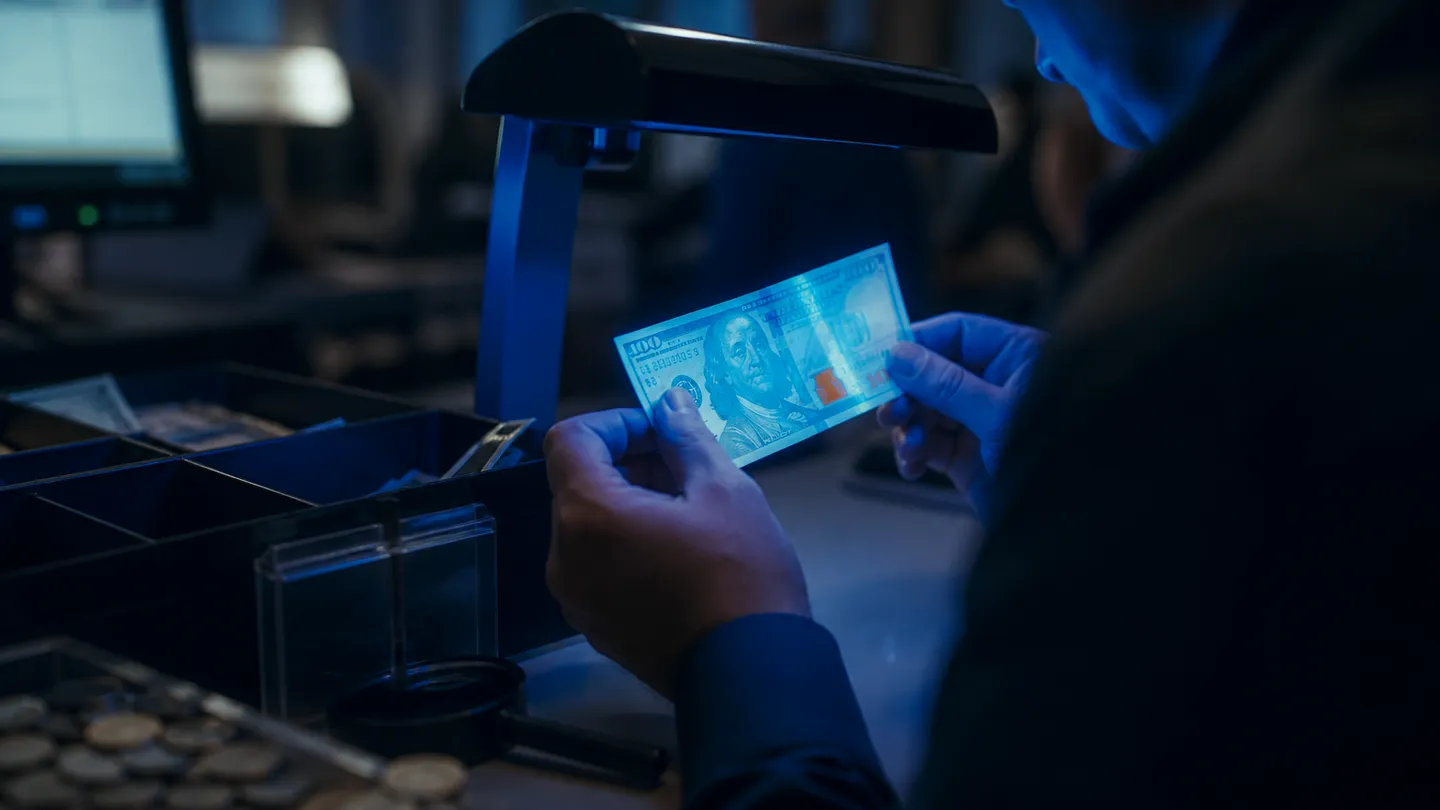
ATMs, banks, and retailers employ various methods to detect counterfeit notes, but it is crucial to understand that their acceptance does not guarantee authenticity. Machines and trained staff check for specific security features, such as the dimensions of the notes, image features, and their responses to ultraviolet and infrared light. They also examine magnetic properties and serial-number patterns to ensure compliance with legal tender standards. However, counterfeiters continually improve their techniques, making it increasingly challenging to identify fake notes.
A common misconception is that if an ATM or self-checkout accepts a banknote, it must be genuine. In reality, these machines may not catch every counterfeit note, especially if it closely resembles a genuine bill. Suspicious deposits can be retained for further investigation, leading to potential legal complications for individuals involved. This is particularly relevant in the context of counterfeit currency transactions, where even minor mistakes can result in serious consequences.
Detection Methods Used by Machines and Staff
- Dimensions: Checking the size of the banknote against standard measurements.
- Image Features: Verifying embedded images and watermarks that should be present on authentic notes.
- Ultraviolet and Infrared Responses: Assessing how the banknote reacts under UV and infrared light, which can reveal hidden security features.
- Magnetic Properties: Testing for specific magnetic attributes that are characteristic of genuine currency.
- Serial Number Patterns: Ensuring that the serial numbers follow expected patterns and haven't been duplicated.
While ATMs and cash-counting machines are equipped with sophisticated technology, they are not foolproof. Retail staff receive training to identify counterfeit notes, but human error can still occur. The U.S. Secret Service and Europol are involved in ongoing efforts to combat counterfeit currency, providing resources and training for financial institutions and retailers.
In summary, while ATMs, banks, and retailers have mechanisms in place to detect counterfeit notes, reliance solely on these systems can be misleading. The presence of a note in circulation does not equate to its legitimacy, and engaging with counterfeit currency carries significant legal risks, as outlined in laws such as 18 U.S.C. §472. Individuals should be cautious and informed about the potential consequences of handling counterfeit money, and consider legitimate alternatives to avoid these pitfalls.
Counterfeit Money vs. Prop Money: The Legal Distinction
Understanding the difference between counterfeit money and prop money is crucial, especially for those exploring the realm of darknet markets. Counterfeit money refers to fake currency that is intended to deceive others into accepting it as legal tender. In contrast, prop money is designed specifically for entertainment purposes, such as in films or theatre productions, and is not considered legal tender. However, the realistic appearance of prop money can lead to misunderstandings and potential legal issues if used improperly.
Prop money typically features prominent markings indicating that it is not real currency. These markings may include the phrase "FOR MOTION PICTURE USE ONLY" or similar disclaimers. Furthermore, prop money is often produced in a size or design that differs from actual banknotes, making it easier to identify as fake. However, individuals should be aware that using prop money in a deceptive manner, such as attempting to pass it off as real currency, can still result in criminal or civil liability. The intent to defraud plays a key role in determining the legal consequences of using prop money.
While prop money is primarily intended for entertainment, its misuse can lead to severe penalties. For example, under U.S. federal law, specifically 18 U.S.C. §472, the use of counterfeit currency with the intent to defraud can result in substantial fines and imprisonment. Similarly, the Forgery and Counterfeiting Act 1981 outlines similar penalties in the UK. The legal distinction between counterfeit and prop money hinges not only on their intended use but also on the intent of the individual using them.
Before using prop money, we recommend ensuring that it complies with local laws and regulations. Being aware of the specific markings and designs can help prevent unintentional legal issues. It's always best to operate within the law, avoiding scenarios that could lead to accusations of deception or fraud. For those interested in prop money options, exploring legitimate sources is advisable to avoid potential pitfalls associated with counterfeit currency.
Common Myths About Darknet Counterfeit Currency
Many myths surround the topic of counterfeit currency on darknet markets. Addressing these misconceptions can help individuals make informed decisions and avoid potential legal issues.
Myth: Small Orders Are Ignored
It's a common belief that placing small orders of counterfeit money will go unnoticed. In reality, law enforcement agencies actively monitor darknet activities, regardless of the order size. Even small transactions can raise red flags and attract scrutiny from agencies like the U.S. Secret Service, which investigates counterfeiting activities under laws such as 18 U.S.C. §472.
Myth: Cryptocurrency Is Untraceable
Another prevalent myth is that payments made with cryptocurrency are completely anonymous and untraceable. While cryptocurrencies like Bitcoin offer a degree of privacy, they are not entirely untraceable. Blockchain analysis can reveal transaction histories, and law enforcement has developed sophisticated methods for tracking cryptocurrency transactions linked to illegal activities. This means that using crypto for purchasing counterfeit currency does not guarantee safety from detection.
Myth: High-Rated Sellers Are Legitimate
Many individuals believe that sellers with high ratings or positive feedback on darknet markets are trustworthy. However, ratings can be manipulated, and high ratings do not equate to legitimacy. Escrow scams are common, where buyers are tricked into paying for counterfeit currency that never arrives. It's essential to approach transactions cautiously, as the risk of being defrauded remains high, regardless of seller ratings.
Myth: ATM Acceptance Makes a Bill Real
Some people think that if an ATM or retail machine accepts a banknote, it must be genuine. This is misleading; while machines are designed to detect counterfeit notes, they are not foolproof. Counterfeiters often produce bills that can pass initial machine checks, leading to potential legal repercussions for individuals who unknowingly use fake currency.
Myth: Prop Money Is Always Legal
Lastly, there is a misconception that all prop money is legal and can be used without consequences. Prop money is designed for entertainment purposes and must have clear markings indicating it is not legal tender. Using prop money in a deceptive manner can lead to severe legal consequences, particularly if there is intent to defraud. Understanding the legal distinctions and ensuring compliance with local regulations is crucial.
By debunking these myths, we hope to shed light on the realities of engaging with counterfeit currency on darknet markets. Staying informed can help individuals avoid pitfalls and legal troubles associated with counterfeit money transactions.
What to Do If You Receive or Suspect a Counterfeit Note
If you receive or suspect that you have counterfeit currency, it is crucial to act promptly and correctly to minimise risks. Here’s a safety-focused checklist to follow:
- Do not spend or deposit the note: Attempting to use a counterfeit note can lead to serious legal consequences, including charges of intent to defraud under laws such as 18 U.S.C. §472 in the USA, which can result in significant fines and imprisonment.
- Do not return the note to circulation: Passing it on to another person can further perpetuate the crime and may implicate you in illegal activities.
- Do not destroy the note immediately: Instead, handle it as little as possible and document where it came from. Take note of where you received it, including the time and place, as this information may be valuable to authorities.
- Avoid confronting anyone: If you suspect someone is involved in passing counterfeit notes, do not approach them directly. This could escalate the situation or put you at risk.
After handling the note, it is advisable to report the incident to the appropriate authorities. You should contact your bank, local police, or the central bank in your country. Procedures for reporting counterfeit currency can vary significantly by location, and reimbursement for the loss is not guaranteed. For example, in the USA, the U.S. Secret Service is responsible for investigating counterfeit currency, while in the UK, Europol may be involved in similar cases.
Always remember that engaging with counterfeit currency, whether knowingly or unknowingly, carries substantial legal risks. Protect yourself by staying informed and following the correct procedures if you come into contact with counterfeit banknotes.
Buyer Risk Matrix and Myth vs. Fact Checklist
| Seller Claim | Probable Outcome | Evidence Trail | Legal Exposure |
|---|---|---|---|
| Small Orders Are Ignored | Scrutiny from law enforcement | Transaction records | Potential charges under 18 U.S.C. §472 |
| Cryptocurrency Is Untraceable | Traceable transactions | Blockchain analysis | Risk of detection and prosecution |
| High-Rated Sellers Are Legitimate | Possibility of scams | Feedback manipulation | Financial loss and legal issues |
| ATM Acceptance Makes a Bill Real | Legal repercussions | Machine acceptance records | Charges of intent to defraud |
| Prop Money Is Always Legal | Severe legal consequences | Misuse documentation | Potential criminal liability |
Common Mistakes and Misconceptions
The labels matter.
Treating Every Offer as the Same Product
Darknet listings may describe counterfeit currency, clearly marked prop money, novelty notes, or goods that the seller never intends to deliver. Buyers often focus on promised appearance rather than identifying what is actually being offered, which obscures both fraud risk and legal exposure. We advise treating unclear or shifting descriptions as a reason to leave, not as an invitation to ask for samples.
Assuming Only the Seller Faces Legal Risk
Some prospective buyers believe enforcement attention falls solely on manufacturers and vendors. Depending on the jurisdiction and circumstances, messages, payment records, shipping details, and an apparent agreement to obtain counterfeit currency may become relevant evidence against a buyer. Before taking any action, we suggest obtaining advice from a qualified local lawyer rather than relying on the seller's interpretation of US law.
Trusting Labels Such as "Novelty" or "Educational Use"
A disclaimer does not automatically determine whether an item is lawful. Sellers may use harmless-sounding labels while displaying notes designed to resemble spendable currency, and authorities can consider the product, communications, and intended use together. We recommend buying genuine prop or novelty products only from transparent businesses whose designs and sales terms clearly match their stated purpose.
Believing a Failed Delivery Removes the Risk
Non-delivery may look like an ordinary online shopping loss because no notes arrive. The buyer can still lose funds, disclose personal information, and leave records showing what they intended to purchase. We suggest avoiding payment disputes or threats through the marketplace, then seeking legal advice if communications could indicate attempted illegal activity.
Assuming Overseas Shipping Avoids Local Law
A seller may claim that production is legal where they operate, but that does not settle the buyer's position in Seattle. Importation, possession, attempted acquisition, and intended use can be assessed under the laws applying to the buyer and destination. We advise against treating a foreign seller's assurances as legal guidance for conduct in the USA.
Before engaging with any supposed fake-money offer, check whether:
- the listing clearly distinguishes counterfeit currency from marked props or novelty products;
- the seller's disclaimer matches the actual appearance and promoted use;
- payment, messages, and delivery details could expose personal information;
- the supposed transaction may simply be a non-delivery scam;
- advice about legality comes from an independent local lawyer rather than the vendor.
Conclusions
The safest choice is to walk away.
- Darknet currency offers expose buyers to possible prosecution, financial loss, stolen personal details, and records that may reveal their intentions.
- Cryptocurrency, small purchases, positive seller ratings, and overseas shipping do not remove the risks attached to a transaction.
- Labels such as "prop", "novelty", or "educational" mean little when the product and surrounding messages suggest deceptive use.
- Before handling a suspicious note in Seattle, avoid spending, depositing, returning, or destroying it; instead, record how you received it and contact your bank or local police.
- For lawful productions, we recommend clearly marked props from transparent retailers rather than anonymous marketplace vendors.
Next, read Fake US Dollars: How to Spot Them to recognise warning signs without testing a note in circulation.
Straight answers
How much jail time for fake money?
In the USA, counterfeit-money offences can lead to imprisonment, but the sentence depends on the conduct, intent, criminal history, and charges involved. Making notes, knowingly passing them, or holding them with an intent to defraud may be treated differently, so we recommend asking a criminal defence lawyer about a specific Seattle case.
Is it illegal to browse dark web markets?
Merely accessing the dark web is not generally illegal in the USA, but a marketplace may contain illegal goods, prohibited material, or undercover activity. Buying, arranging shipment, downloading unlawful content, or helping a criminal transaction can create liability, while browsing and account records may still become evidence.
How illegal is it to use fake money?
Knowingly using counterfeit money as genuine is a serious offence because it involves an intent to defraud. Accidentally receiving a fake note is different, but trying to spend it after discovering or strongly suspecting it is counterfeit can expose the holder to investigation and prosecution.