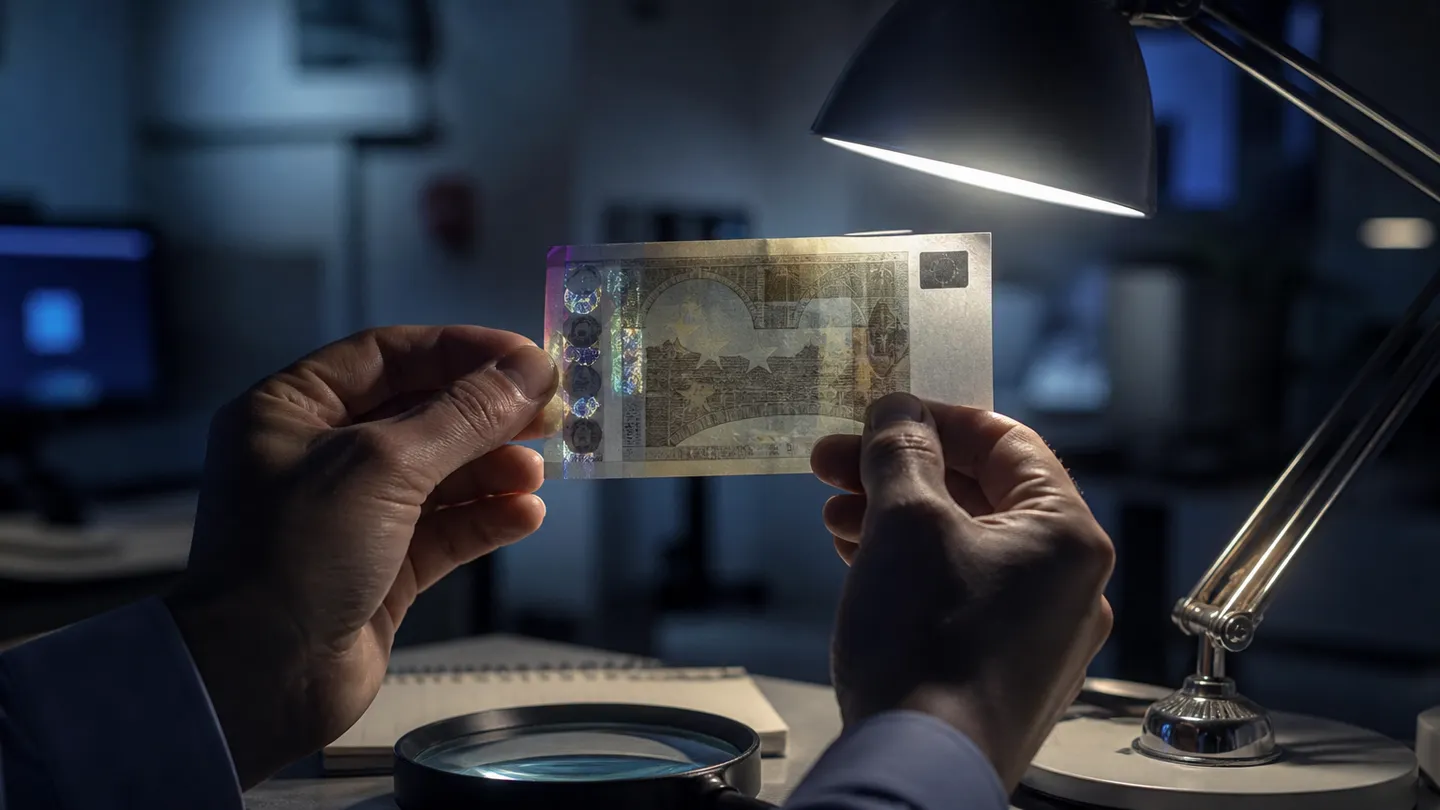
A fake euro note is an imitation made or altered to resemble genuine currency; prop money is not counterfeit unless someone presents it as real. If a note seems suspicious, do not accept, spend, or return it to the payer—check its feel, visible features, and changing features, then contact a bank or local police.
What “Fake Euro Money” Can Mean
Understanding what constitutes "fake euro money" is crucial for anyone handling cash. The term can refer to counterfeit currency, which is designed to deceive and defraud, or to legal prop money, play money, souvenir notes, and specimen money. While counterfeit notes are illegal and can lead to serious consequences, prop money is typically used for entertainment, training, or display purposes and is not intended to be passed off as real currency.
Counterfeit euro notes may closely resemble genuine currency, featuring realistic appearances, holograms, or labels indicating they are "copies." However, the presence of these characteristics does not guarantee legality. For example, prop money may have similar visual features but is explicitly designed to avoid confusion with real currency. The European Central Bank (ECB) regulates the design and security features of euro banknotes, including the Europa series, which incorporates advanced technology such as the portrait watermark, security thread, and hologram.
It’s essential to be aware that knowingly spending or passing counterfeit notes is illegal. If you receive a suspicious euro note, do not attempt to use it. Instead, verify its authenticity by checking its feel, visible features, and changing features, such as the emerald number and satellite hologram. If you are uncertain about a note's legitimacy, consult a bank or your local police for guidance.
In summary, while counterfeit money aims to deceive, prop money serves legitimate purposes and should not be confused. Always exercise caution and ensure you are handling legal currency to avoid potential legal issues. For those interested in prop money options, we recommend exploring more about Prop Money Euro: Realistic Options Available.
How to Check a Euro Note: Feel, Look and Tilt
To ensure that a euro note is genuine, we can follow the European Central Bank's (ECB) three-part method: feel, look, and tilt. This straightforward approach allows us to verify several features of the note safely.
Feel
Start by examining the texture of the note. Genuine euro banknotes are made from a firm cotton paper, which gives them a distinct feel. When we touch the note, we should notice the raised print, especially on the large denomination numerals and the portrait. If it feels smooth or flimsy, it might be counterfeit.
Look
Next, let’s investigate the visible features. Look for the watermark, which is a portrait of Europa, visible when the note is held up to the light. The security thread should also be present, running vertically through the note, and should be visible on both sides. Additionally, check for the transparent portrait window, a feature unique to the Europa series, which displays a holographic image of Europa when viewed correctly.
Tilt
Finally, tilting the note will reveal dynamic features. The hologram located in the bottom corner should change appearance as we tilt the note, showing a shifting image of the value and the euro symbol. The emerald number, which appears on the front of the note, should also change colour from emerald green to bright gold when tilted. Under ultraviolet light, we can check for microprinting and other security features that are difficult to replicate.
Checking Multiple Features
It’s important to remember that we should not rely on a single sign to determine the authenticity of a euro note. Instead, we should check several features and, if possible, compare the suspicious note with one we know is genuine. This method increases our chances of accurately identifying a counterfeit note. If we remain uncertain, consulting a bank or local police is always a wise course of action.
Security Features by Euro Banknote Series and Denomination
The euro banknotes have evolved through two distinct series: the first series and the Europa series. Each series contains specific security features that vary by denomination, crucial for identifying genuine notes. Below is a comparison table highlighting these features.
| Denomination | First Series Features | Europa Series Features |
|---|---|---|
| €5 | Watermark, security thread | Watermark, security thread, portrait window |
| €10 | Watermark, security thread | Watermark, security thread, portrait window |
| €20 | Watermark, security thread | Watermark, security thread, portrait window |
| €50 | Watermark, security thread | Watermark, security thread, portrait window |
| €100 | Watermark, security thread, hologram | Watermark, security thread, hologram, satellite hologram |
| €200 | Watermark, security thread, hologram | Watermark, security thread, hologram, satellite hologram |
| €500 | Watermark, security thread, hologram | Not issued in Europa series |
The Europa series, introduced in 2013, does not include the €500 note, which means that while new €500 notes are no longer being printed, existing €500 notes remain legal tender. This is important to remember if you encounter one of these larger denominations.
In the Europa series, several enhanced features are included to improve security. The portrait watermark—depicting the mythological figure Europa—is visible when held up to the light. The security thread runs vertically through the note and is visible on both sides. A unique addition in the Europa series is the portrait window, which features a holographic image of Europa that can be seen when the note is tilted.
Another significant feature is the emerald number, which changes colour from emerald green to bright gold when tilted. For the €100 and €200 notes, a satellite hologram is present, displaying a shifting image of the value and the euro symbol.
When verifying a euro note, we advise employing the feel-look-tilt method, which includes checking for these specific features. If there are doubts about a note's authenticity, it is best to consult a bank or local authorities for assistance.
Fast Checks for Common Counterfeit Warning Signs
Identifying counterfeit euro notes can be challenging, but there are practical red flags we can look for. By checking specific features, we can quickly assess whether a note is genuine or fake. Here are some common warning signs:
Limp or Waxy Paper
Genuine euro notes are made from high-quality cotton paper, giving them a firm texture. If a note feels limp or has a waxy surface, it is likely counterfeit.
Flat Print Instead of Raised Ink
One of the key features of authentic euro notes is the raised print, especially noticeable on the large denomination numbers and the portrait of Europa. If the print feels flat, it could indicate a fake.
Blurry Microprinting
Euro notes include tiny print that is difficult to replicate. If we notice blurry or missing microprinting, that’s a significant warning sign. Authentic microprinting should be clear and precise.
Simulated Security Threads
A genuine euro note features a security thread embedded in the paper, visible when held up to the light. If the thread appears to be printed on the surface rather than embedded, it is likely a counterfeit.
Incorrect Colours
Each euro denomination has specific colour schemes. If the colours seem off or do not match the known genuine notes, we should be cautious.
Holograms That Do Not Change
Holograms on euro notes should change appearance when tilted. If the hologram remains static or does not display the expected images, it may indicate a fake.
Wear and Tear
It's important to note that wear can weaken tactile clues. An old note may not exhibit all the features clearly, so just because it shows signs of age does not mean it is counterfeit.
To illustrate these points, we can compare a genuine feature of a €20 note with a common imitation. For instance, the genuine note will have a pronounced raised print on the denomination number, while a counterfeit may feel smooth and flat.
By being aware of these signs, we can make informed decisions when handling euro notes. If we remain uncertain, consulting a bank or local authorities is always advisable.
Can UV Lights, Detector Pens or Apps Confirm a Fake Euro?
Using UV lights, detector pens, and apps can assist in checking the authenticity of euro notes, but none of these methods should be solely relied upon for a definitive answer. Each tool has its limitations and can only provide partial verification. For instance, while UV light can reveal certain security features, genuine euro banknotes should not glow uniformly under ultraviolet light. Instead, only specific fibres and printed elements react, with variations depending on the series of the note.
Detector pens, designed to identify counterfeit ink, can sometimes yield false positives or negatives. A genuine euro note may not always react as expected due to the variety of inks used in production. Similarly, phone apps that claim to verify currency can be helpful but often rely on image recognition, which may not capture all the intricate details of a note.
For a more comprehensive check, we recommend using the European Central Bank's multi-feature check method. This involves examining the feel, look, and tilt of the note, which allows us to verify multiple security features at once. If there's still doubt about a note's authenticity after these checks, it’s best to consult a professional verification service or visit your national central bank.
In summary, while UV lights, pens, and apps can support our checks, they should not replace thorough verification methods. Always combine multiple approaches and seek expert advice when uncertain.
Fake Euro Coins: Basic Checks
When it comes to euro coins, particularly the €1 and €2 denominations, counterfeit versions are increasingly common. To ensure that these coins are genuine, we can perform a few basic checks that focus on their physical characteristics.
First, let’s look at the official specifications: the €1 coin has a diameter of 23.25 mm and a weight of 7.50 g, while the €2 coin measures 25.75 mm in diameter and weighs 8.50 g. Using a precise scale and caliper can help us verify these dimensions. If a coin feels lighter or smaller than expected, it may be counterfeit.
Edge Lettering and Colour Separation
One of the distinctive features of euro coins is their edge lettering. The €1 coin has the inscription "1 EURO" repeated four times, while the €2 coin features "2 EURO" in a similar manner. These inscriptions should be crisp and clear. If the lettering appears blurry or poorly defined, this can indicate a counterfeit.
Additionally, the €1 and €2 coins exhibit a bi-metallic structure; the centre of the €1 coin is made of nickel-brass, while the outer ring is copper-nickel. The €2 coin has a similar design, with a different colour separation visible between the core and the outer ring. A genuine coin will have a noticeable contrast between these two sections, while a counterfeit might show a lack of distinct separation or irregular colouring.
Magnetic Behaviour
While not a definitive test, checking the magnetic behaviour of the coins can provide additional clues. Genuine euro coins are not magnetic, so if a coin is attracted to a magnet, it is likely counterfeit. However, reliance solely on this test is insufficient, as some counterfeits might be made with non-magnetic materials that still lack authenticity.
Summary of Basic Checks
To summarise, here are the basic checks we recommend when assessing €1 and €2 coins:
- Diameter and Weight: Verify the dimensions and weight using a caliper and scale.
- Edge Lettering: Check for clear and crisp inscriptions.
- Colour Separation: Ensure that the bi-metallic structure shows a distinct colour difference.
- Magnetic Behaviour: Test with a magnet, but do not rely solely on this method.
By performing these checks, we can significantly reduce the risk of accepting counterfeit euro coins. If you remain uncertain about a coin's authenticity, consulting a bank or your local authorities will provide further guidance.
What to Do If You Receive a Suspected Counterfeit Euro
If you suspect that you have received a counterfeit euro note, it is essential to handle the situation carefully. Firstly, do not spend or return the note to circulation. By trying to use it, you may inadvertently contribute to the problem of counterfeit money. Instead, minimise handling of the note to preserve any evidence that may be necessary for authorities.
Remember to take note of where you received the suspicious note. This information can be crucial for investigations. It is advisable to contact local police, a bank, or the relevant national central bank for guidance. In the euro area, each country has specific procedures for dealing with counterfeit currency, so it is important to follow the correct steps based on your location.
When you report the counterfeit note, be aware that it may be retained by the authorities for examination. Generally, if the note is confirmed to be fake, it will not be reimbursed. This means you could lose the value of that note, which is a risk to consider.
To provide better clarity, here’s a brief overview of what to do:
- Do Not Spend or Circulate: Avoid using the suspected counterfeit note.
- Minimise Handling: Keep the note safe and handle it as little as possible.
- Document the Source: Make a note of where you received the note.
- Contact Authorities: Reach out to local police, a bank, or the national central bank for assistance.
By following these steps, we can ensure that we address the issue of counterfeit euros properly and responsibly. Each euro-area country may have different protocols, so it is important to seek local advice. For further information on handling prop money or other types of currency, feel free to explore our resources.
Common Myths About Fake and Prop Euros
Many misconceptions surround the topic of counterfeit and prop euros. We often hear claims that can lead to confusion about what constitutes authentic currency. One common myth is that a hologram proves a note is real. While holograms are indeed a feature of genuine euro banknotes, they can be replicated in prop money. Therefore, relying solely on the hologram is not sufficient for verification; we should inspect multiple security features, such as the portrait watermark and security thread, to confirm authenticity.
Another prevalent belief is that all €500 notes are fake. This is not true; while the European Central Bank (ECB) has ceased printing new €500 notes, existing ones remain valid. It’s essential to check these notes carefully, as they can still be genuine but may be less frequently circulated, leading to increased scrutiny.
There is also a misconception that detector pens can conclusively verify a note's authenticity. These pens can sometimes yield false positives or negatives, as genuine euro notes may not always react as expected due to variations in inks used. A more comprehensive method involves the feel-look-tilt approach, which examines several security features at once.
Lastly, many believe that banks will always replace counterfeit money. Unfortunately, if you present a counterfeit note, banks are typically obligated to retain it for investigation, and you may not receive reimbursement. This highlights the importance of assessing notes carefully before accepting them.
Realistic 1:1 prop notes and online listings that use phrases such as "movie money" can also pose legal and practical risks. While they may be designed for entertainment purposes, using or attempting to pass them off as real currency can lead to serious legal consequences. We recommend being cautious when handling such items and understanding local laws regarding their use.
In summary, verifying euro notes requires a thorough approach that goes beyond common myths. We should rely on multiple security features and consult authorities if uncertain about a note's authenticity.
Euro Note Security Features and Counterfeiting Overview
| Denomination | Series | Security Features | Counterfeit Rate (per million) | Latest ECB Snapshot |
|---|---|---|---|---|
| €5 | Series 1 | Watermark, Security Thread, Microprinting | Depends on series | As of June 2023: 4.2 |
| €10 | Series 1 | Watermark, Hologram, Raised Print | Depends on series | As of June 2023: 3.8 |
| €20 | Series 1 | Watermark, Hologram, Colour Changing Ink | Depends on series | As of June 2023: 3.5 |
| €50 | Series 2 | Watermark, Hologram, Security Thread | Depends on series | As of June 2023: 2.9 |
| €100 | Series 2 | Watermark, Hologram, Raised Print | Depends on series | As of June 2023: 2.2 |
| €200 | Series 2 | Watermark, Hologram, Microprinting | Depends on series | As of June 2023: 1.7 |
| €500 | Series 2 | Watermark, Hologram, Raised Print | Depends on series | As of June 2023: 1.1 |
Common Mistakes and Misconceptions
Shortcuts create most mistakes. Before accepting a suspicious euro note, we suggest checking three points:
- Identify the denomination and banknote series.
- Compare both sides with an official reference for that same series.
- Establish whether the item is currency, prop money, or play money.
Comparing Different Euro Series
People sometimes compare a first-series note with an image of a Europa-series note and treat every design difference as suspicious. The two series do not share identical layouts or security features, so we should identify the series before examining the watermark, hologram, window, or colour-changing elements. A missing Europa-series feature does not automatically make a first-series note counterfeit.
Treating Wear or Damage as Proof of Counterfeiting
A worn note may feel soft, show faded colours, or have damaged security elements after prolonged handling. Those changes can make a genuine banknote difficult to assess, but poor condition alone does not establish that it is fake. We recommend comparing it with a genuine note of the same denomination and series, then referring uncertain or badly damaged currency for professional examination.
Believing a Prop Label Removes Every Risk
Sellers may describe realistic notes as "prop money", "movie money", or souvenirs, but a product label does not turn the item into spendable currency. Prop and play notes have no monetary value, while counterfeit notes are made to imitate genuine money; problems arise when any imitation is offered as payment or represented as real. We advise keeping realistic props separate from genuine cash and never carrying them in a wallet where they could be handed over accidentally.
Assuming a Convincing Print Job Means the Note Is Genuine
Sharp artwork, convincing colours, and a reflective patch can make an imitation look credible in a photograph or under indoor lighting. Authenticity depends on whether several features behave correctly on the physical note, not whether its overall appearance seems professional. We should examine features belonging to the correct series rather than accepting a polished finish as evidence.
Expecting an Immediate Decision After Reporting
People may expect a bank or authority to identify the note while they wait, but formal examination can require the banknote to be sent elsewhere. Before surrendering it, we suggest asking for a receipt or reference, the expected method of notification, and what happens if the note is found genuine. In Seattle, contact the receiving bank or currency-exchange service beforehand to ask how it handles suspected foreign currency.
Conclusions
- Start with the note itself: we suggest identifying its denomination and series, then checking several corresponding security elements under good lighting.
- Avoid single-test decisions: a hologram, detector pen, magnet, worn texture, or convincing print quality cannot establish authenticity alone.
- Pause the transaction if anything conflicts: do not accept the note until you can compare it with a known genuine example or obtain professional guidance.
- Keep suspicious currency separate: record how you received it, avoid further handling, and ask a bank or relevant authority about examination procedures.
If the item may have been made for filming or display, read our guide to Prop Money Euro: Realistic Options Available next.
Straight answers
How to tell fake money euro?
We suggest feeling the paper, holding the note to light, and tilting it rather than trusting its printed appearance. Genuine security features should be integrated into the banknote and change consistently with viewing angle, while printed imitations often remain flat or reveal crude edges. Compare only with a known genuine euro of the same denomination and series.
What's the most realistic fake money?
There is no dependable category of "most realistic" fake money because appearance varies, and photographs can conceal poor paper, static effects, or missing transparent features. A sophisticated counterfeit may imitate several visible details, while realistic prop money should never be treated as currency. We advise judging the physical note through several security checks, not a seller's realism claim.
Are realistic 1:1 prop euro notes legal?
Legality depends on where the notes are produced, sold, possessed, and used, as well as whether they comply with applicable currency-reproduction rules. Exact-size props that could be mistaken for spendable euros may create legal risk even when labelled "movie money". In Seattle, we advise checking current US reproduction requirements before ordering and using clearly non-spendable designs for filming or display.
What should I do if an ATM or shop gives me a fake euro note?
If you notice the problem during the transaction, stop and ask staff to document it without handing the note to another customer. For an ATM withdrawal, keep the receipt or account record and note the machine, location, and time, then contact the operator and your bank promptly. If the business disputes the source, preserve the note separately and ask Seattle police or the relevant bank how to submit it for examination.