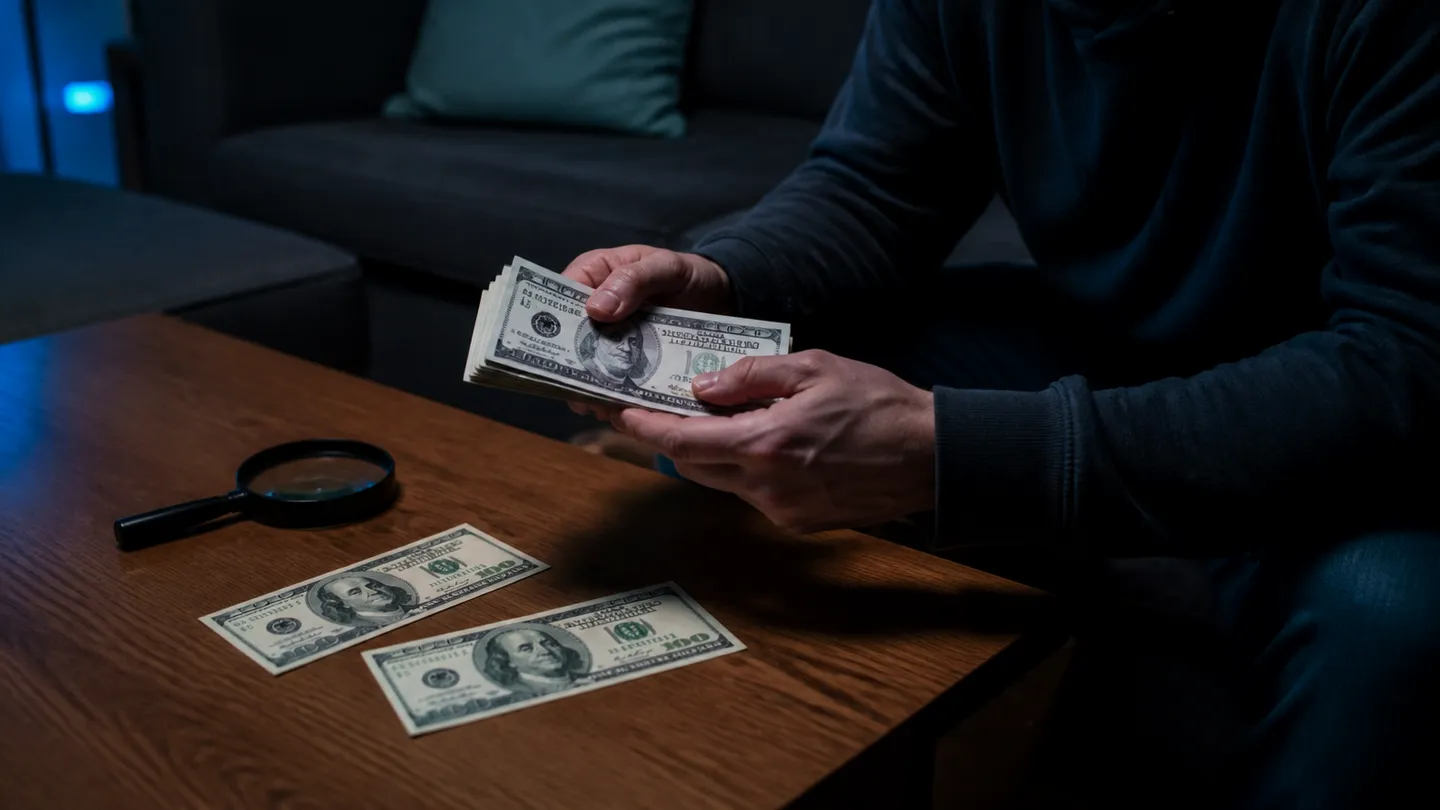
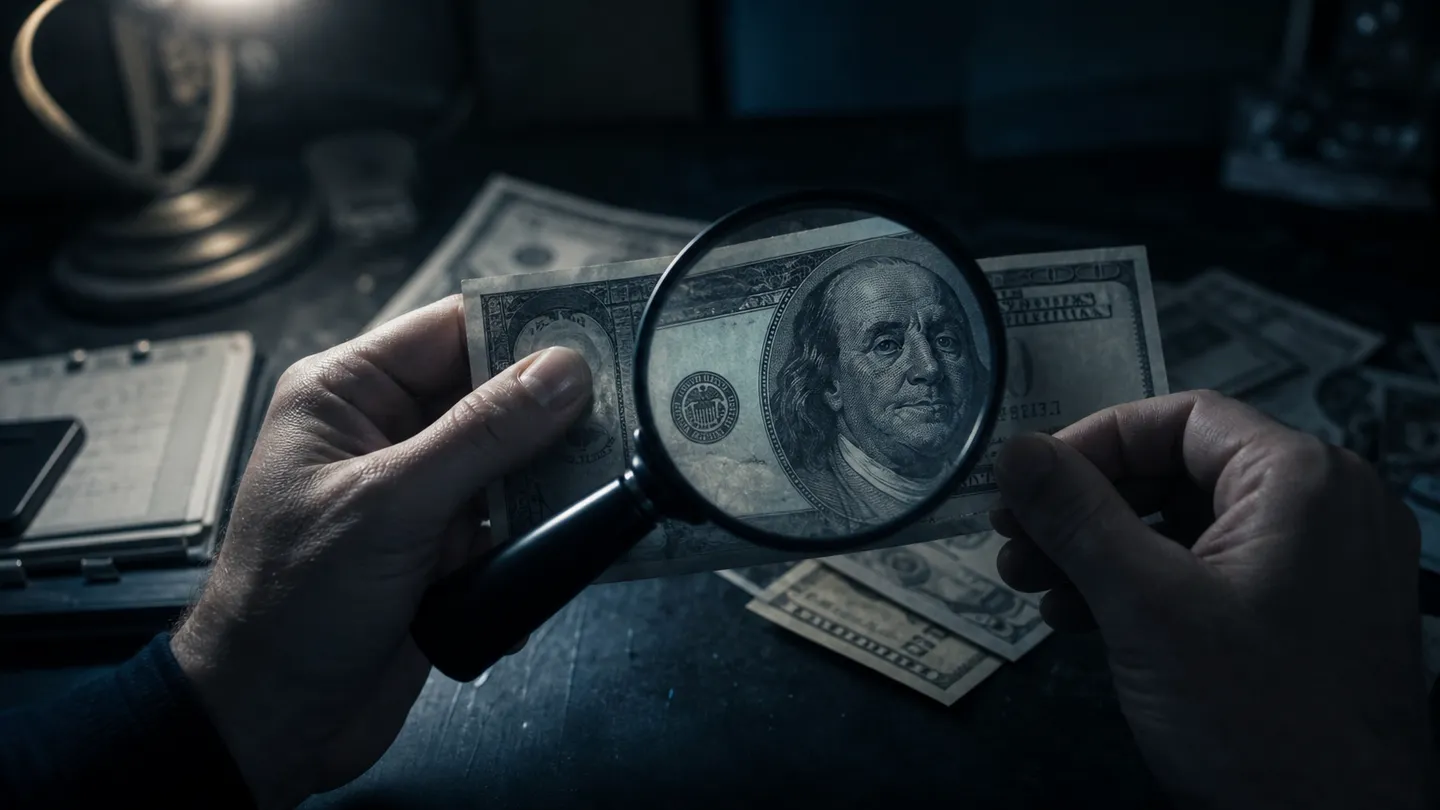
For a fake $100 bill template, we recommend the official U.S. Currency Education Program play-money PDF or a clearly fictional design with conspicuous educational wording.[1][2] If reproducing a colour currency image, keep it one-sided and either smaller than 75% or larger than 150% of a genuine note in every linear dimension, then erase image-bearing files and production materials after final use.[3]
Download a Free, Clearly Fictional $100 Bill Template
We offer several options for downloading a free, clearly fictional $100 bill template. These templates are designed to be distinctly different from genuine currency, ensuring they cannot be mistaken for real money. Each template prominently features large inscriptions like "NOT LEGAL TENDER" and "PROP" or "PLAY MONEY," making their purpose unmistakable.
Available Formats
PDF Template: This one-sided template is ideal for printing. It is designed to be easily printed on standard A4 or letter paper (8.5 x 11 inches). The file size is approximately 1.2 MB.
PNG Template: A high-resolution image format, this template can be used for digital applications or printed out. The file size is around 800 KB, and it maintains clarity even when resized.
SVG Template: This vector format is perfect for those who want an editable template. The SVG can be resized without losing quality, making it versatile for various projects. The file size is about 500 KB.
Each template adheres to federal regulations, which stipulate that reproductions of U.S. currency must be one-sided and either smaller than 75% or larger than 150% of the genuine note in all dimensions[3][4]. This ensures compliance with the law, avoiding any potential legal issues.
Usage Guidelines
These templates are suitable for personal or educational use. They should not be used for any fraudulent purposes, as creating or altering currency with intent to defraud can lead to severe penalties, including fines and imprisonment[5][6]. Always ensure that any printed or digital money template is clearly marked and stored securely.
For a safe and educational choice, we recommend the official play-money options provided by the U.S. Currency Education Program, which includes a variety of denominations tailored for children and educational purposes[1][2].
Which Template Format Should You Choose?
Selecting the right format for your fake $100 bill template is crucial to ensure it meets your needs while complying with legal guidelines. Each format serves different purposes, from quick printing to detailed editing. The following table compares the four most common formats: PDF, PNG, SVG, and editable templates.
| Format | Best For | Characteristics | Recommended Use Case |
|---|---|---|---|
| Quick printing | One-sided, fixed size | Instant printouts for events | |
| PNG | Digital presentations | High-resolution, supports transparency | Use in slideshows or online content |
| SVG | Editing and scaling | Resolution-independent, editable text/colors | Custom designs requiring flexibility |
| Editable | Customisation | Allows text and graphic modifications | Tailored templates for specific needs |
PDF files are ideal for those needing a quick printout. They can be easily printed on standard A4 or letter-sized paper, making them convenient for events or educational purposes. PNG files, on the other hand, are perfect for digital presentations due to their high resolution and support for transparent backgrounds, allowing for seamless integration into various digital formats.
SVG files stand out for their flexibility, enabling users to change text and colours without loss of quality. This makes them suitable for projects where design alterations are necessary. However, it's essential to remember that any template used must adhere to federal regulations, which require that reproductions are either smaller than 75% or larger than 150% of the genuine note in every linear dimension[3][4].
When working with raster files like PNG, we recommend a resolution of 300 DPI. This ensures that your printed copies appear crisp and clear, maintaining a professional look for presentations or displays. Always consider the intended use and audience when selecting your template format to ensure it effectively meets your needs while remaining compliant with legal standards.
How to Customize Your Fake $100 Bill Safely
How to Customize Your Fake $100 Bill Safely
Customising your fake $100 bill can be a fun and creative process, especially for events like birthdays or themed parties. We recommend making it distinctly fictional to avoid any legal issues. One way to do this is by replacing the traditional portrait with a fun photograph, perhaps of the guest of honour or a mascot. This personal touch immediately signals that the bill is not real.
Adding a playful name or title can enhance the whimsical aspect of your bill. For example, you could create "Alex’s Birthday Bucks — 100 Fun Dollars." This not only makes it clear that the bill is meant for entertainment but also adds a personal element that guests will appreciate. Consider including the event name and a humorous denomination to further emphasise its fictional nature.
When it comes to design, using bright colours can help differentiate your prop money from real currency. Avoid copying any official seals, signatures, or elements from genuine notes, as this could lead to legal complications. Instead, choose playful symbols or designs that are clearly not associated with real currency. For instance, you might create a unique serial number like "FUN123456" instead of mimicking the official numbering system.
It’s essential to remember the legal guidelines surrounding the reproduction of currency. According to federal regulations, any colour illustration of U.S. currency must be one-sided and either smaller than 75% or larger than 150% of the genuine note in every dimension[3][4]. By following these rules, you can ensure that your customisation remains within legal boundaries while providing a fun and engaging experience for your guests.
Always make sure to print your customised bills with a clear disclaimer that they are "NOT LEGAL TENDER." This will help in avoiding any misunderstandings about their intended use. For those seeking a safe and educational option, the U.S. Currency Education Program offers free printable play-money cutouts, which can serve as a great starting point for your creative endeavours[1].
How to Print Play Money for Kids, Parties, and Props
Printing play money for various occasions can be a straightforward and enjoyable process, provided we adhere to the necessary regulations. First, it's vital to ensure that any design we create is clearly fictional and cannot be mistaken for real currency. This means using a one-sided reproduction that is either smaller than 75% or larger than 150% of a genuine note in every linear dimension, as stipulated by federal law[3][4]. Additionally, we must include prominent markings like "NOT LEGAL TENDER" to make its purpose unmistakable.
When selecting materials, we recommend using ordinary printer paper rather than any type of paper or coating that mimics the texture or appearance of real currency. Genuine Federal Reserve notes have a unique composition that includes cotton and linen, giving them a distinct feel[7]. Instead, our play money should be printed on standard paper to avoid any legal complications associated with counterfeit currency[5][6].
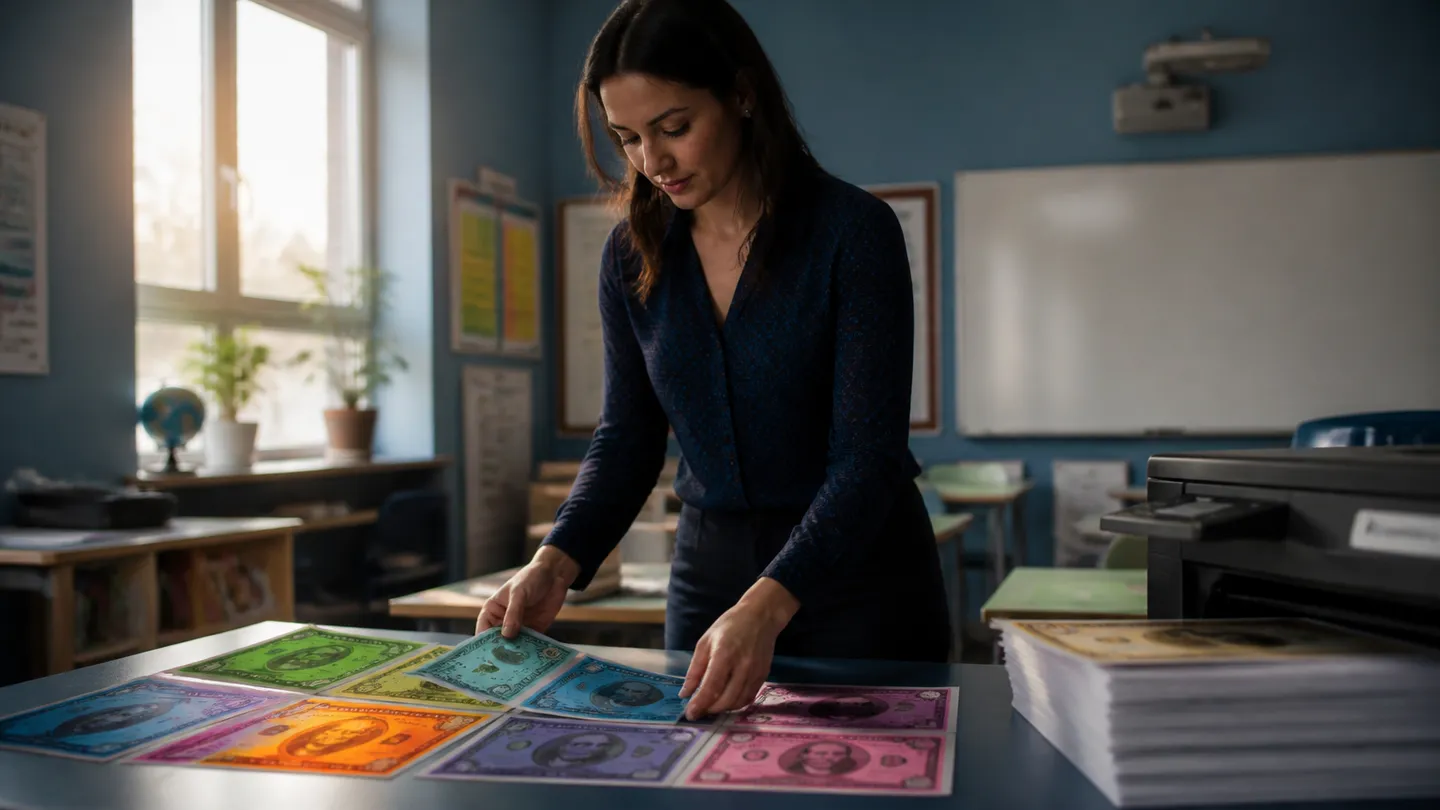
For those looking to create larger displays or educational tools, we can offer templates that print multiple bills on a single Letter or A4 sheet. Options include layouts with one, four, or nine bills per page, allowing for versatility depending on the intended use—be it for a poster, gift coupons, or classroom activities. Each template can be adjusted to suit our needs while maintaining compliance with the law.
Recommended Printing Guidelines
- Paper Type: Use standard printer paper; avoid any special coatings or textures.
- Design Features: Make sure the design is one-sided and includes clear markings like "NOT LEGAL TENDER."
- Template Layouts: Choose from layouts with one, four, or nine bills per Letter/A4 sheet for various uses.
We can also consider using formats like PDF for quick printing or SVG for editable designs, ensuring that our templates remain user-friendly and easy to modify. Each format has its advantages: PDFs are great for instant printouts, while SVG files allow for customisation without losing quality.
In summary, printing play money can be a fun addition to events or educational activities, as long as we remain mindful of the legal requirements and design guidelines. By choosing the right templates and materials, we can create engaging, safe, and clearly fictional currency for all to enjoy.
Is It Legal to Print a Fake $100 Bill?
In the United States, the legality of printing a fake $100 bill is governed by specific federal regulations. Under 18 U.S.C. § 471, creating or altering U.S. currency with the intent to defraud is a serious offence, punishable by fines and imprisonment for up to 20 years[5]. Additionally, 31 CFR Part 411 outlines the requirements for reproducing currency images, stating that any colour illustration must be one-sided and either smaller than 75% or larger than 150% of the genuine note in every linear dimension[3].
It is a common misconception that simply marking a bill as "PROP MONEY" renders it legal. While this designation is important, it is not sufficient on its own. The design, scale, and overall presentation of the prop money must also comply with legal standards. For instance, if a $100 bill is printed at actual size or includes both sides, it could be considered counterfeit, regardless of any disclaimers[4]. The U.S. Secret Service closely monitors the reproduction of currency, and any attempt to pass or sell counterfeit notes can result in severe penalties[6].
It is crucial to understand that the rules regarding counterfeit currency can vary significantly in other countries. Therefore, if you are considering creating prop money for use outside the U.S., we recommend researching the specific laws applicable to your location.
Before proceeding with any project involving fake currency, we advise consulting a legal expert to ensure compliance with all relevant laws. Remember, our guidance does not replace professional legal advice. For safe and educational play-money options, consider using the official resources provided by the U.S. Currency Education Program, which includes free printable templates specifically designed for educational purposes[1][2].
What Does a Fake $100 Bill Look Like?
Recognising the differences between a genuine $100 bill, a clearly fictional prop money, and an obvious counterfeit is essential for parents, teachers, and event organisers. Genuine U.S. currency, specifically the current-design $100 note, features several distinct security elements. These include a copper-to-green numeral 100, a blue 3-D security ribbon woven into the bill, and a watermark of Benjamin Franklin that can be seen when held up to the light. Additionally, there are colour-shifting elements, such as the bell in the Inkwell, that change colour when viewed from different angles[8][9].
In contrast, a clearly fictional template that we might use for educational or entertainment purposes intentionally lacks these security features. For example, our printable $100-style template will not include a security thread or watermark, making it evident that it is not real currency. Instead, it should have a whimsical design with playful elements that signal its fictional nature, such as bright colours and humorous text. This helps to ensure that anyone who sees the bill knows it is meant for fun rather than legitimate transactions.
An obvious counterfeit, on the other hand, may attempt to mimic the genuine note closely but often fails to replicate the intricate details and feel of real currency. For instance, counterfeit bills might not have the same texture, as genuine Federal Reserve notes are composed of 75% cotton and 25% linen, giving them a distinct tactile quality[7]. Moreover, counterfeit bills may lack the required legal disclaimers, such as "NOT LEGAL TENDER," which is crucial for compliance with regulations[3].
To remain compliant with federal guidelines, any reproduction of currency must be one-sided and either smaller than 75% or larger than 150% of the genuine note in every linear dimension[3][4]. Our template is designed to meet these requirements and should be used solely for educational or entertainment purposes. By understanding these differences, we can create a safe and enjoyable experience while avoiding any legal issues associated with counterfeit currency.
Common Mistakes to Avoid with Printable Money Templates
Creating printable money templates can be a fun and engaging activity, but there are several common pitfalls we should avoid to ensure compliance with legal standards and maintain clarity in our designs. One major mistake is printing a realistic image on both sides of the bill. According to federal regulations, any colour illustration of U.S. currency must be one-sided to avoid confusion with real money[3]. Additionally, printing at actual size can lead to legal issues; the dimensions must be smaller than 75% or larger than 150% of the genuine note[4].
Another critical error is failing to include noticeable markings that indicate the money is not real. We recommend adding "NOT LEGAL TENDER" prominently on the template. This is essential not just for clarity but also to avoid potential legal repercussions associated with counterfeiting laws, which can result in severe penalties[5][6]. Moreover, copying official seals or signatures can lead to legal trouble, so we should create unique designs that do not resemble any genuine currency elements.
Using templates without verifying their licensing can also be problematic. Many free downloads may not allow for commercial use, which can lead to legal disputes if the templates are used inappropriately. It's crucial to check the licensing information to ensure that we are compliant, especially if we intend to use the templates for any commercial purposes.
Checklist Before Printing
- Ensure the design is one-sided.
- Verify the size is either smaller than 75% or larger than 150% of the genuine note.
- Include clear markings stating "NOT LEGAL TENDER."
- Avoid copying any official seals, signatures, or identifiable features.
- Confirm the licensing terms for any templates used.
- Print on standard paper, not any material that mimics real currency.
- Use bright colours and whimsical designs to signal the fictional nature.
Understanding the difference between "free download" options and those with commercial-use licenses is vital. A free download may allow personal use only, while a commercial-use license permits broader applications, including public distribution or sale. Therefore, we should always review the licensing terms to avoid any unintended violations.
By avoiding these common mistakes and following our checklist, we can create effective and compliant printable money templates that serve their intended purpose without legal complications.
Fake $100 Bill Template FAQ
We often receive questions about our fake $100 bill template, especially regarding its use, formatting, and printing. Here are some quick answers to common queries:
Is there a free PDF version available?
Yes, we provide a free printable PDF of the fake $100 bill template. This template is designed to be clearly fictional and unsuitable for use as real currency.
Can I edit the template?
Absolutely! Our template is available in various formats, including PNG and SVG. The SVG format is particularly useful as it allows for easy editing without losing resolution, making it ideal for customisation[10].
What about printing for children or events?
When printing for children or events, ensure that the design is clearly marked as "NOT LEGAL TENDER." This helps to avoid any confusion. The template should also be printed on standard paper, not any material that mimics the texture of real currency[7].
Why should I avoid printing a double-sided version at actual size?
Printing a double-sided version at actual size does not comply with federal regulations. According to 31 CFR § 411.1, any colour reproduction must be one-sided and either smaller than 75% or larger than 150% of the genuine note in every linear dimension[3][4]. Failing to adhere to these guidelines could lead to legal issues.
Are there templates for other denominations?
Yes, if you're looking for play money in other denominations, we recommend checking out our separate templates for $1, $2, $5, $10, and $20 bills. These templates are designed to be clearly fictional and are suitable for educational or entertainment purposes[1].
By keeping these guidelines in mind, we can create fun and safe experiences with our fake $100 bill template while ensuring compliance with legal standards. If you have further questions, don’t hesitate to reach out!
Fake $100 Bill Template Options and Checklist
| Format | Description | Legal Compliance | Download Link |
|---|---|---|---|
| Instant print, clear fictional design | One-sided, marked as 'NOT LEGAL TENDER' | [Download PDF] | |
| PNG | Easy for quick use, fixed size | One-sided, marked as 'NOT LEGAL TENDER' | [Download PNG] |
| SVG | Editable, scalable without losing quality | One-sided, marked as 'NOT LEGAL TENDER' | [Download SVG] |
| Checklist | Ensure compliance before printing | 1. One-sided design 2. Size: <75% or >150% 3. Clear markings | N/A |
Common Mistakes and Misconceptions
Treating "PROP MONEY" as a Complete Safeguard
A label cannot fix an otherwise realistic design. People add "PROP MONEY" but retain the portrait, layout, denomination and security-style details, leaving the result easy to misunderstand when folded, photographed or viewed from a distance. We advise changing several visual signals at once: use fictional wording, an invented issuer, unusual colours, a non-currency purpose and prominent text on the main design area.
Choosing a File Format Without Considering Its Use
The easiest download is not always the right working file. A PDF suits controlled printing, a PNG is convenient for placing a fixed raster image into invitations or worksheets, and an SVG allows text and vector shapes to remain editable and sharp when resized[10]. Before downloading, we should also check the licence separately, because PDF, PNG and SVG describe file formats rather than permission to modify, distribute or sell the artwork.
| Format | Best suited to | Main limitation to check |
|---|---|---|
| Printing a finished layout | Editing may be restricted or awkward | |
| PNG | Slides, worksheets and digital mock-ups | Enlarging may reduce print quality |
| SVG | Changing names, colours and fictional values | Editable elements can be altered into an unsafe design |
Making the Template More Realistic Than the Activity Requires
Realism often adds risk without improving the project. Copying a Benjamin Franklin watermark, a woven blue ribbon or colour-shifting features can make a prop resemble the current-design note, whose authentic version uses those elements for verification[8]. We suggest a safer design checklist: replace the portrait, rename the issuer, remove security-style graphics, use obviously playful artwork and preview the print in greyscale as well as colour.
Using One Design for Children, Parties, Coupons and Theatre
These settings need different visual cues. For children, we would favour the official educational approach, which replaces authentic wording with conspicuous learning-focused text[2]; for a Seattle party, an oversized "Birthday Bucks" design can show the guest’s name and event date instead of a cash denomination. A gift coupon should state the reward and issuer, while stage money should remain recognisable to the audience but clearly fictional when handled close-up.
Assuming an Unprinted Editable File Is Harmless
A digital template can create problems before it reaches a printer. Federal law covers analog, digital and electronic currency images when they are handled with intent to defraud, so keeping or sharing an editable file is not automatically harmless[11]. We should restrict editing access, export only the clearly fictional version needed for the activity, and erase image-bearing files and production materials after final use where the federal illustration conditions require it[3].
Forgetting What Happens After the Event
People often plan the printout but not its collection and disposal. Loose props can leave a classroom, party venue or Seattle theatre and later appear without the context that made their purpose obvious. Before distributing them, we should count the copies, brief supervising adults, prohibit use outside the activity and collect or destroy every remaining piece afterwards.
Conclusions
- Start with the activity. We recommend defining whether the template is for a classroom, Seattle event, stage production or private craft project.
- Make the artwork unmistakably fictional through invented names, playful colours and original imagery rather than details associated with genuine currency.
- Match the file type to the task: choose PDF for straightforward printing, PNG for digital layouts or SVG when customisation is required.
- Before distributing copies, confirm the licence, restrict editing access, explain acceptable use and arrange collection or disposal after the activity.
For the next step, use our Fake Dollar Bill Template: Creating Your Own guide to plan a clearly fictional design from scratch.
Straight answers
What does a fake $100 bill look like?
There is no single appearance shared by every fake $100 bill. We advise comparing a suspicious note with a genuine current-design bill, which has a woven blue 3-D Security Ribbon, a Benjamin Franklin watermark, a security thread marked "USA 100", and colour-shifting copper-to-green details[8]. Ordinary printer-paper texture is another warning sign because genuine note paper is 75% cotton and 25% linen, with embedded red and blue fibres and slightly rough raised printing[7].
How can I print money for kids?
We recommend downloading the free play-money cutouts or colouring sheets from the U.S. Currency Education Program, which provides classroom materials covering $1, $2, $5, $10, $20, and $100 denominations[1]. Its official $100 PDF uses conspicuous wording such as "CURRENCY EDUCATION PROGRAM" instead of authentic currency text[2]. Before printing, we would still check that children understand it is learning material and cannot be spent.
How much is an old $100 bill worth?
An old-design $100 Federal Reserve note issued from 1914 onward remains legal tender and retains its face value[12]. It may have additional collector value, but that depends on features such as condition, series and rarity, so we suggest asking a currency dealer or numismatic organisation for an individual assessment[12]. Avoid cleaning, trimming or writing on the note before it is assessed.
Links and references
- 1. Download Materials | U.S. Currency Education Program
- 2. CEP - Play Money Coloring Sheet - English (Digital)
- 3. eCFR :: 31 CFR 411.1 -- Color illustrations authorized.
- 4. The Fed - Chapter 1. Balance Sheet
- 5. 18 USC 471: Obligations or securities of United States
- 6. Currency Image Use | U.S. Currency Education Program
- 7. The Buck Starts Here: How Money is Made | Engraving & Printing
- 8. Decoding Dollars $100 | U.S. Currency Education Program
- 9. The Seven Denominations | U.S. Currency Education Program
- 10. Scalable Vector Graphics (SVG)
- 11. 18 USC 474: Plates, stones, or analog, digital, or electronic images for counterfeiting obligations or securities
- 12. Frequently Asked Questions | U.S. Currency Education Program