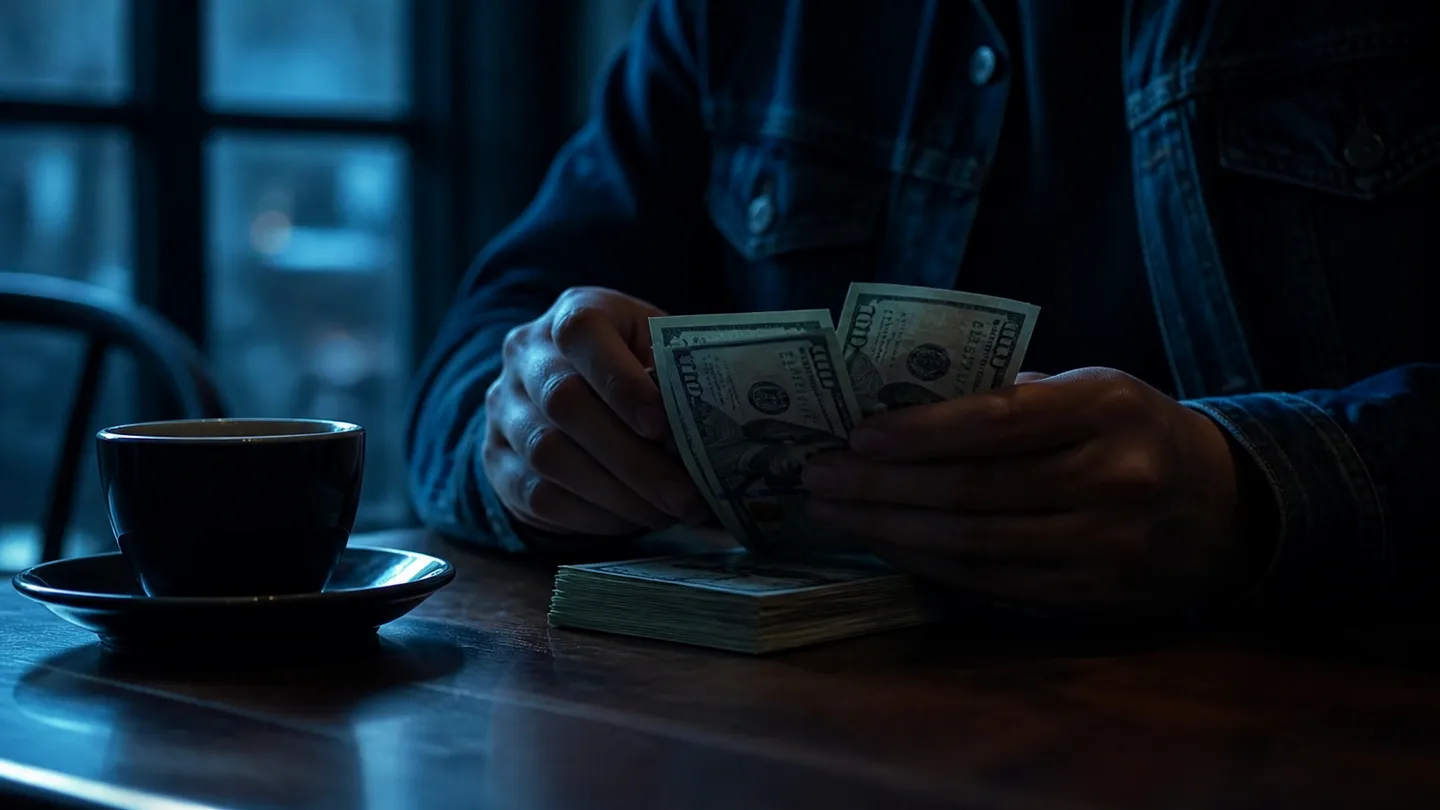
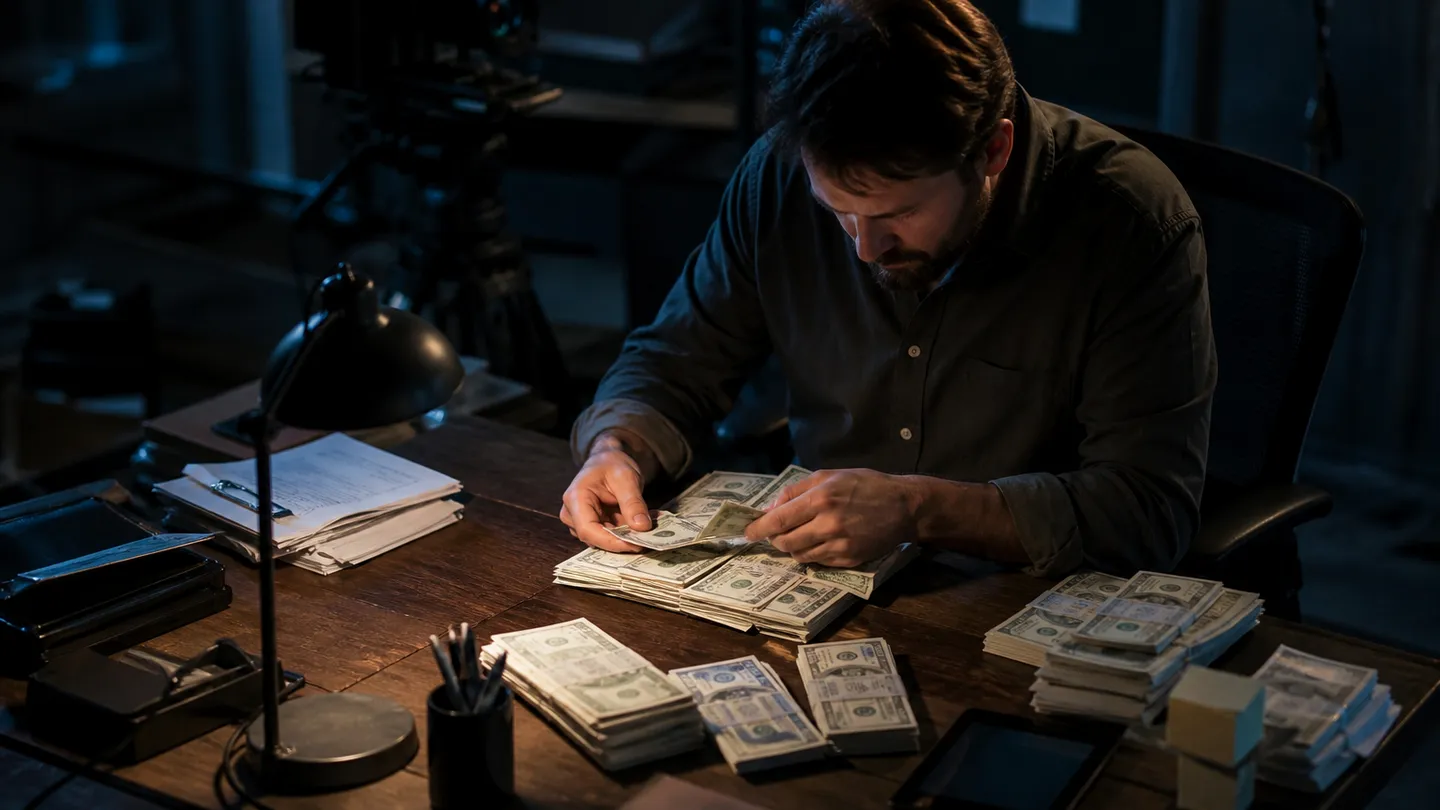
"Fake money 100" usually refers to a counterfeit or prop hundred-dollar bill. Counterfeit currency is intended to pass as real money and is illegal, while prop money should be clearly identifiable as not legal tender; we recommend using marked props only for filming, photography, education, events, or novelty displays, never for payment.
Fake $100 Bills, Prop Money, and Play Money: What Is the Difference?
Understanding the distinctions between counterfeit currency, prop money, play money, and novelty notes is essential to avoid confusion and legal issues. Counterfeit currency refers to fake money created with the intent to deceive, passing as genuine currency. This is illegal and punishable under laws such as 18 U.S.C. § 504. In contrast, prop money is designed specifically for use in film, theatre, and photography, and it must be clearly marked to indicate that it is not real money.
Prop money typically features labels such as "COPY" or "Motion Picture Use Only," which help to distinguish it from authentic currency. These markings are crucial, as they prevent any potential misuse. Prop money may look realistic but is not intended for actual transactions. For example, prop bills often include visual elements that mimic real currency, such as the Benjamin Franklin watermark, blue 3-D security ribbon, and embedded security thread, but they do not possess the same legal standing as genuine notes.
Play money, on the other hand, is primarily used for children's games and educational purposes. It is often brightly coloured and designed to be clearly distinguishable from real money, making it unsuitable for any serious use. Novelty money may also fall into this category, often created for advertising or promotional purposes.
A common myth is that any item resembling money is illegal. While it's true that attempting to pass off fake currency as real can lead to criminal charges, using clearly labelled prop or novelty money for legitimate purposes is perfectly legal. Always remember to check the markings and intended use of any money-like items before using them in your projects.
For more information on identifying counterfeit currency, we recommend visiting our guide on Fake US Dollars: How to Spot Them.
Best Realistic $100 Prop Money Options by Use Case
When selecting prop money for various scenarios, it’s important to consider how realistic the notes need to appear and the specific requirements of your project. Below, we compare several options available in the market, focusing on their suitability for film close-ups, background scenes, music videos, photography, parties, and educational purposes.
Comparison of Prop Money Options
Superbills Prop Money
- Bill Count: 100
- Dimensions: Standard (6.14" x 2.61")
- Printing: One-sided
- Visible Disclaimers: "COPY" marking
- Seller Type: Online retailer
- Current Price: $19.99
- Price per 100 Bills: $19.99
- Use Case: Excellent for close-up shots in films.
Prop Money Shop
- Bill Count: 50
- Dimensions: Standard
- Printing: Two-sided
- Visible Disclaimers: "Motion Picture Use Only"
- Seller Type: Specialty shop
- Current Price: $14.99
- Price per 100 Bills: $29.98
- Use Case: Ideal for educational purposes and events.
Money Factory Prop Money
- Bill Count: 100
- Dimensions: Standard
- Printing: One-sided
- Visible Disclaimers: "COPY" marking
- Seller Type: Online marketplace
- Current Price: $24.95
- Price per 100 Bills: $24.95
- Use Case: Suitable for background scenes and parties.
Realistic Prop Money
- Bill Count: 100
- Dimensions: Standard
- Printing: Two-sided
- Visible Disclaimers: "COPY" marking
- Seller Type: Online retailer
- Current Price: $29.99
- Price per 100 Bills: $29.99
- Use Case: Great for music videos and photography.
Cinematic Props
- Bill Count: 200
- Dimensions: Standard
- Printing: Two-sided
- Visible Disclaimers: "Motion Picture Use Only"
- Seller Type: Film supply store
- Current Price: $39.99
- Price per 100 Bills: $20.00
- Use Case: Perfect for extensive film shoots requiring multiple scenes.
Stage Money
- Bill Count: 100
- Dimensions: Standard
- Printing: One-sided
- Visible Disclaimers: "COPY" marking
- Seller Type: Event supply company
- Current Price: $15.99
- Price per 100 Bills: $15.99
- Use Case: Best for novelty displays and parties.
Key Considerations
When choosing prop money, ensure that it is clearly marked to avoid any legal issues associated with counterfeit currency. The U.S. Secret Service and regulations like 18 U.S.C. § 504 outline the importance of using properly labelled prop money for educational and entertainment purposes. Always verify the terms of use with the seller to ensure compliance with legal requirements.
Each of these options serves different needs, so consider the context of your project when making a selection.
$100 Prop Money Comparison Table
When selecting prop money for your project, it's helpful to compare options based on various criteria. Below, we present a table that ranks different types of $100 prop money by intended use, camera realism, close-up suitability, markings, pack size, and value. Each entry includes a "best for" scenario and a limitation to guide your choice.
| Prop Money Option | Intended Use | Camera Realism | Close-Up Suitability | Markings | Pack Size | Price | Best For | Limitation |
|---|---|---|---|---|---|---|---|---|
| Superbills Prop Money | Film, Photography | High | Excellent | "COPY" | 100 bills | $19.99 | Close-up shots | One-sided printing |
| Prop Money Shop | Education, Events | Moderate | Good | "Motion Picture Use Only" | 50 bills | $14.99 | Classroom activities | Fewer bills per pack |
| Money Factory Prop Money | Parties, Background Scenes | Moderate | Fair | "COPY" | 100 bills | $24.95 | Background scenes | One-sided printing |
| Realistic Prop Money | Music Videos, Photography | High | Excellent | "COPY" | 100 bills | $29.99 | High-quality visuals | Higher price |
| Cinematic Props | Film Shoots | High | Excellent | "Motion Picture Use Only" | 200 bills | $39.99 | Extensive film shoots | More expensive |
| Stage Money | Novelty Displays, Parties | Low | Poor | "COPY" | 100 bills | $15.99 | Fun events | Less realistic appearance |
Selecting the right prop money depends on your specific needs. For close-up shots in films, we recommend the Superbills Prop Money due to its high realism. However, if you're organising an educational event, the Prop Money Shop option is ideal, despite having fewer bills. Always ensure that the prop money is properly labelled to comply with the legal requirements set by the U.S. Secret Service and relevant laws like 18 U.S.C. § 504.
When considering your project, remember that quality and intended use can significantly impact your choice of prop money.
What Makes Prop Money Look Realistic on Camera?
Several factors contribute to the realistic appearance of prop money when viewed through a camera lens. Key aspects include print sharpness, colour consistency, paper movement, stack thickness, and edge alignment. Each of these elements plays a significant role in how convincingly the prop money mimics genuine currency. For instance, high-resolution printing ensures that details such as the Benjamin Franklin watermark and intricate patterns are clear and crisp, which can be vital for close-up shots.
Colour consistency is equally important. Authentic U.S. currency features specific shades that can shift slightly depending on lighting. When selecting prop money, we recommend that it adheres closely to these colour characteristics to maintain realism. The movement of the paper can also affect how it appears on camera; prop money should mimic the feel of real currency while being lightweight enough for easy handling. Additionally, stack thickness should be considered; a stack that is too thin or too thick can draw attention away from the overall believability of the scene.
Visible disclaimers, such as "COPY" or "Motion Picture Use Only," are crucial in distinguishing prop money from real currency. These markings must be strategically placed to avoid being overly prominent in close-ups, as they can detract from the realism. However, they are necessary for legal compliance and to prevent misuse. It is essential to ensure that these disclaimers are subtle yet legible, allowing the prop money to serve its intended purpose without causing confusion.
Camera realism differs from checkout-counter similarity. While prop money may look convincing on screen, it should not be mistaken for actual currency during transactions. We advise using clearly marked props and making thoughtful framing choices rather than attempting to alter the prop money to look more like real bills. The genuine U.S. bill size of approximately 6.14 × 2.61 inches is relevant for understanding proportions but should not be used as a template for reproduction. Properly designed prop money will meet the visual needs of your project while adhering to legal standards, allowing for a seamless integration into your filming or photography efforts.
Buyer’s Checklist for $100 Prop Bills
When purchasing $100 prop money, it’s essential to consider several factors to ensure you get the best value for your project. Here’s a checklist to guide your decision-making process:
Key Factors to Consider
Intended Shot Distance: Determine how close the camera will be to the prop money. For close-up shots, opt for higher-quality options that closely mimic real currency.
Front/Back Printing: Check whether the prop money features printing on both sides. Two-sided notes generally appear more realistic in various filming scenarios.
Readable Prop Markings: Ensure that the money includes clear disclaimers such as "COPY" or "Motion Picture Use Only." These markings are essential for legal compliance and should be discreet enough not to detract from the scene.
Quantity: Consider how many bills you need. It’s often more cost-effective to buy in bulk, but ensure that the total number fits your project requirements.
Material: Look for prop money made from high-quality materials that resemble the feel of real currency. This can affect how the money looks on camera.
Return Policy: Before purchasing, review the seller's return policy. A flexible return option is beneficial if the product does not meet your expectations.
Customer-Uploaded Images: Check if the seller provides customer-uploaded images. These can give you a better idea of the product’s realism and quality.
Seller Transparency: Choose sellers who are transparent about their products, including detailed descriptions and specifications.
Delivery Time: Consider how quickly you need the prop money. Ensure that the seller can meet your timeline.
Calculating Value
To assess the value of your purchase, divide the total price by the number of bills to find the price per bill. For instance, if you buy 100 bills for $29.99, the calculation would be $29.99 ÷ 100 = $0.2999 per bill. Additionally, you can calculate the price per 100 bills to compare different listings effectively.
Watch for Misleading Listings
Be cautious of listings where "100" refers to the denomination rather than the number of bills. For example, a listing stating "100 $100 bills" may only be selling one bill, which can lead to confusion and disappointment. Always verify the quantity included in the purchase.
Verify Current Listings
Before making a purchase, check the current listing photos and specifications rather than relying solely on titles claiming "realistic." This ensures you have the most accurate representation of what you're buying.
By following this checklist, you can make a more informed decision when selecting $100 prop money for your project. Remember, quality and compliance with legal standards are key to successfully using prop money in any context.
Where to Buy $100 Prop Money Safely
When looking to purchase $100 prop money, the choice of supplier can significantly impact your experience and the quality of the product. We can compare several types of vendors: specialist film-prop suppliers, major marketplaces like Amazon and eBay, party stores, and educational retailers. Each option presents its own trade-offs in terms of selection, documentation, quality consistency, returns, and seller risk.
Specialist film-prop suppliers typically offer high-quality prop money specifically designed for film and photography. These products usually include clear disclaimers such as "Motion Picture Use Only" and often feature realistic details like the Benjamin Franklin watermark and embedded security threads. However, prices may be higher, and the selection might be limited to specific denominations or styles. For example, you might pay around $39.99 for a pack of 100 bills, ensuring that they are suitable for professional use.
Major marketplaces like Amazon and eBay provide a vast selection of prop money options at various price points. While this can be convenient, the quality can be inconsistent, and there’s a risk of encountering sellers who do not adhere to proper documentation. It's crucial to verify that the listings include clear prop disclosures and avoid sellers that claim their notes will pass counterfeit checks or other tests. Always check the seller's ratings and reviews to mitigate risks.
Party stores and educational retailers often carry novelty and play money, which may be cheaper but can lack the realism needed for film or photography. These options might be marked with "COPY" but may not meet the quality standards required for professional projects. If you're planning a fun event, this could be a good choice; however, for serious filmmaking, they may not be suitable.
To ensure a safe purchase, we recommend opting for products that explicitly state their intended use and include visible disclaimers. Avoid any listings that suggest the prop money can pass counterfeit detection methods. This not only protects you legally but also ensures that your project maintains authenticity without risking confusion with real currency. Always prioritise quality and legal compliance when selecting your prop money supplier.
Is Realistic $100 Prop Money Legal?
Is Realistic $100 Prop Money Legal?
Understanding the legal status of realistic $100 prop money in the U.S. is crucial for filmmakers and content creators. The distinction between lawful reproductions and counterfeit currency is outlined in federal statutes, specifically 18 U.S.C. § 504 and 31 CFR § 411.1. These regulations specify that reproductions of U.S. currency must adhere to certain size and marking requirements to avoid being classified as counterfeiting.
According to 18 U.S.C. § 504, any reproduction must be less than 75% or more than 150% of the original linear dimensions of the bill. Furthermore, any reproduction should be one-sided and, if applicable, the production materials must be destroyed after use. Simply marking the prop money with "COPY" does not exempt it from legal scrutiny; it must still comply with these federal guidelines to prevent any fraudulent use.
For example, a prop money piece that is the same size as a genuine $100 bill could easily be mistaken for real currency, leading to potential legal issues. The inclusion of a "COPY" label is necessary but not sufficient for legal compliance. It is essential to ensure that all prop money is clearly marked and adheres to the aforementioned size regulations.
It's worth noting that laws regarding prop money may differ outside the United States. Therefore, productions operating in other countries should confirm local legal requirements to avoid complications. Always check the relevant regulations in your jurisdiction before using prop money in any context. By being informed and compliant, we can ensure that our projects run smoothly and legally.
Fake $100 Bill vs. Real: Security Features and Common Myths
When distinguishing between a genuine $100 bill and a counterfeit, we can rely on several key security features outlined by the U.S. Currency Education Program. Notable elements include the woven blue 3-D security ribbon, the Benjamin Franklin watermark, an embedded security thread, the colour-shifting numeral "100," and the bell in the inkwell. These features are designed to be visible under certain conditions, making them essential checks for anyone handling cash.
For example, the blue 3-D security ribbon shifts in appearance when the bill is tilted. The Franklin watermark is visible from both sides of the note and is best seen when held up to the light. The embedded security thread glows under UV light, while the colour-shifting numeral changes from green to black when tilted. Lastly, the bell in the inkwell is another subtle detail that can be hard to replicate accurately, making it a useful feature for identification.
Common Misconceptions
There are a couple of myths surrounding the identification of counterfeit $100 bills. One common misconception is that a printed blue stripe guarantees authenticity. In reality, many counterfeit notes may include a blue stripe, but they lack the intricate features that genuine bills possess. Therefore, relying solely on the presence of a blue stripe can be misleading.
Another myth is that older-design genuine $100 notes are no longer valid. In fact, these older notes remain legal tender, even if they lack the current blue ribbon. The U.S. Secret Service states that all U.S. currency issued is still considered valid for transactions, which includes older designs that may not feature the latest security enhancements.
By understanding these security features and debunking prevalent myths, we can better protect ourselves from counterfeit currency. For further guidance on identifying fake money, check our detailed resource on Fake US Dollars: How to Spot Them.
What to Do If You Receive a Suspected Counterfeit $100 Bill
Receiving a suspected counterfeit $100 bill can be unsettling. If you find yourself in this situation, it is crucial to follow the official safety sequence to protect yourself legally and financially. First, do not attempt to spend or return the note. Handling it minimally is essential to avoid any legal implications. Make sure to record where you obtained the bill, as this information can be vital. Finally, contact your local police department or a U.S. Secret Service field office for guidance.
Knowingly passing a counterfeit bill can expose you to legal risks under 18 U.S.C. § 504, which prohibits the distribution of counterfeit currency. Even if you are unaware that the bill is fake, there is no guarantee of reimbursement if it is later deemed counterfeit. Therefore, it is best to refrain from any further transactions with the note.
Retail Purchase Scenario
Imagine you receive a $100 bill as change during a retail purchase. If you suspect the bill is counterfeit, do not attempt to use it again. Instead, keep the bill safe and note the details of the transaction, such as the store name and the cashier's description. Contact the local police or the U.S. Secret Service to report the incident. They will provide guidance on the next steps to take.
ATM Dispensed Bill Scenario
In another scenario, you withdraw cash from an ATM, and the $100 bill dispensed appears suspicious. If you believe it might be counterfeit, do not attempt to use it for purchases. Instead, contact your bank immediately to report the issue. Inform them that you received a potentially counterfeit bill, and follow their instructions. They may request you to bring the bill to the bank for further verification.
By adhering to these steps, you can navigate the situation effectively and minimise any potential legal consequences. Remember, the key is to act quickly and responsibly when dealing with suspected counterfeit currency.
Comparison of $100 Prop Money Options
| Product | Camera Realism | Visible Legal Distinction | Close-Up Suitability | Pack Size | Price per 100 Bills |
|---|---|---|---|---|---|
| Specialist Supplier | High | Clear disclaimers | Excellent | 100 bills | $39.99 |
| Amazon | Varies | Check listings | Good | 1-100 bills | $29.99 - $49.99 |
| eBay | Varies | Check listings | Good | 1-100 bills | $25.00 - $45.00 |
| Party Store | Low | May lack markings | Limited | 50-100 bills | $15.00 - $25.00 |
Common Mistakes and Misconceptions
The labels are easy to confuse. Before comparing listings, we separate the terms by purpose rather than treating every cash-shaped product as interchangeable.
| Term | Intended use | Main concern |
|---|---|---|
| Prop money | Film, photography, theatre, or staged content | Must remain clearly identifiable as a production item |
| Play money | Education, games, parties, or children’s activities | Often looks unconvincing on camera |
| Counterfeit currency | Intended or presented as genuine money | Never an acceptable production or novelty product |
Treating All "Fake Money" as the Same Product
People often use "fake money" as an umbrella term because marketplace titles mix prop notes, play cash, and deceptive reproductions. This can leave a filmmaker with toy-like notes, or expose a buyer to a listing that should never be treated as legitimate merchandise. We advise choosing only products with a stated production, educational, event, or novelty purpose and unmistakable identifiers.
Assuming "100" Always Means the Denomination
A search for "fake money 100" may describe a $100 design, a pack quantity, or both, while the title leaves the distinction unclear. Buyers then receive the expected denomination in an unexpectedly small bundle, or a large pack containing unsuitable designs. Confirm the printed denomination and the included quantity as separate specifications before ordering.
Comparing Pack Prices Instead of Cost per Usable Bill
A cheaper bundle may contain fewer usable notes, mixed denominations, damaged pieces, or designs that cannot appear in the planned shot. We suggest calculating the delivered cost per usable bill in USD by dividing the total after shipping and tax by the suitable quantity. This makes a specialist pack easier to compare with marketplace and Seattle party-store options.
Choosing Maximum Realism for Every Scene
Creators often assume the most realistic-looking prop is always the best choice, even when the cash appears only in the background. Close-ups need convincing print, texture, and colour, while wide shots usually depend more on shape, movement, and a believable stack. Match the prop to the closest intended camera distance rather than paying for details the audience will never see.
Believing Visible Prop Markings Ruin the Shot
Clear production markings do not automatically make a prop unusable, because their visual impact depends on framing, focus, movement, and viewing distance. The safer approach is to plan the shot around an identifiable prop rather than covering, removing, or altering its safeguards. For tight detail shots, reconsider the composition if the scene requires the note to appear indistinguishable from genuine currency.
Treating a Suspicious Delivery as Ordinary Prop Stock
A buyer may assume that anything ordered from a prop listing is safe to distribute among performers, guests, or students. If the delivered notes lack clear identifiers or appear designed for real transactions, keep them separate, preserve the packaging and order records, and do not test them in a shop. Before handing out any pack, we suggest checking:
- the stated intended use;
- the denomination and actual bundle contents;
- the visible prop or novelty identifiers;
- the closest planned camera distance;
- the seller’s return and reporting process.
Conclusions
- Start with the scene, not the note. Before buying, confirm the camera distance, required quantity, printed denomination, and intended production use.
- A convincing appearance is only suitable when visible production identifiers remain intact; we advise adjusting framing rather than hiding or altering them.
- Marketplace prices can mislead, so compare the delivered cost per usable bill, including shipping and Seattle sales tax where applicable.
- If delivered notes appear intended for genuine transactions, keep them separate, retain the order records, and do not attempt to spend them.
Next, review Fake Money Website: Identifying Reliable Sources before choosing a seller or placing an order.
Straight answers
Are there fake $100 bills that look real?
Yes, both counterfeit notes and film props can appear convincing at a glance. We advise treating any note intended to pass as genuine as counterfeit, while legitimate prop money should carry clear wording, altered artwork, or other visible identifiers.
What happens if you get a counterfeit $100 bill?
Do not spend it, return it to circulation, or confront the person who gave it to you. We suggest keeping it separate, recording where it came from, and contacting local police, your bank, or the appropriate federal authorities; you may not recover its face value.
Do fake $100 bills have a blue stripe?
Some counterfeits and props imitate the blue stripe, so its presence alone proves nothing. We should examine the whole note, while remembering that genuine older designs may not have that feature.
Is a $100 bill fake if it says copy on it?
A note marked "copy" is not genuine currency and should never be offered as payment. It may be a prop or novelty reproduction, but the label alone does not establish that its manufacture and use comply with applicable rules.
Where to buy fake money 100?
We advise searching for clearly labelled prop or play money from established theatrical suppliers, film-production shops, or reputable marketplaces rather than sellers advertising undetectable notes. Seattle buyers can also ask local costume and party shops, but should inspect product images, identifiers, intended use, returns, shipping, and tax before ordering.
Is it legal to buy realistic $100 prop money?
Buying production money can be lawful, but legality depends on its design, markings, advertising, and intended use. We should choose clearly identifiable props and never alter them, present them as genuine, or use them in a transaction.
What is the best prop money for movies and photography?
The best choice is the least realistic prop that still looks convincing in the planned framing. For close-ups, we suggest crisp printing and believable colour with visible production identifiers; for distant shots, inexpensive play money may be sufficient if its size, movement, and stack shape suit the scene.