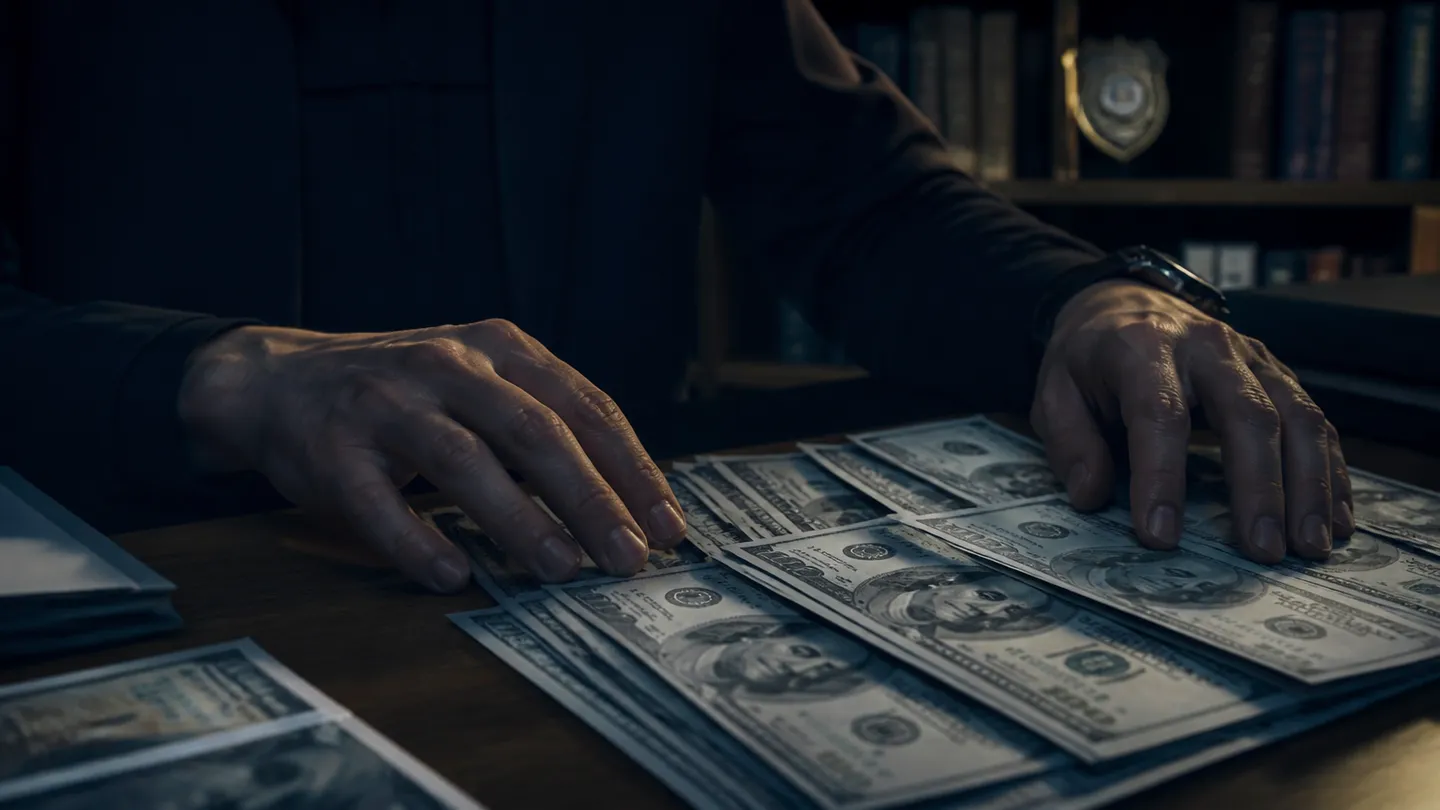
A reliable fake money website sells clearly non-genuine props for film, photography, theatre, training, education, or novelty use—not currency intended to pass as genuine, which is illegal[1][2]. We advise checking recent feedback across several sources, clear product images and policies, and buyer-protected payment options; HTTPS alone does not prove legitimacy[3].
What “Fake Money Website” Can Mean
The term "fake money website" encompasses various types of non-genuine currency, each serving distinct purposes. Understanding these categories is crucial for anyone seeking to differentiate between legal and illegal uses of fake money.
Legal prop money is designed for use in film, theatre, or educational settings. It is clearly marked, often with phrases like "For Motion Picture Use Only" or "Replica," but these labels alone do not guarantee legality. For example, prop money may be used to simulate transactions in a classroom exercise or to create realistic scenes in a movie. However, it must comply with currency reproduction rules, such as being one-sided or not exceeding specific size dimensions[4].
Novelty notes and replica banknotes also fall under legal categories, typically used for entertainment purposes or as collectibles. Unlike counterfeit currency, which is illegal and intended to defraud, these notes are not meant to be passed as genuine. The U.S. Secret Service warns that even labelled notes can be mistaken for real currency if they lack proper security features[5].
Digital play money is another form, often used in games or simulations. While it is entirely legal, care should be taken to ensure it is not confused with actual currency.
In contrast, illegal counterfeit currency is produced with the intent to deceive and can lead to severe penalties, including imprisonment for up to 20 years[1][2]. The ramifications of possessing or trying to use counterfeit money are significant, making it essential to distinguish between legitimate and fraudulent sources.
Before purchasing from a fake money website, we recommend verifying the seller's credentials and ensuring that the products are intended for legal use. Always check seller feedback and product descriptions carefully to avoid scams that may exploit unsuspecting buyers[3].
Is It Legal to Buy Fake Money Online?
The legality of purchasing fake money online hinges on several factors, including the type of product, jurisdiction, design, intended use, and seller conduct. It's essential to understand these elements to avoid legal pitfalls.
In the United States, under 18 U.S.C. § 473, buying or selling counterfeit U.S. obligations with the intent to use them as genuine is a serious offence, punishable by a fine or imprisonment for up to 20 years[1]. Similarly, 18 U.S.C. § 472 states that passing or possessing counterfeit obligations with intent to defraud can also lead to imprisonment for up to 20 years[2]. Federal regulations allow for colour illustrations of U.S. currency if they meet specific criteria, such as being one-sided and not exceeding certain size dimensions[4]. Notably, any prop money marked "For Motion Picture Use Only" or "Replica" must still adhere to these rules to be considered legal[5].
In Europe, the European Central Bank emphasises that any reproduction of euro banknotes must not create confusion with genuine currency. Similar guidance is provided by the Bank of England, which states that novelty notes should be clearly marked as non-legal tender and should not resemble actual banknotes too closely.
It’s crucial for buyers to verify local laws regarding fake money, as regulations can differ significantly by region. Checking the current legal requirements in your area is essential to ensure compliance and avoid unintentional violations.
Before making a purchase, we recommend researching the seller’s reputation and confirming that the products are clearly intended for legal purposes. Always ensure that the seller provides clear descriptions and adheres to legal standards. This diligence can help protect you from scams and legal repercussions associated with counterfeit currency[3].
A Reliability Checklist for Any Fake Money Site
When evaluating a fake money website, we recommend using a comprehensive checklist to ensure the reliability of the source. Below is a pass/fail table covering critical checks that can help you identify trustworthy sellers. If any of the critical failures occur, we advise halting your purchase evaluation immediately.
| Check | Pass | Fail |
|---|---|---|
| Verifiable business identity | ✔️ | ❌ |
| Physical contact details | ✔️ | ❌ |
| Domain history (WHOIS lookup) | ✔️ | ❌ |
| Clear returns and privacy policies | ✔️ | ❌ |
| Lawful product descriptions | ✔️ | ❌ |
| Responsive customer support | ✔️ | ❌ |
| Secure transaction (HTTPS/TLS) | ✔️ | ❌ |
| Recent seller feedback | ✔️ | ❌ |
| Compliance with currency reproduction rules | ✔️ | ❌ |
| Clear marking (e.g., "For Motion Picture Use Only") | ✔️ | ❌ |
Critical Failures to Note
Verifiable Business Identity: If a website lacks a registered business name or clear ownership details, it raises red flags. Always check for a legitimate business registration.
Physical Contact Details: Absence of a physical address or contact number can indicate a scam. Reliable sellers should provide ways to reach them directly.
Domain History: Using a WHOIS lookup can reveal the registration duration and ownership changes. Short-lived domains may suggest a fraudulent operation.
Clear Returns and Privacy Policies: If a site does not provide clear policies on returns or how they handle customer data, we recommend avoiding it.
Lawful Product Descriptions: Products should be described in a way that clearly indicates their intended use, such as "prop money" or "novelty notes". Vague descriptions can be misleading.
Responsive Customer Support: A lack of timely responses or customer service options can indicate a lack of accountability. Reliable sellers should have a responsive support system.
Secure Transactions: While HTTPS is essential for secure transactions, it does not guarantee legitimacy. Always check additional indicators of trust.
Recent Seller Feedback: Look for feedback across multiple platforms. Relying solely on star ratings can be deceptive, as they may be manipulated[3].
Compliance with Currency Reproduction Rules: Ensure that the products meet federal regulations regarding size and marking to avoid legal issues[4][5].
Clear Marking: Products marked as "For Motion Picture Use Only" should not resemble real currency too closely to comply with legal standards.
By following this checklist, we can significantly reduce the risk of falling victim to scams and ensure that any fake money purchased is used legally and responsibly.
How to Evaluate the Product Listing
When assessing a product listing for fake money, we should look for specific details that can indicate whether the item is a legitimate prop or a potential scam. Start by checking if the listing discloses dimensions, materials, and whether both sides of the note are printed. Reliable sellers will provide comprehensive information about their products, including supported denominations and intended use. For example, prop money should clearly state its purpose, such as being designed for film or theatre use.
Recognising Red Flags
We often encounter listings that make bold claims, such as "1:1," "undetectable," or "passes machines." These phrases should raise immediate concerns. Legitimate prop money is designed to be clearly distinguishable from real currency, and any suggestion that it can be used as genuine is a red flag. It's crucial to contrast compliant-looking listings with these dubious claims. For instance, a listing may appear to meet reproduction standards but still promise that the money can be used in stores, which is illegal and misleading.
Compliance with Regulations
Understanding the legal framework surrounding prop money can help us make informed decisions. For instance, under federal rules, colour illustrations of U.S. currency must be one-sided and adhere to specific size regulations[4]. If a product listing does not provide this information, or if it seems to violate these guidelines, we should approach with caution. Similarly, notes marked "For Motion Picture Use Only" or "Replica" must comply with currency reproduction rules to be considered legal[5].
To sum up, when evaluating a product listing, ensure that it provides clear and comprehensive details about its design and intended use. Be wary of any claims that suggest the money can pass as genuine currency, as these often indicate a seller operating outside legal boundaries. By doing so, we can better protect ourselves from scams and ensure that any purchases we make are both safe and lawful.
How to Verify Seller Claims and Reviews
Verifying the credibility of a seller is crucial when purchasing from a fake money website. Start by comparing their claims against official currency-issuer rules and regulations. For example, the U.S. currency reproduction rules specify that any colour illustrations must be one-sided and meet specific size dimensions[4]. If a seller does not acknowledge these requirements, it raises concern about their legitimacy.
We recommend checking business registries and domain records. A WHOIS lookup can provide essential information about the domain's registration history. If the domain has changed ownership frequently or is newly registered, this might indicate a potential scam. Always look for a verifiable business identity, including a registered name and physical address.
Recognising Review Manipulation
Be vigilant for signs of review manipulation. Genuine reviews typically reflect a variety of experiences, while manipulated reviews may show patterns, such as repeated wording or bursts of reviews over a short time. Additionally, if all reviews appear on the seller's site without presence on independent platforms, this could suggest inauthentic feedback. Here are some common signals:
- Repeated wording: Phrases that appear identical across multiple reviews.
- Review bursts: A sudden influx of reviews within a short timeframe, often indicating a coordinated effort to boost ratings.
- Stock photos: Use of generic images that do not represent actual products can be a red flag.
- Ratings only on the seller’s site: If a seller's ratings exist only on their own platform, they may not be trustworthy[3].
Claim-to-Source Verification Table
To assist in verifying claims, we can use the following table to compare seller assertions with credible sources:
| Seller Claim | Verification Source | Status |
|---|---|---|
| "Our money is legal for all uses" | U.S. currency reproduction rules[4] | Verify compliance |
| "1:1 replica, undetectable" | U.S. Secret Service guidelines[5] | Highly suspicious |
| "Guaranteed satisfaction" | Recent customer reviews on independent platforms[3] | Check for diversity |
| "Fast shipping, no delays" | FTC Mail Order Rule[6] | Confirm shipping policy |
By using this table, we can systematically assess the validity of claims made by sellers. Always cross-reference claims with established regulations and feedback from independent review platforms to ensure you are making a safe and informed purchase.
Payment, Privacy, Shipping, and Refund Safeguards
When purchasing prop money or novelty currency, understanding payment methods and their associated risks is vital. We recommend using credit cards or reputable payment processors, as they often provide buyer protection and the ability to dispute charges if something goes wrong. In contrast, methods such as cryptocurrency, wire transfers, gift cards, and person-to-person payments are generally considered high-risk. These payment forms typically lack the same level of recourse in case of fraud, making them less secure choices for purchasing fake money[3].
Before completing a transaction, it's crucial to check the seller's refund policies. Reliable sellers should clearly state their refund deadlines and conditions. For instance, if a product is not shipped within the advertised timeframe, the seller is obligated to notify the buyer and either obtain consent for the delay or issue a refund within 30 days[6]. We recommend looking for sellers who offer clear tracking information and specify their shipping origins. This transparency helps verify the legitimacy of the seller and the products being offered.
Data privacy is another important consideration. Ensure that the seller has a clear privacy policy detailing how your information will be used and protected. While a website using HTTPS indicates that the connection is encrypted, it does not guarantee the legitimacy of the merchant. Scammers can also implement HTTPS to mislead buyers[3]. Always take the time to read through privacy policies and understand what data is collected and how it is managed.
Lastly, we advise checking the seller's dispute procedures. A reputable seller should have a straightforward process for addressing customer complaints or issues with their products. If this information is not readily available, it may be a sign to reconsider your purchase. By following these guidelines, we can significantly reduce the risk of falling victim to scams while ensuring a safer buying experience for prop money and related products.
Claims and Myths That Should Trigger Caution
Several claims and myths circulate within the realm of prop money and counterfeit currency that warrant our attention and caution. One common misconception is that a note marked "FOR MOTION PICTURE USE ONLY" is automatically legal. In reality, such markings do not guarantee compliance with the law. The U.S. Currency Education Program emphasises that authenticity should be assessed based on security features rather than wording alone[5]. This means that even if a note has this disclaimer, it could still be counterfeit if it fails to meet legal standards.
Another myth is the belief that a disclaimer absolves sellers of liability. Under U.S. law, selling counterfeit currency with the intent for it to be used as genuine can lead to severe penalties, including fines and imprisonment of up to 20 years[1][2]. Thus, a simple disclaimer cannot protect a seller from legal consequences if their product violates the law.
Moreover, some sellers advertise their products as "realistic," suggesting high production quality. However, this term can be misleading. The U.S. regulations for currency reproduction specify that colour illustrations must be one-sided and either less than 75% or more than 150% of the actual note's linear dimensions[4]. These strict guidelines are in place to ensure that such reproductions are clearly distinguishable from real currency. Therefore, a product claiming to be "realistic" should be scrutinised against these standards; non-compliance could indicate a potential scam.
To navigate these claims effectively, we should always verify the details surrounding a product. When considering a purchase, check whether the seller adheres to U.S. currency reproduction rules and whether their products are marked appropriately. By remaining vigilant and informed, we can better protect ourselves from misleading claims and ensure our purchases are both safe and legal.
What to Do If You Receive Suspected Counterfeit Money
If you suspect that you have received counterfeit money, it is crucial not to spend, resell, deposit, or test the notes in a machine. Engaging in any of these actions can lead to serious legal consequences. Under U.S. law, knowingly passing or distributing counterfeit currency can result in imprisonment for up to 20 years[1][2]. Therefore, the first step is to preserve the order record related to the transaction.
Next, we recommend contacting your payment provider. For example, if you made a purchase through a credit card, notify your card issuer about the suspected counterfeit. According to federal guidelines, you generally have 60 calendar days to dispute a charge after it appears on your statement[7]. This action can help protect your financial interests and might lead to a chargeback if the seller is found to be fraudulent.
Following this, it is essential to report the suspected counterfeit to the appropriate authorities. In the U.S., you can contact the U.S. Secret Service, which handles investigations into counterfeit currency. They have specific procedures for reporting counterfeit notes, and you may need to fill out Form 1604 at your local field office[8]. Alternatively, you can reach out to the Federal Trade Commission (FTC) or the Internet Crime Complaint Center (IC3) if you suspect online fraud.
In other jurisdictions, similar guidance applies. For instance, in Europe, you would report to the European Central Bank or the relevant national central bank. Always refer to your local currency authority for specific instructions on handling counterfeit money. These actions not only help protect you but also assist in combating the circulation of counterfeit currency.
To sum up, if you receive suspected counterfeit money, do not attempt to use it. Preserve all relevant records, contact your payment provider, and follow the guidance of local authorities. By taking these steps, you can ensure that you are acting within the law and contributing to the fight against currency fraud.
Fake Money Website: Identifying Reliable Sources
| Claim | Verification Source | Red Flags | Jurisdiction |
|---|---|---|---|
| "Legal for all uses" | U.S. currency reproduction rules [4] | Lack of compliance | USA |
| "1:1 replica, undetectable" | U.S. Secret Service guidelines [5] | Highly suspicious | USA |
| "Guaranteed satisfaction" | Independent review platforms [3] | Manipulated reviews | USA |
| "Fast shipping, no delays" | FTC Mail Order Rule [6] | No clear shipping policy | USA |
| "Authentic for film use" | U.K. currency reproduction rules | Misleading disclaimers | UK |
| "Replica for novelty" | Euro area currency guidelines | Non-compliance with size rules | Euro Area |
| "Secure payment methods" | FTC recommendations [3] | Use of high-risk methods | All Jurisdictions |
| "Refund within 30 days" | FTC Mail Order Rule [6] | No stated refund policy | All Jurisdictions |
| "Privacy policy available" | HTTPS encryption [3] | Lack of transparency | All Jurisdictions |
| "Report counterfeit to authorities" | Local currency authority guidelines | Ignoring legal procedures | All Jurisdictions |
Common Mistakes and Misconceptions
These mistakes are avoidable. Before trusting a seller, make sure we can identify:
- what the seller is actually supplying;
- which official rule supports its legality claims;
- who operates the website and receives returns;
- what remedy remains if the order is misleading or never arrives.
Assuming Currency Image Rules Approve the Physical Product
They do not. A seller may cite federal image-reproduction requirements as if they approve every printed prop, although those requirements address one-sided colour illustrations, permitted dimensions, and deletion or destruction of production materials and files[4]. We should ask which rules apply to the physical item rather than accepting a general reference to "federal compliance".
Checking Only One Feature on a Delivered Note
One feature proves little. Buyers may focus on colour, paper texture, or a printed disclaimer, but a genuine current-design $100 note combines raised printing, colour-shifting ink, a woven security ribbon, an embedded thread, and a watermark on cotton-and-linen paper[9]. We should compare several features with official currency guidance and treat unresolved inconsistencies as a reason to stop and seek instructions.
Assuming a Social-Media Advert Has Been Vetted
An advert is not approval. The FTC reported that consumers lost more than $95 million during 2025 to scams beginning with purchases prompted by social-media advertising, while noting that actual losses were probably higher[10]. Instead of moving directly from an advert to checkout, we should independently confirm the business name, contact details, return destination, and website domain.
Treating Published Policies as Meaningful Protection
A policy can be decorative. Scam websites may display polished privacy, shipping, and refund pages while omitting the merchant’s legal name, a usable return address, clear exclusions, or a workable complaint route. For a buyer in Seattle, we advise checking whether the stated address belongs to the seller, whether returns are accepted there, and whether the checkout terms match the policy pages.
Expecting Reimbursement for a Surrendered Counterfeit Note
Reimbursement is not automatic. Official guidance says local police should receive suspected counterfeit currency; a genuine note will be returned, but a counterfeit note will not be reimbursed[11]. We should therefore avoid trying to recover the loss by spending or reselling the note and pursue the merchant or payment-provider dispute separately.
Returning a Suspected Note Directly to the Seller
That can destroy useful evidence. An immediate return may remove the note, packaging, and delivery trail from our control before police or the payment provider can review them. We advise preserving the listing, receipt, correspondence, envelope, and tracking details, then asking local police how the suspected note should be handed over[11].
Conclusions
Choose cautiously.
- Start by confirming that the product is clearly intended for lawful film, theatre, photography, training, education, or novelty use.
- Match the item’s design, size, and printing format against US reproduction requirements rather than trusting labels such as "movie money"[4].
- Verify the merchant’s identity, return destination, payment protections, and complaint route before entering card or personal details.
- Reject offers describing notes as "1:1", "undetectable", or suitable for circulation; those claims point towards counterfeit activity, not legitimate props.
- If an order appears suspicious, keep the packaging, listing, receipt, messages, and tracking record while seeking instructions from the payment provider and authorities.
Next, use Realistic Fake Money for Sale: Where to Find It to compare safer purchasing criteria before choosing a seller.
Links and references
- 1. 18 USC 473: Dealing in counterfeit obligations or securities
- 2. 18 USC 472: Uttering counterfeit obligations or securities
- 3. Buying From an Online Marketplace
- 4. Currency Image Use
- 5. Teller Toolkit
- 6. Mail, Internet, or Telephone Order Merchandise Rule
- 7. How do I dispute a charge on my credit card bill?
- 8. Report a Counterfeit
- 9. Decoding Dollars: The $100
- 10. Are ads on social media vetted or checked for scams? Here’s what to know
- 11. The New $100 Note Brochure