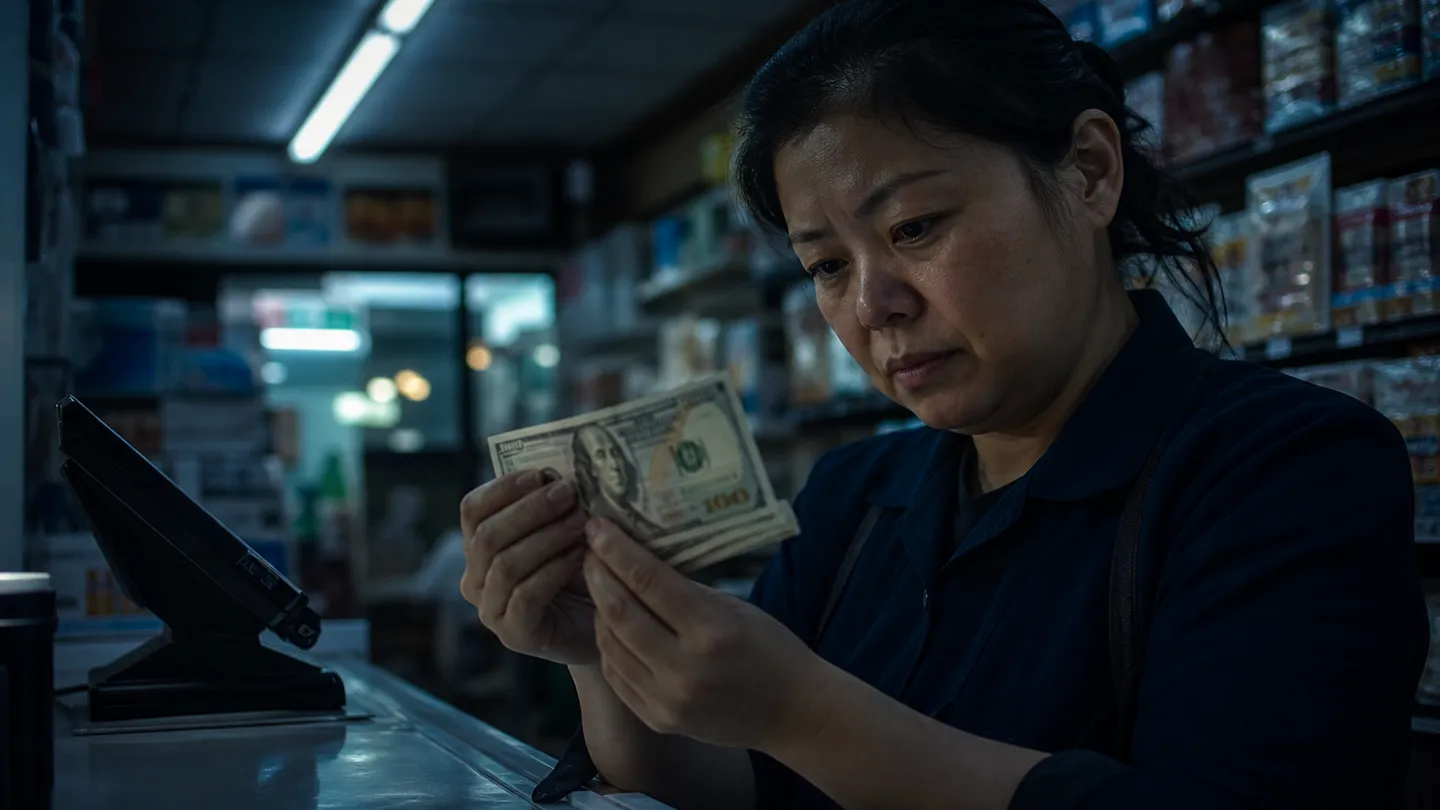
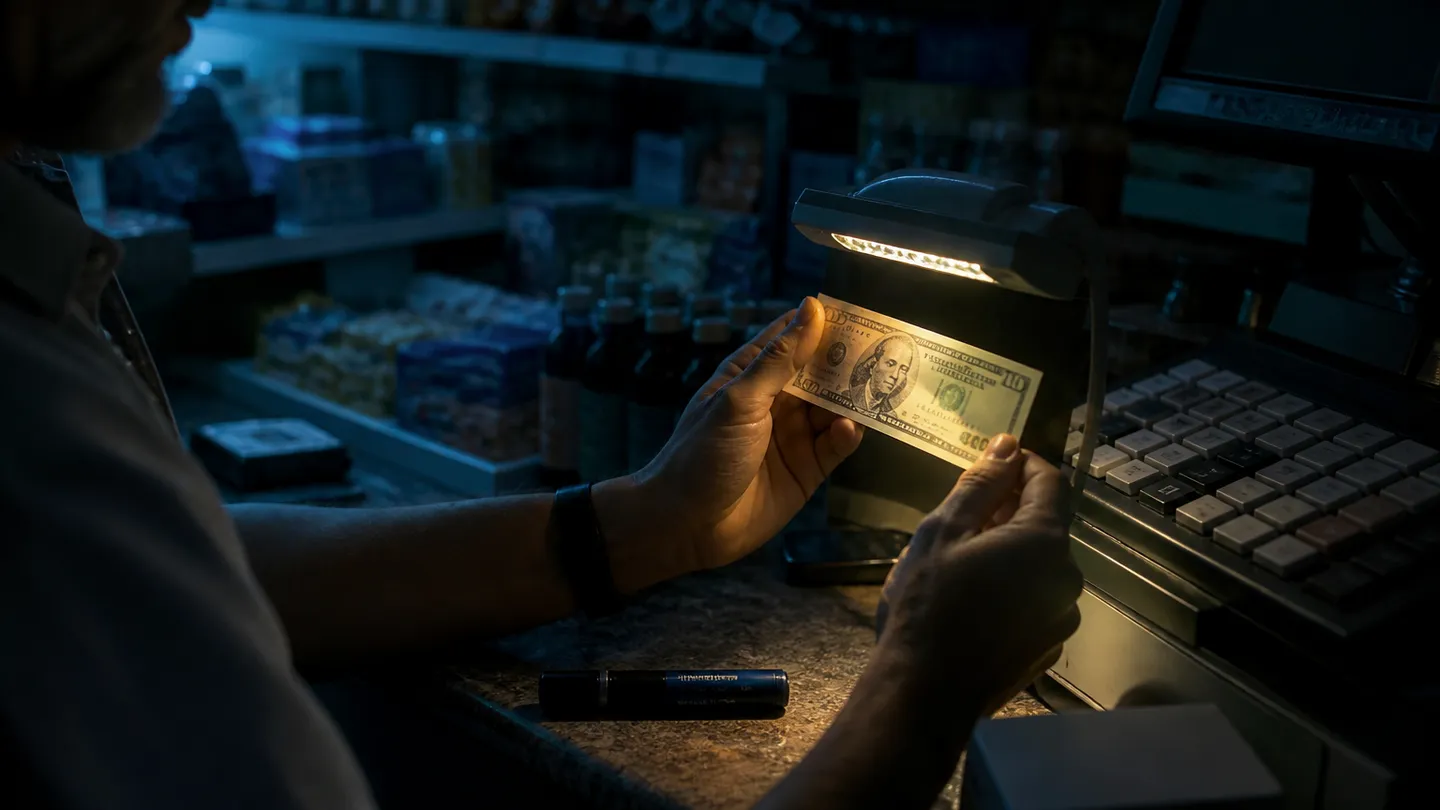
Counterfeiting money means making an unauthorised imitation of genuine currency closely enough to deceive an unsuspecting person[1]. Making or knowingly passing counterfeit U.S. money with intent to defraud can mean fines and up to 20 years’ imprisonment[2][3]; if we receive a suspicious bill, we should separate it, avoid spending it, and notify local police immediately[4].
What Is Counterfeit Money?
Counterfeit money refers to an unauthorized imitation created to resemble genuine currency closely enough to deceive an unsuspecting person. This includes both completely fabricated notes and altered currency, where an existing note's value or information has been modified[1]. Understanding the legal implications is crucial, as there are distinct terms associated with counterfeit currency: making, possessing, passing, and attempting to pass counterfeit notes. Each of these actions carries different legal consequences, and knowledge of the counterfeit nature of the currency, as well as intent to defraud, are key factors in legal assessments[2][3].
In the United States, counterfeiting remains a significant concern, although a Federal Reserve study from February 2025 estimated that counterfeit currency in circulation totalled no more than about $30 million, which equates to roughly one counterfeit note for every 40,000 genuine notes[5]. This statistic indicates that while the prevalence of counterfeit currency is low, the impact on businesses and consumers can still be substantial.
Historically, counterfeiting has been a persistent issue, prompting the establishment of various measures to combat it, including the creation of the U.S. Secret Service, which was originally formed to address the problem of counterfeit currency in the late 19th century.
For individuals and businesses, recognising counterfeit currency involves careful examination of security features such as watermarks, embedded security threads, and colour-shifting ink, which are designed to protect against counterfeiting. We advise checking these features before accepting any currency. If we suspect that we have received a counterfeit note, it is important to separate it from genuine currency, document any details about the passer, and notify local law enforcement rather than attempting to use the note[4].
Counterfeit Currency vs. Genuine, Altered, and Prop Money
Understanding the differences between counterfeit currency, genuine notes, altered notes, and prop money is essential for anyone handling cash. Each type of currency has unique characteristics that affect its legal status and intended use.
| Type of Currency | Issuer | Intended Use | Legal Status | Can Be Lawfully Presented as Payment |
|---|---|---|---|---|
| Genuine Currency | U.S. Federal Reserve | General circulation | Legal tender under U.S. law[6] | Yes |
| Counterfeit Currency | None | To defraud | Illegal; punishable by fines and up to 20 years in prison[2][3] | No |
| Altered Currency | U.S. Federal Reserve | To defraud or misrepresent value | Illegal; similar penalties as counterfeit[2][3] | No |
| Prop Money | Private entities | Film production, training, etc. | Legal if marked appropriately (e.g., "For Motion Picture Use Only")[7] | No |
Counterfeit currency refers to notes created to imitate genuine currency, aiming to deceive unsuspecting individuals[1]. Altered notes begin as genuine currency that has been modified, for example, changing the denomination or value[1]. Both counterfeit and altered notes are illegal and can lead to serious legal consequences if passed or used with intent to defraud[2][3].
Prop money, often used in movies or training exercises, is not intended for use as legal tender. It must be clearly marked, and labels such as "replica" or "for motion picture use only" do not provide legal immunity if someone attempts to use it as real money[7].
For those handling cash, recognising genuine currency involves checking for specific security features. Genuine Federal Reserve notes are made from a unique blend of cotton and linen and include various security elements like watermarks, embedded security threads, and colour-shifting ink[8][9]. Understanding these features can help us avoid accepting counterfeit or altered notes.
If we come across a suspicious note, it is crucial to separate it from legitimate currency, document any details about the transaction, and report it to local authorities[4]. This proactive approach not only protects us but also assists in the broader fight against counterfeiting.
Why Counterfeit Money Matters
Accepting counterfeit money can lead to a direct and significant financial loss for individuals and businesses. Once a counterfeit note is received, it cannot be exchanged for genuine currency or reimbursed by a bank, meaning the recipient bears the entire loss[4]. This is particularly concerning for small businesses that may not have the resources to absorb such losses. For example, if a café unknowingly accepts a counterfeit $100 bill, it effectively loses that amount, plus any goods or services provided in exchange.
The implications of counterfeit currency extend beyond individual losses. Trust in cash transactions can erode, leading to increased cash-handling costs as businesses implement more rigorous authentication measures. This can include investing in counterfeit detection tools, which, however, are not foolproof. For instance, counterfeit detection pens can yield false positives, especially when counterfeiters use bleached genuine notes or specially treated paper[4]. As businesses heighten their security measures, the overall cost of cash handling rises, which can impact pricing and service delivery.
While counterfeiting contributes to financial crime, it is important to clarify that it is not a primary driver of inflation. A Federal Reserve study estimated that counterfeit currency in circulation totals no more than about $30 million, which translates to roughly one counterfeit note for every 40,000 genuine notes[5]. This isolated occurrence of counterfeit notes does not produce measurable inflation, contrary to common misconceptions.
In summary, while the prevalence of counterfeit currency remains relatively low, the effects on trust, financial security, and operational costs are significant. It is crucial for cash-handling employees and business owners to remain vigilant and informed about counterfeit detection techniques to mitigate these risks effectively.
How to Check Whether U.S. Currency Is Genuine
To determine if U.S. currency is genuine, we recommend a simple sequence: feel, tilt, check with light, and compare. This method utilises various security features embedded in the notes that differ by denomination, design series, and issue year. Always verify against official references from the Federal Reserve or the U.S. Currency Education Program.
Feel
Genuine Federal Reserve notes are printed on a unique paper made from 75 percent cotton and 25 percent linen, which gives them a distinct texture. The raised printing creates a slightly rough feel, especially on the portraits and numerals[8]. If a note feels unusually smooth or flimsy, it may be counterfeit.
Tilt
When tilting the note, we should observe the colour-shifting ink, particularly on higher denominations like the $100 bill. The numeral in the lower-right corner shifts from copper to green, while the blue 3-D ribbon features bells and 100s that appear to move[9]. This feature is not present on lower denominations, such as the $1 and $2 notes, so their absence is not a sign of counterfeiting[10].
Check with Light
Examining the note under light reveals additional security features. Most genuine notes contain a watermark visible from both sides, while the security thread is embedded in the paper[9]. For example, on the $100 bill, the thread reads "USA 100" and glows pink under ultraviolet light. The Franklin watermark appears to the right of the portrait, providing another layer of verification[9].
Compare
Lastly, comparing notes side by side can help identify inconsistencies. When we have access to a known genuine note, we should check the microprinting for clarity and detail, which is often too small to replicate accurately in counterfeit notes. Each denomination has specific features, so it's essential to know what to look for.
Denomination Matrix
Here’s a quick overview of some features by denomination:
| Denomination | Raised Printing | Watermark | Security Thread | Colour-Shifting Ink | Microprinting |
|---|---|---|---|---|---|
| $1 | No | No | No | No | Yes |
| $5 | Yes | Yes | No | No | Yes |
| $10 | Yes | Yes | No | No | Yes |
| $20 | Yes | Yes | Yes | No | Yes |
| $50 | Yes | Yes | Yes | Yes | Yes |
| $100 | Yes | Yes | Yes | Yes | Yes |
Verifying currency involves understanding these features and knowing that they can vary widely. For accurate authentication, we advise consulting official resources from the Federal Reserve or the U.S. Currency Education Program to ensure we’re equipped with the most current information.
Common Counterfeit-Money Myths and Detection Mistakes
Common Counterfeit-Money Myths and Detection Mistakes
There are several common myths surrounding counterfeit money that can lead to mistakes in detection. For instance, many believe that all genuine bills have watermarks. However, current-design $1 notes do not feature watermarks or embedded security threads, meaning the absence of these elements does not indicate a bill is counterfeit[10]. This misconception can lead to unnecessary suspicion about perfectly valid currency.
Another widespread belief is that counterfeit-detection pens are foolproof. In reality, these pens can yield false positives, especially if counterfeiters use bleached genuine notes or specially treated paper that alters the pen's chemical reaction[4]. Relying solely on a pen can give a false sense of security, leading to the acceptance of counterfeit currency.
It's also a common mistake to assume that old-looking notes are automatically fake. All designs of Federal Reserve notes issued from 1914 to the present are still considered legal tender[6]. This means that a well-worn note can still be genuine, and dismissing it solely based on its appearance can result in lost transactions.
Moreover, some believe that if a note is accepted by a machine, it must be genuine. While machines are designed to detect many counterfeit features, they are not infallible. Counterfeiters often create notes that can pass initial machine checks, so we should not rely solely on this method for authentication.
To effectively authenticate currency, we recommend checking multiple independent features rather than relying on a single test. For instance, when verifying a $100 note, we should look for the blue 3-D ribbon woven into the paper, the colour-shifting ink that changes from copper to green, and the visible watermark of Franklin[9]. This comprehensive approach increases our chances of accurately identifying counterfeit notes and protecting ourselves from potential losses.
What to Do If You Receive a Suspicious Bill
If we receive a suspicious bill, it is essential to take immediate and careful action. Here’s a concise checklist of steps to follow:
- Do not knowingly spend or return the note. Attempting to use it can lead to legal repercussions under laws such as 18 U.S.C. § 472, which prohibits passing counterfeit currency with intent to defraud[2].
- Minimise handling of the note. This reduces the risk of transferring it to someone else and preserves any evidence for law enforcement.
- Note relevant transaction details. Record the time, location, and any descriptions of the person who passed the note or their vehicle. This information can be crucial for investigators[4].
- Contact local police or a U.S. Secret Service field office. Report the incident immediately. The Secret Service is responsible for investigating counterfeit currency, and they can provide guidance on the next steps[11].
For businesses, it is common to be asked to complete a Counterfeit Note Report and surrender the note to law enforcement. This report helps authorities track the circulation of counterfeit money and can assist in broader counterfeiting investigations.
It is important to avoid confronting or detaining anyone suspected of passing counterfeit money. This can escalate into a dangerous situation, and it is best left to law enforcement to handle such matters.
Lastly, it's crucial to understand that a suspected note is generally not reimbursed if confirmed counterfeit. This means that the loss incurred from accepting a counterfeit bill typically falls on the person or business that received it[4]. Being vigilant and informed can help us protect ourselves and our businesses from the risks associated with counterfeit currency.
U.S. Laws and Penalties for Counterfeit Money
Under U.S. law, counterfeiting money is a serious offense governed primarily by 18 U.S.C. §§ 471 and 472. These statutes define the illegal production, possession, and distribution of counterfeit currency. A counterfeit U.S. obligation is considered an unauthorized imitation made to closely resemble genuine currency, while an altered obligation starts as an existing instrument whose material information has been changed[1].
Individuals who knowingly pass, attempt to pass, sell, import, possess, or conceal counterfeit currency with the intent to defraud can face severe penalties. Specifically, violations of 18 U.S.C. § 472 can lead to fines and imprisonment for up to 20 years[2]. Similarly, making, forging, counterfeiting, or altering U.S. currency with intent to defraud is punishable under 18 U.S.C. § 471, which carries the same potential penalties[3].
It is crucial to distinguish between innocent receipt of counterfeit money and knowing possession or use with intent to defraud. Innocent receipt refers to receiving counterfeit currency without knowledge of its illegitimacy, while knowing possession implies awareness of the note's counterfeit status and intent to use it to deceive others. The legal ramifications are significantly more severe for those who knowingly engage in activities related to counterfeit currency.
In addition to these laws, it's important to be aware of restrictions surrounding prop money. Although prop money can be used for film or theatre, federal regulations stipulate that it must meet specific criteria. For instance, prop money must be one-sided and either less than three-fourths or more than one-and-a-half times the note's linear dimensions. Moreover, any images used must be destroyed after final use[12].
As a reminder, this overview is intended for informational purposes and should not be construed as legal advice. If you find yourself in a situation involving counterfeit currency, it’s advisable to consult a legal professional for guidance tailored to your specific circumstances.
Who Investigates and Handles Counterfeit Currency Reports?
Counterfeit currency investigations involve several key agencies and institutions in the United States. The U.S. Secret Service plays a primary role, as it is responsible for investigating and enforcing laws against counterfeiting. If you suspect you have received counterfeit money, you should contact your local Secret Service field office or report it using the appropriate channels[11].
Local law enforcement agencies also participate in these investigations. If you report a counterfeit note to them, they will document the incident and may coordinate with the Secret Service for further investigation. The Federal Reserve System and the Bureau of Engraving and Printing are involved in the overall management and production of genuine currency, and they provide resources for identifying counterfeit notes. Commercial banks can assist by checking suspicious currency, but they cannot reimburse you for counterfeit notes, which typically results in a loss for the individual or business that accepted them[4].
After a counterfeit note is surrendered, the following steps generally occur:
- Documentation: The law enforcement agency will document the details of the incident, including descriptions of the suspect and the circumstances under which the note was received.
- Examination: The note will be examined for authenticity using various methods, including checking security features like watermarks, embedded security threads, and colour-shifting ink[9].
- Confirmation: If the note is confirmed as counterfeit, it may be sent to the Secret Service for further investigation, which could involve tracing the source of the counterfeit money.
- Possible Investigation: If the case warrants it, a broader investigation may be initiated to identify and apprehend those involved in the counterfeiting operation.
For further information on reporting counterfeit currency or authenticating notes, we recommend visiting the U.S. Currency Education Program's official resources. Here, you can access detailed guidelines on how to handle suspected counterfeit currency, ensuring you are well-informed and prepared to act appropriately.
Denomination Authentication Features and Action Checklist
| Denomination | Security Thread | Watermark | Colour-Shifting Ink | 3-D Ribbon | Action for Suspicious Note |
|---|---|---|---|---|---|
| $1 | No | No | No | No | Separate and report to police |
| $5 | No | No | No | No | Separate and report to police |
| $10 | No | No | No | No | Separate and report to police |
| $20 | Yes | Yes | No | No | Separate and report to police |
| $50 | Yes | Yes | Yes | Yes | Separate and report to police |
| $100 | Yes | Yes | Yes | Yes | Separate and report to police |
Common Mistakes and Misconceptions
Mistakes follow familiar patterns.
Applying One Security Checklist to Every Note
A feature missing from one denomination may be expected on another, and design series can also differ. Before rejecting cash, we suggest matching the note’s denomination and design to official guidance rather than using a universal checklist; genuine $1 and $2 notes lack an embedded denomination security thread[10].
Treating Accidental Possession as Counterfeiting
People often assume that unknowingly accepting a fake note is itself the offence. The legal risk arises when someone knowingly possesses, conceals, or attempts to pass counterfeit or altered currency with intent to defraud[2]. Once suspicious, we should stop circulating the note and follow the reporting process.
Confusing Counterfeit, Altered, and Prop Notes
These terms are often used interchangeably, but they describe different situations. We can use this comparison before deciding what to report:
| Item | Practical meaning | What to check |
|---|---|---|
| Counterfeit note | An unauthorised imitation intended to resemble genuine currency closely enough to deceive an ordinary person[1] | Denomination-specific security features |
| Altered note | A genuine instrument whose material information or value has been changed[1] | Signs that the original denomination or printed details were modified |
| Prop or replica note | An item presented as imitation currency, sometimes bearing wording such as "Replica" | Treat labels as warning signs, not proof; authenticate the note’s security features[7] |
Assuming a "Replica" Label Settles the Question
Some people treat prop wording as proof that an item is harmless, while others assume any note carrying it is counterfeit currency. Labels such as "For Motion Picture Use Only" and "Replica" are immediate warning signs, but official guidance still calls for checking denomination-specific features[7]. Separate the item from genuine cash and do not try to pass it.
Using an Outdated Online Reporting Route
Older instructions may direct consumers to submit a report through the USDollars website. That electronic route stopped accepting submissions on November 1, 2024; individuals should contact a local Secret Service field office, while eligible businesses and financial institutions use Form SSF 1604[11]. For a Seattle transaction, we advise preserving the available transaction details before contacting local law enforcement or the appropriate field office.
Expecting the Note Back or a Refund
A customer or cashier may surrender a suspicious note expecting a bank to replace it after examination. Counterfeit currency cannot be exchanged for genuine money or reimbursed by a bank, so the person or business accepting it generally bears the loss[4]. Before surrendering it, ensure that useful details about the transaction, passer, or vehicle have been recorded without confronting the person involved[4].
Conclusions
Stay methodical.
- We recommend checking several denomination-specific security features rather than relying on a pen, label, or single missing detail[10][9].
- If a note appears suspicious, stop handling it as spendable cash, keep it separate, and record useful transaction details without confronting the customer[4].
- Accidental acceptance differs from knowingly using counterfeit currency with intent to defraud, which carries serious federal legal exposure[2][3].
- Consumers should contact local police or a Secret Service field office; eligible businesses and financial institutions may use Form SSF 1604[11].
- Before accepting high-value cash, ensure staff know the authentication routine and understand that confirmed counterfeit notes are not reimbursed[4].
Next, review Fake US Dollars: How to Spot Them for a practical recognition guide.
Straight answers
Is it a felony to possess counterfeit money?
Possession can lead to federal prosecution when a person knows the currency is counterfeit or altered and intends to defraud someone. Under 18 U.S.C. § 472, knowingly possessing or concealing it with fraudulent intent may result in a fine, imprisonment for up to 20 years, or both[2].
How to tell if a one dollar bill is real with light?
Do not expect to see an embedded denomination security thread in a genuine $1 bill; that feature is absent from genuine $1 and $2 Federal Reserve notes[10]. Against light, look for red and blue fibres embedded in the paper, then check for the slightly rough texture created by raised printing[8].
What's the punishment for using fake money?
Knowingly passing or attempting to pass counterfeit U.S. currency with intent to defraud may bring a fine, imprisonment for up to 20 years, or both under 18 U.S.C. § 472[2]. Accidentally accepting a fake bill is different from trying to spend it after recognising that it may be counterfeit.
How to detect counterfeit money $100?
For a current-design $100 note, tilt it and check that the bells and 100s on the woven blue ribbon appear to move, while the lower-right numeral and inkwell bell change from copper to green[9]. Hold it to light to find the Franklin watermark on the portrait’s right and the "USA 100" security thread on the left; the thread glows pink under ultraviolet light[9].
What should I do with a suspected counterfeit bill?
Keep the bill separate from genuine cash, note any available description of the person who passed it or their vehicle, and contact local police immediately[4]. Do not spend or return the note; surrender it to law enforcement, and individuals may also contact a local Secret Service field office[4][11].
Can a bank replace counterfeit money?
No. A bank cannot exchange a counterfeit note for genuine currency or reimburse its value, so the consumer or business that accepted it generally bears the loss[4].
Links and references
- 1. National Stolen Property Act — “Falsely Made, Forged, Altered, Or Counterfeited”
- 2. 18 USC 472: Uttering counterfeit obligations or securities
- 3. 18 USC 471: Obligations or securities of United States
- 4. How do I determine if a banknote is genuine? What should I do if I think I have a counterfeit note?
- 5. Estimating the Volume of Counterfeit U.S. Currency in Circulation
- 6. Acceptance and Use of Older-Design Federal Reserve Notes
- 7. Teller Toolkit | U.S. Currency Education Program
- 8. $100 Note
- 9. Decoding Dollars: The $100
- 10. Know Your Money
- 11. Report a Counterfeit | U.S. Currency Education Program
- 12. Frequently Asked Questions | U.S. Currency Education Program