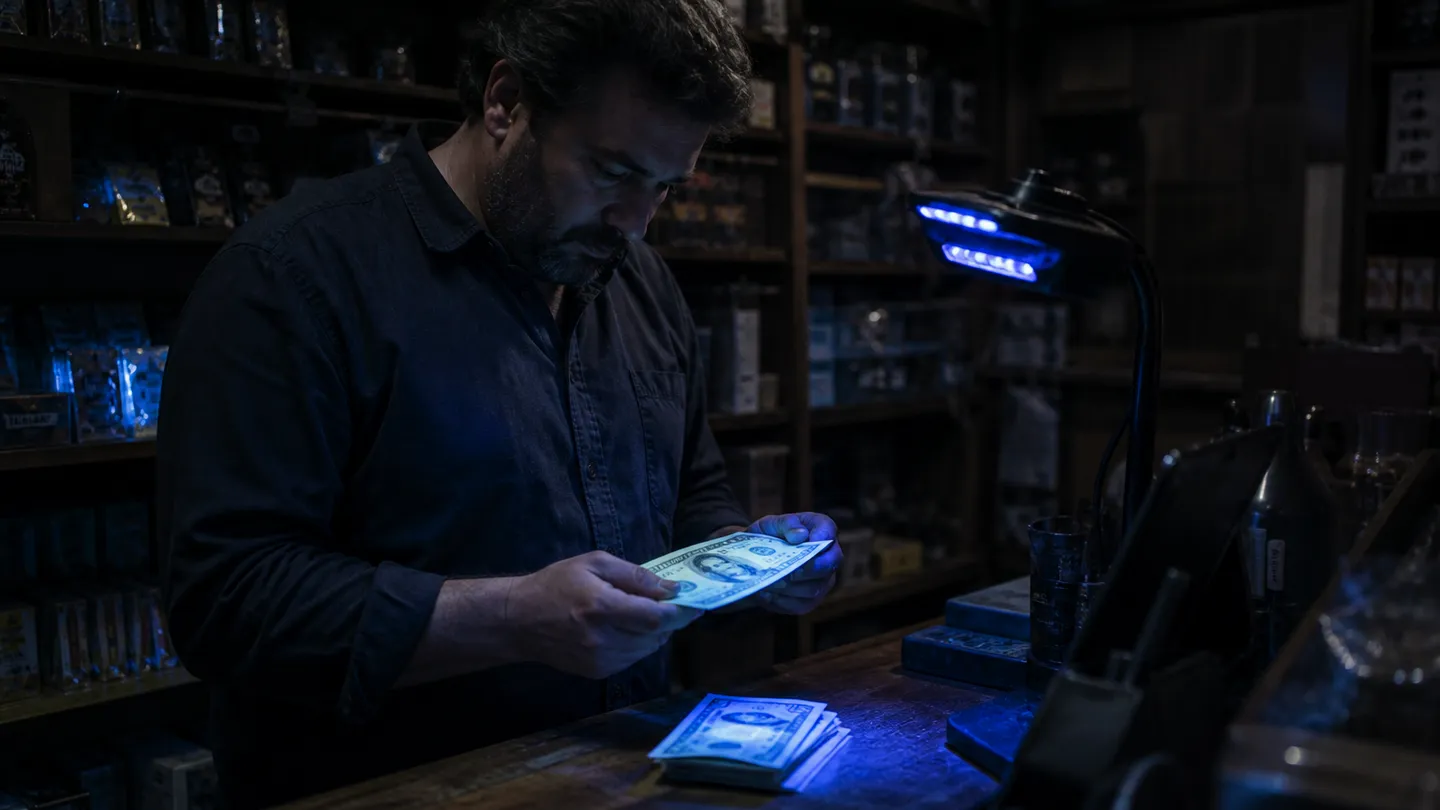
Fake money prop is imitation currency designed for authorised film, theatre, photography, training, and other media productions—not for use as legal tender[1]. Choose detailed hero bills for close-ups, full-print stacks when individual notes are exposed, and blank-filler bundles for closed background piles; before filming, confirm that the design complies with applicable currency-reproduction rules[2][1][3].
What Is a Fake Money Prop?
Fake money props are imitation currency specifically created for visual use in media productions. Unlike counterfeit currency, which is designed to deceive and used with fraudulent intent, fake money props serve legitimate purposes in film, theatre, photography, and other creative projects[1]. Understanding this distinction is crucial for anyone involved in these industries to avoid legal pitfalls.
The terms “prop money,” “fake prop money,” and “motion picture money” are often used interchangeably, yet they can have subtle differences in context. Prop money typically refers to any imitation currency used on set, while fake prop money may imply a lower-quality or less realistic version. Motion picture money specifically designates props intended for film and television productions. For instance, a dramatic close-up of a character counting bills might require high-quality hero bills, whereas a scene showing stacks of cash in a vault could use blank-filler stacks, which contain printed bills only on the top and bottom[2][1].
When selecting prop money for a production, it's important to consider the intended use and camera angles. Full-print bills can be effective for scenes that involve counting or throwing money, while blank-filler bundles are more suited for background settings where the details of individual notes are less critical. This strategic selection ensures that the prop money meets your visual needs without drawing unnecessary attention[1][2].
Legal guidelines also play a significant role in the creation and use of fake money props. In the U.S., regulations stipulate that any reproduction of currency must adhere to specific size and design criteria, such as being one-sided or not exceeding 75% or 150% of the original note's dimensions[3]. Violating these rules can lead to serious legal repercussions, including fines or imprisonment for those who knowingly attempt to use imitation currency as real money[4][5]. Thus, we recommend ensuring compliance with these regulations to safeguard your production from potential legal issues.
In summary, fake money props are essential tools for filmmakers and other content creators, providing a safe and legal way to depict currency in their work. By understanding the distinctions between different types of prop money and adhering to the relevant regulations, we can enhance our productions while staying within the bounds of the law.
Types of Prop Money and Where Each Works Best
Understanding the various types of prop money is vital for filmmakers and content creators to ensure that their productions look authentic while complying with legal requirements. Each type of prop money has its specific use case, visibility, and limitations.
Full-Print Bills
Full-print bills are fully printed notes that can be counted, fanned, or thrown in front of the camera. They work best for controlled close-ups where the camera focuses on individual notes, hands, or edges. These bills are ideal for scenes requiring detailed shots of money exchange or handling. However, they must be designed to comply with legal regulations regarding size and reproduction[2][3].
Blank Filler Stacks
Blank filler stacks consist of printed bills on the top and bottom, with blank paper in the middle. This type is suitable for distant shots where only the edges of the bundles are visible. They are commonly used in scenes depicting large amounts of cash in vaults or bags. While they are cost-effective and safe for use in the background, they should remain closed on camera to avoid revealing the blank paper inside[2][1].
Aged or Distressed Notes
These notes are designed to look worn and old, adding a sense of realism to scenes set in the past or requiring a gritty aesthetic. They can be used in various contexts, from historical dramas to crime films. However, be cautious about their appearance in close-ups, as the aging effects may not hold up under scrutiny[1].
Stage Money
Stage money is often used in live theatre productions. It is typically lightweight and designed for quick handling. While it looks good under stage lights, it may not hold up in film or photography due to its often exaggerated features. This type of prop money is usually less detailed than film-grade options, making it less suitable for close-up shots[1].
Digital or Printable Alternatives
Digital prop money can be printed at home or used in digital productions. These options are flexible and can be customised for specific scenes. However, creators must ensure that any printed notes comply with regulations, such as being one-sided or sized appropriately[3].
| Type of Prop Money | Visibility | Suitable Shot Distance | Typical Uses | Limitations |
|---|---|---|---|---|
| Full-Print Bills | High | Close-ups | Counting, fanning, throwing | Requires compliance with regulations |
| Blank Filler Stacks | Moderate | Several feet away | Background piles, vaults | Should remain closed on camera |
| Aged or Distressed Notes | Moderate to High | Close-ups (with caution) | Historical scenes, gritty aesthetics | May not hold up in extreme close-ups |
| Stage Money | Low to Moderate | Stage distance | Live theatre productions | Less detail for film or photography |
| Digital Alternatives | Varies | Depends on print | Custom scenes, flexibility | Must comply with reproduction rules |
Selecting the appropriate type of prop money can significantly enhance the visual storytelling of your production. We recommend carefully considering the context and camera angles to ensure that the prop money meets your production's needs while adhering to legal guidelines.
How Realistic Does Your Prop Money Need to Be?
The realism of your prop money significantly depends on the framing and context of your shots. For extreme close-ups or hand-held medium shots, detailed hero bills are essential, as the camera will focus closely on individual notes, hands, or edges. In these instances, factors such as dimensions, paper feel, and print sharpness become critical. Genuine U.S. notes measure 6.14 by 2.61 inches, and any replica should adhere to legal guidelines regarding size and reproduction to avoid legal complications[3][6].
When filming wide shots or live stage performances, less detail may suffice. Blank-filler stacks, which consist of printed bills on the top and bottom with blank paper in between, work well for distant shots where the specific details of individual notes are less visible[2]. This type of prop money is ideal for scenes depicting large amounts of cash in vaults or bags, allowing for a convincing backdrop without the need for intricate detail.
It's important to consider the feel and appearance of the prop money. Genuine U.S. note paper is a blend of 75% cotton and 25% linen, which gives it a distinct texture that can be easily recognised in close-ups[7]. A matte finish can reduce glare and enhance the authenticity of your props. Moreover, repeated serial numbers and visible disclaimers, such as "For Motion Picture Use Only," can help distinguish your prop money from real currency, but these markings alone do not guarantee compliance with legal standards[3][5].
However, the most realistic option isn't always the best choice. For example, using hero bills in scenes where they won't be closely inspected can lead to unnecessary expenses and potential legal issues. Always ensure that the chosen prop money aligns with the visual needs of your production while adhering to regulations set forth by the U.S. Secret Service and relevant laws[4][8].
In summary, matching the realism of your prop money to the framing of your shots can enhance your production's visual storytelling while maintaining compliance with legal guidelines.
Is Fake Prop Money Legal?
The legality of fake prop money hinges on several factors, including jurisdiction, design, dimensions, printing method, and intended use. Merely labelling it "For Motion Picture Use Only" does not guarantee compliance with the law. In the United States, the framework governing the use of prop money is primarily outlined in 18 U.S.C. § 504 and 31 CFR Part 411. According to these regulations, the reproduction of currency must adhere to strict guidelines: it should be one-sided or must not exceed 75% or 150% of the genuine note's linear dimensions, and all production materials must be destroyed after use[3].
The U.S. Secret Service provides additional guidance, emphasising that the intent behind the use of imitation currency is crucial. For example, using prop money with the intention to defraud is a serious offence, potentially leading to fines and imprisonment of up to 20 years under 18 U.S.C. § 472[4]. A notable case in 2025 involved a defendant who used motion-picture money to defraud sellers, highlighting that prop labels do not shield individuals from legal liability[5].
In contrast, the European Central Bank (ECB) has its own set of reproduction rules for euro banknotes. For example, reproductions must be no more than 50% or at least 200% of the genuine note's dimensions when showing both sides, while one-sided reproductions must follow similar size guidelines of not exceeding 75% or 125%[9]. This regulatory framework differs from the U.S., where the focus is more on the intent and compliance with size restrictions.
Given the complexities involved, we advise verifying local requirements before proceeding with the use of prop money. Legal standards can vary significantly, and staying informed is essential to avoid potential legal issues. Always consult with local regulations or legal counsel to ensure compliance within your specific jurisdiction.
What to Look for When Buying Fake Prop Money
When purchasing fake prop money, several key factors can influence the quality and legality of your choice. Here’s a practical checklist to guide you through the process.
Currency and Denomination
Ensure you select the correct currency and denomination that fits your production needs. Common choices include U.S. dollars, euros, or other currencies, depending on the context of your project.
One- versus Two-Sided Printing
Opt for one-sided reproductions if you are filming close-ups or scenes where the back of the bill will not be visible. U.S. regulations permit one-sided prints and impose size restrictions on two-sided reproductions, which must not exceed 75% or 150% of the original note's dimensions[3].
Disclaimer Placement
Look for prop money that includes disclaimers such as "For Motion Picture Use Only." However, understand that this label alone does not ensure compliance with legal standards, as the production must still meet size and printing regulations[3].
Size and Paper Finish
Check that the dimensions align with genuine currency. Modern U.S. notes measure 6.14 by 2.61 inches; thus, any exact-size replicas should be scrutinised closely[6]. Additionally, consider the paper type; genuine notes are made from a blend of cotton and linen, which provides a distinct texture that is important for realism[7].
Full-Print vs. Blank-Filler Construction
Full-print bills are suitable for scenes requiring detailed views, as they are printed throughout, making them ideal for counting or throwing[2]. In contrast, blank-filler stacks, where only the top and bottom are printed, should be used for background settings and need to remain closed on camera[1].
Quantity and Seller Documentation
When evaluating bundle claims, such as "100 pieces" or a nominal "$10,000" stack, remember that these descriptions do not imply any actual monetary value. Instead, they indicate the number of notes included in the bundle, which can help you decide how much prop money you need for your production.
Seller Documentation
Always purchase from reputable sellers who provide documentation confirming compliance with legal standards. This can help protect you and your production from potential legal issues related to the use of fake currency.
By following this checklist, we can ensure that the prop money we choose not only meets our production needs but also complies with legal requirements, enhancing the authenticity of our work without risking legal repercussions.
Best Fake Money Props by Use Case
Best Fake Money Props by Use Case
Selecting the right type of fake money prop can elevate the authenticity of your production. Here are some recommendations based on specific use cases, focusing on compliance and visual impact.
Compliance-Forward Close-Up Props
For scenes requiring close-ups, detailed hero bills are essential. These props should be printed on high-quality paper to mimic the texture of genuine currency. They need to adhere to legal guidelines, including size restrictions—specifically, they must not exceed 75% or 150% of the genuine note’s dimensions[3]. A popular choice is the "Realistic Prop Money" brand, which offers bills that feature clear markings and a matte finish to reduce glare. Expect to pay around $50 for a pack of 100 notes.
Matte Full-Print Notes for Controlled Screen Use
Full-print stacks are ideal for scenes that involve counting or throwing money. These bills are printed throughout, ensuring that any angle captures realistic details. For instance, the "Dependable Expendables" offers full-print options that work well for mid-range shots and are priced at approximately $35 for 100 notes. These notes should be handled with care and ideally used in controlled environments to avoid legal issues.
Aged Folds for Handled Scenes
Aged or distressed notes create a sense of realism, particularly in scenes set in the past. These props are designed to look worn and can enhance the narrative of films or plays requiring a gritty aesthetic. However, be cautious with their use in close-ups, as the aging effects may not withstand scrutiny[1]. You might find aged prop money priced around $60 for a bundle of 50 notes, which can be appropriate for historical dramas.
Blank Fillers for Large Background Bundles
For background scenes where large sums of cash are needed, blank filler stacks are practical. These consist of printed bills on the top and bottom, with blank paper in between, allowing for realistic piles of money without the need for detailed views[2]. They should remain closed on camera to comply with regulations. You can find these bundles for about $40 for 100 notes, making them an economical choice for productions needing to depict vaults or large transactions.
| Prop Type | Price (Approx.) | Bill Count | Markings | Intended Shot Type |
|---|---|---|---|---|
| Hero Bills | $50 | 100 | Detailed, matte finish | Close-ups |
| Full-Print Notes | $35 | 100 | Printed on all sides | Mid-range, counting scenes |
| Aged Folds | $60 | 50 | Distressed look | Handled scenes, historical context |
| Blank Fillers | $40 | 100 | Printed top and bottom | Background piles |
Choosing the right prop money not only enhances the visual storytelling of your production but also ensures compliance with legal standards. Always consider the specific needs of your scenes, the intended camera angles, and the regulations governing the use of prop money to make informed decisions.
Realistic Prop Money Claims: Myths and Facts
There are several common claims regarding the use of realistic prop money that need clarification. Understanding these myths can help you make informed decisions while ensuring compliance with legal standards.
"Motion picture use only makes any design legal."
This claim is misleading. While marking prop money as "For Motion Picture Use Only" is a good practice, it does not exempt the user from all legal requirements. U.S. federal reproduction rules still impose size, one-sidedness, and destruction of production materials after use. A prop marked with this phrase can still be deemed illegal if it does not comply with these regulations[3].
"1:1 size is always allowed."
Many believe that creating prop money in the exact dimensions of real currency is permissible. However, U.S. law is clear on this matter: reproductions must be one-sided or must not exceed 75% or 150% of the genuine note's linear dimensions[3]. Therefore, exact-size replicas are subject to extra scrutiny and could lead to legal issues.
"The best prop cash must feel exactly like real currency."
While the tactile quality of prop money can enhance realism, the statement that it must feel identical to genuine notes is not a requirement for legality. Genuine U.S. notes are made from a specific blend of materials that give them their unique texture[7]. Prop money can still be effective in storytelling without replicating this feel, as long as it adheres to size and printing guidelines. Focusing on visual fidelity often suffices for most productions.
Marketing phrases like "100% realistic" are not compliance evidence.
Terms such as "100% realistic" are often used in marketing materials but do not guarantee that a product meets legal standards. These phrases can mislead consumers about the compliance of the prop money with federal regulations. It's crucial to verify that the prop money follows the guidelines set by the U.S. Secret Service and relevant laws to avoid potential legal repercussions[4].
By understanding these myths and facts, we can navigate the complexities of using prop money in our productions with confidence. Always research and verify compliance with regulations to ensure a smooth creative process.
Safe Handling, Storage, and Disposal
Safe Handling, Storage, and Disposal
Handling prop money requires diligence to ensure compliance with legal standards and to maintain the integrity of your production. Here’s a practical checklist to guide you through the process of managing prop money safely.
Before each shoot, we recommend conducting an inventory of all prop money pieces. This helps ensure that nothing is lost or misplaced during production. After the shoot, perform another inventory to confirm all props are accounted for. It's crucial to keep prop money segregated from real cash to avoid any accidental mix-ups. This means storing them in distinct containers or bags that are clearly labelled.
Briefing performers on the proper handling of prop money is essential. They should be aware that while the money is for artistic use, it should never be displayed or used in public settings. This can help prevent misunderstandings or potential legal issues. Additionally, we must restrict public use of prop money to avoid confusion with genuine currency. Never leave loose bills at filming locations, as this can lead to unintended consequences, including legal repercussions.
For storage, we recommend using clearly labelled sealed containers. This not only keeps the prop money organised but also ensures that it is protected from damage. When prop money is no longer needed, disposal should be irreversible. Shredding or incinerating the bills is advisable to prevent any misuse or confusion with real currency. Following these practices will help us maintain compliance with U.S. regulations, which impose strict guidelines on the reproduction and use of currency[1][3].
By adhering to these guidelines, we can ensure that our productions run smoothly and legally, allowing us to focus on the creative aspects of our projects without the worry of potential legal issues.
Fake Money Prop Selection Matrix
| Shot Type | Realism | Print Style | Markings | Bundle Type |
|---|---|---|---|---|
| Close-Up | High | Full-Print | Detailed, matte finish | Hero Bills |
| Medium | Moderate | Full-Print | Printed on all sides | Full-Print Notes |
| Wide | Low | Blank-Filler | Printed top and bottom | Blank Fillers |
| Stage | Varies | Depends on use | Depends on use | Depends on use |
Common Mistakes and Misconceptions
Treating an Authorised Shoot as Permission to Use Props Anywhere
Creative use has limits. Production prop money is intended for authorised media work, not as legal tender[1]. We advise keeping every note within a controlled production workflow, especially when filming in public locations around Seattle, because passing counterfeit obligations with intent to defraud can carry a fine and imprisonment of up to 20 years[4].
Assuming the Motion-Picture Exception Covers Every Physical Note
The exception is narrower than it sounds. U.S. law permits motion-picture films, microfilms, or slides depicting obligations for projection or telecasting, but it does not automatically authorise same-size, two-sided physical notes[10]. Before buying props, confirm what will physically enter the scene rather than relying on a seller’s broad interpretation of "screen use".
Choosing Maximum Realism Without Considering the Shot
More detail is not always better. Smooth paper may look convincing at a distance but becomes visibly different when performers handle it or the camera moves into an extreme close-up[7]. For close shots of a current $100 note, we suggest checking whether framing exposes recognisable elements such as the woven ribbon, colour-shifting bell, watermark, or security thread[7].
Applying U.S. Rules to Every Currency
Currency rules are jurisdiction-specific. For physical euro reproductions showing both sides, ECB requirements use limits of no more than 50% or at least 200% of the genuine note’s length and width, although clearly different material can provide another permitted route[9]. A Seattle production depicting euros should therefore review the euro requirements separately instead of treating U.S. compliance as transferable.
Counting the Total but Not Tracking Each Movement
A single total leaves gaps. We recommend recording the denomination, prop type, assigned scene, quantity issued, quantity returned, and responsible crew member whenever cash moves between storage and set. Before wrap, reconcile the log, isolate damaged props, and investigate missing notes rather than carrying an unexplained discrepancy into another location.
Before approving a fake money prop, we suggest checking:
- whether its use remains strictly within the production;
- whether the legal basis actually covers a physical note;
- whether its detail matches the camera distance and handling;
- whether the depicted currency requires different rules;
- whether every issue and return can be traced.
Conclusions
Keep it controlled.
- We should begin with the shot list, choosing detailed notes only where the camera or performers reveal them clearly.
- We should judge products by visible design, materials, and intended use rather than broad claims such as "100% realistic".
- Before ordering, we must confirm that each physical note meets applicable reproduction requirements; production markings alone are insufficient[3].
- We recommend appointing one crew member to record every issue, return, damaged note, and location change on a Seattle set.
- We should keep prop cash separate from genuine money and review each depicted currency under its own jurisdiction’s rules.
Next, compare sourcing criteria in Realistic Fake Money for Sale: Where to Find It before selecting a supplier.
Straight answers
What is prop money?
Prop money is imitation currency created for authorised film, television, commercial, photography, theatre, training, and other media productions rather than use as legal tender[1]. We treat it as a controlled production asset that should remain separate from genuine cash.
What is the best fake money prop?
The best fake money prop is the one matched to the shot: detailed hero bills suit visible print, hands, edges, and close-ups, while filler bundles suit distant piles, bags, and vault scenes[1]. We suggest choosing from the shot list rather than buying the most realistic product available.
Where can I buy realistic fake money props?
Buy from a production-prop supplier that provides clear images, dimensions, print configuration, materials, and compliance information instead of relying on claims such as "screen ready". Before ordering for a Seattle production, we advise asking whether the note is one-sided and whether its dimensions fall below 75% or above 150% of the genuine note's linear dimensions, as required by current U.S. guidance for colour illustrations[3].
Can prop money be used in close-up shots?
Yes, but the prop and framing must be selected together. Detailed hero bills are intended for shots revealing a single note, its edges, visible print, or handling[1], while a current $100 prop may need careful framing if it lacks the visible ribbon, colour-shifting elements, watermark, or security thread[7].
What is the difference between full-print prop money and blank filler stacks?
A full-print stack contains printed notes throughout, making it suitable for counting, fanning, throwing, or any action that separates the bills[2]. A blank-filler stack has printed notes only at the top and bottom around blank paper, so we should keep the bundle closed and use it for background volume[2].
Are the rules different for prop money euros?
Yes. For physical euro reproductions showing both sides, the ECB permits dimensions no more than 50% or at least 200% of a genuine note's length and width; one-sided versions must be no more than 75% or at least 125%[9]. A physical reproduction made from material clearly different from genuine euro banknote material may also qualify as lawful, so we should assess euro props under ECB rules rather than U.S. standards[9].
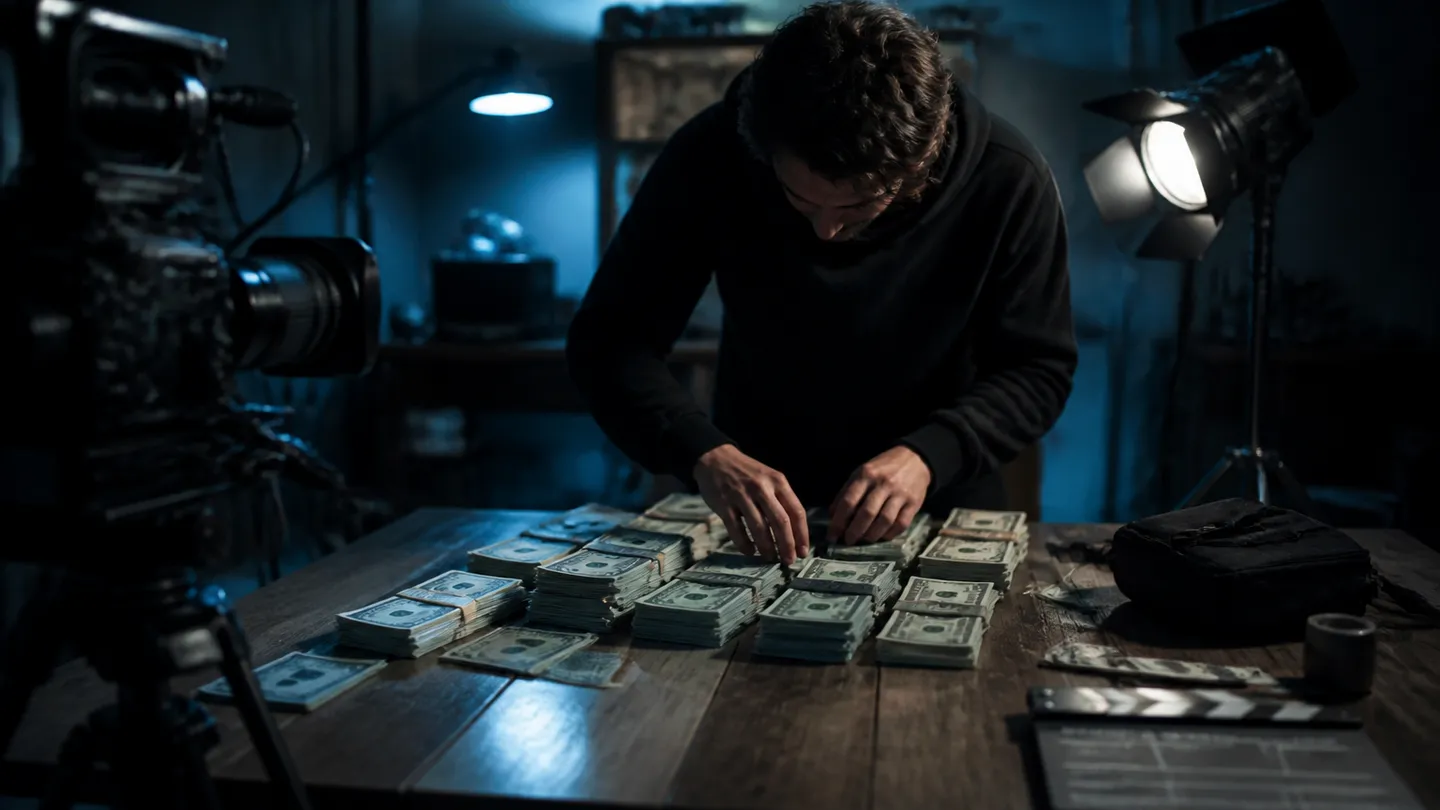
Links and references
- 1. Production Cash Props | Realistic Prop Money
- 2. Money Props | Television, Film and Live Theater | Dependable Expendables
- 3. Currency Image Use | U.S. Currency Education Program
- 4. 18 USC 472: Uttering counterfeit obligations or securities
- 5. St. Louis County Man Admits Defrauding Online Sellers with Prop Money
- 6. $2 Note | U.S. Currency Education Program
- 7. Decoding Dollars: The $100
- 8. MSP Leonardtown Press Release 2/20/2026
- 9. Images and reproduction rules | European Central Bank
- 10. 18 USC 504: Printing and filming of United States and foreign obligations and securities