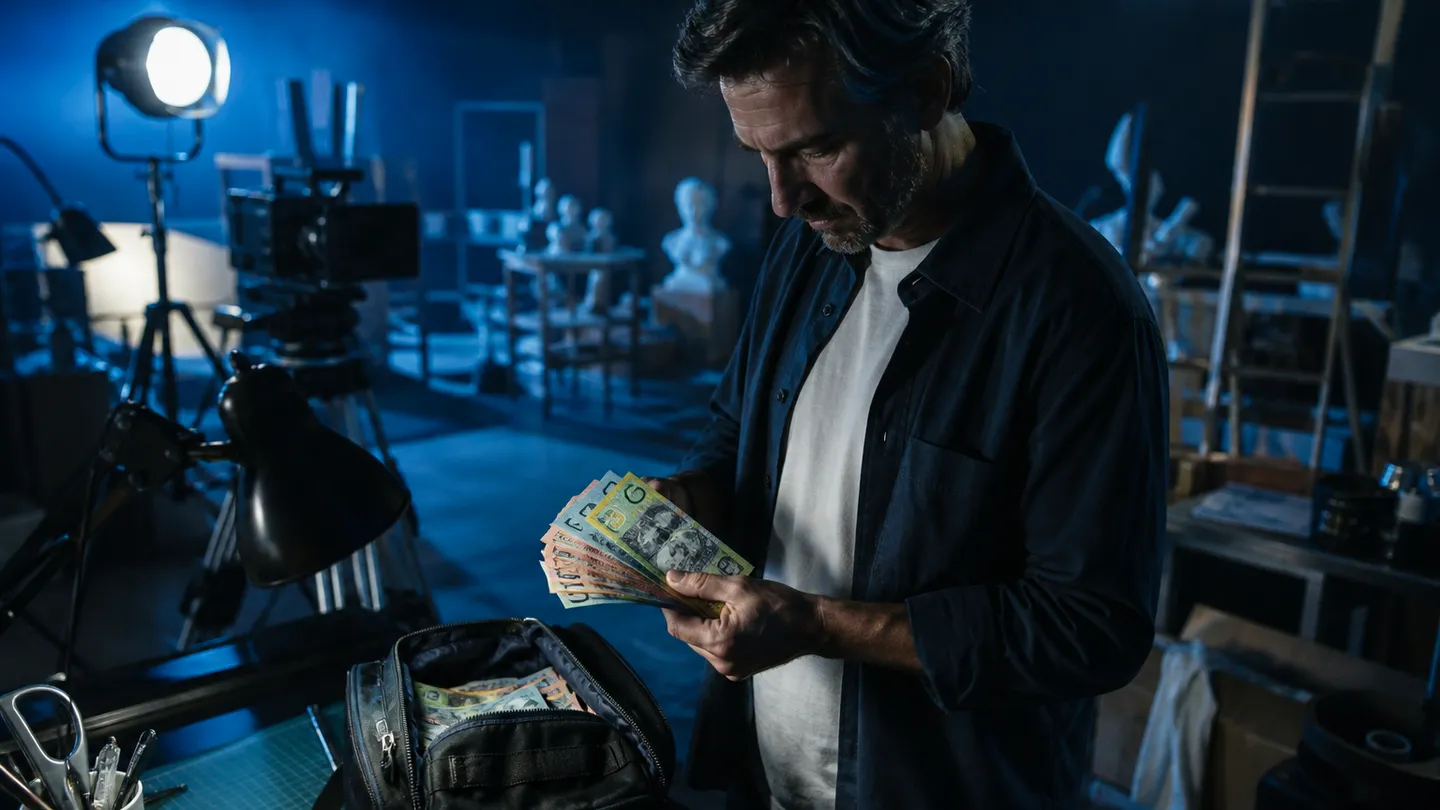
For realistic fake money in Australia, choose clearly marked prop or play money that cannot reasonably be mistaken for genuine currency. We recommend checking for an altered design, obvious "PROP" wording, or non-standard sizing, then confirming the seller’s terms before using it for filming, photography, education, or events.
What “Realistic Fake Money” Means in Australia
In Australia, "realistic fake money" refers to various types of non-genuine currency that serve specific purposes while adhering to legal standards. It is essential to distinguish between several categories: screen-used prop money, educational play money, novelty notes, printable templates, and illegal counterfeit currency. Each type has its intended use and legal implications, especially when considering the Crimes (Currency) Act 1981, which regulates currency reproduction in the country.
Screen-used prop money is designed for filmmakers and photographers, ensuring it looks convincing on camera but remains distinguishable from real Australian banknotes. Educational play money is often used in classrooms to teach children about currency and financial literacy. Novelty notes, while not intended for serious use, can be fun additions to events or promotions. Printable templates allow users to create their own versions of fake money but must be used with caution to avoid breaching legal guidelines. Lastly, illegal counterfeit currency is strictly prohibited and can lead to serious legal consequences.
Lawful realism means that the fake money should look convincing in the intended shot or activity while remaining clearly distinguishable from genuine Australian currency. For instance, prop money might have the word "PROP" printed on it, or it could be a different size or colour compared to authentic Australian dollar notes.
Quick Use-Case Table
| Use Case | Type of Fake Money |
|---|---|
| Film Production | Screen-used prop money |
| Photography | Screen-used prop money |
| Theatre | Screen-used prop money |
| Classroom Activities | Educational play money |
| Displays | Novelty notes |
| Games | Educational play money, novelty notes |
When selecting realistic fake money, we recommend checking for clear markings and ensuring it complies with the regulations set by the Reserve Bank of Australia and the Royal Australian Mint. Understanding the differences between these types can help you choose the right option for your needs while staying within legal boundaries.
Is Prop Money Legal in Australia?
Prop money is legal in Australia, but its usage is strictly regulated under the Crimes (Currency) Act 1981. This Act outlines the legal framework for reproducing currency and specifies that any imitation currency must not be capable of being mistaken for genuine Australian banknotes. The Reserve Bank of Australia provides guidance on how to reproduce banknotes legally. It emphasises that any reproduction must be clearly marked and should not resemble real banknotes in size, colour, or design.
When it comes to coin replicas, the Royal Australian Mint has similar guidelines. They state that any reproduction of coins must also be clearly identifiable as a replica and not a genuine currency. Labels such as “prop money” or “for motion picture use only” do not automatically confer legality. These labels do not exempt the user from the responsibility of ensuring that the prop money complies with legal standards.
It is crucial to note that passing, offering, or possessing imitation money with dishonest intent can lead to severe criminal consequences. This means that if someone uses prop money in a way that suggests it is real currency, they could face legal repercussions. Therefore, before ordering or printing any type of prop money, we advise checking the current regulations and guidance from the Reserve Bank of Australia and the Royal Australian Mint.
To summarise, while prop money can be a useful tool for filmmakers, educators, and event organisers, it is essential to ensure that it complies with the relevant laws to avoid any legal issues. Always verify the specifics before making a purchase or using prop money in any capacity.
Australian Prop Money Options Compared
When selecting realistic fake money in Australia, it's crucial to understand the various options available and how they compare. Below is a comparison table that outlines key features of different types of prop money, including specialist screen-prop notes, educational play-money packs, novelty currency, downloadable printables, and generic non-Australian prop cash.
| Type of Prop Money | Realism on Camera | Intended Viewing Distance | Denominations Available | Notes vs Coins | Material | Customisation Options | Legal Risk Considerations | Suitability by Use | Price Range (AUD) | Pack Quantity | Shipping Costs | Delivery Estimates |
|---|---|---|---|---|---|---|---|---|---|---|---|---|
| Specialist Screen-Prop Notes | High | Close-up | Various (e.g., 50, 100) | Notes | Polymer | Limited | Must be marked as "PROP", comply with Crimes Act | Film, photography, theatre | 50 - 150 | 100 - 500 | Varies | 1-2 weeks |
| Educational Play-Money Packs | Moderate | Classroom distance | Limited (e.g., 1, 5, 10) | Notes and coins | Paper or plastic | Some options available | Must not resemble real money closely, educational use only | Teaching financial literacy | 20 - 50 | 50 - 200 | Low (typically free) | 1 week |
| Novelty Currency | Low | Distant | Various | Notes | Paper | No customisation | Should clearly state "novelty" to avoid confusion | Events, promotions | 10 - 30 | 10 - 100 | Low | 1-2 weeks |
| Downloadable Printables | Variable | Depends on print quality | Customisable | Notes | Digital (print) | High | Must follow reproduction guidelines; personal use only | Personal use, educational activities | 5 - 15 | N/A | N/A | Instant |
| Generic Non-Australian Prop Cash | Low | Distant | Various | Notes | Paper | Limited | Risk of legal issues if mistaken for real currency | Not recommended for serious use | 10 - 25 | 10 - 50 | Varies | 2-3 weeks |
Specialist screen-prop notes are ideal for filmmakers and photographers due to their high realism on camera. They typically come in various denominations and are made from polymer, mimicking the look of genuine Australian banknotes while remaining distinguishable. Educational play-money packs are designed for classroom activities, featuring limited denominations and available in both notes and coins. They serve to teach children about money management without closely resembling real currency.
Novelty currency is often used for events and promotions, with a clear label indicating its non-genuine status. Downloadable printables offer a flexible option, allowing users to create their own designs, but they must adhere to legal guidelines to avoid any confusion with real currency. Generic non-Australian prop cash should be avoided in serious contexts, as it carries a higher risk of being mistaken for authentic notes.
Before making a purchase, we recommend verifying the current prices, shipping costs, and delivery estimates from reputable sources, such as Officeworks or Kmart Australia. This ensures that you are well-informed about your options while complying with local regulations set by the Reserve Bank of Australia and the Royal Australian Mint.
Where to Buy Legal Fake Money in Australia
Finding legal fake money in Australia requires navigating various suppliers, from specialist prop providers to larger retail chains. Each option has its unique features, including availability, shipping policies, and product details.
Specialist Prop Suppliers
Specialist suppliers focus on high-quality prop money suitable for filmmakers and photographers. They often provide polymer notes that replicate the look of genuine Australian banknotes. It's essential to check if the product clearly states "PROP" and displays both sides, ensuring compliance with the Crimes (Currency) Act 1981. Prices may vary, so always confirm the total delivered cost, including shipping.
Educational Retailers
Educational stores offer play money designed primarily for teaching purposes. This type of fake money is often less realistic but serves to educate children about currency. Retailers like Officeworks may stock these items, but it's advisable to check their current availability and whether they display both sides of the notes. Shipping costs are typically low, and delivery can be quick.
Party and Toy Stores
Party and toy stores frequently carry novelty notes that can be used for events or decorations. These notes should be clearly labelled as "novelty" to avoid any confusion. While these products can be affordable, it’s crucial to check the seller's return policy and whether they show both sides of the notes before purchasing.
Large Retailers
Chain stores like Kmart Australia and BIG W may stock prop money or educational play currency. However, availability can vary, so we recommend checking their websites or visiting in person. Ensure that the product meets legal requirements and displays both sides. Shipping policies differ by store, so take note of any additional costs.
Online Marketplaces
Online marketplaces can be a convenient option for sourcing fake money. Listings should specify the product's details, including whether it complies with Australian regulations. Always verify the seller's reputation and return policy. When purchasing online, be sure to check if the listing includes images of both sides of the money.
Quick Checklist Before Purchase
- Confirm the product is clearly marked as prop or play money.
- Ensure it complies with the Crimes (Currency) Act 1981.
- Check for images showing both sides of the notes.
- Review shipping costs and delivery estimates.
- Look into the seller's return policy for peace of mind.
By exploring these options and checking the necessary details, we can ensure that we acquire legal fake money for our needs while adhering to Australian regulations.
How to Choose the Right Option for Your Use
How to Choose the Right Option for Your Use
Selecting the right type of realistic fake money involves considering several factors, including your purpose, the viewing distance, and the audience. To guide your decision, we recommend a checklist that focuses on key elements like resolution, handling needs, and whether coins are required.
Decision Checklist
- Purpose: Determine if the money is for filming, educational use, or events.
- Camera Distance: For close-up shots, opt for high-quality polymer notes. For stage productions viewed from several metres away, lower-quality options may suffice.
- Resolution: Ensure that the fake money maintains clarity in detail, especially for close-up filming.
- Duration on Screen: Longer screen times may require more durable materials.
- Handling Needs: Consider how often the money will be handled. More robust materials are advisable for frequent use.
- Audience Age: For educational purposes, ensure that the design is age-appropriate and clearly marked as play money.
- Coins Required: If coins are necessary, check for sets that include both notes and coins.
Quality Signals
When evaluating options, look for practical quality signals:
- Material: Polymer-like materials are preferable as they mimic genuine Australian banknotes. Paper options may be less durable.
- Print Consistency: A consistent print across denominations is essential for realism.
- Glare: Avoid materials that produce excessive glare under lights, as this can detract from realism.
- Repeated Serial Numbers: Ensure that notes do not share serial numbers, which can raise suspicion.
- Denomination Mix: A good mix of denominations can enhance the realism for various scenarios.
- Durability: Consider how well the money will hold up over time, especially if it's going to be handled frequently.
Scenarios
Close-Up Film Shot: For a film scene requiring close-up shots, we recommend using specialist screen-prop notes made from polymer. These notes closely resemble genuine Australian banknotes and can withstand scrutiny under camera lights.
Stage Production Viewed from Several Metres Away: In a theatre setting where the audience is seated several metres away, educational play-money packs may be adequate. These packs often include colourful designs without closely mimicking real currency, making them suitable for performance settings.
Primary-School Money Lesson: For teaching children about money management, educational play money is ideal. This type of fake money should be clearly marked as play money and feature denominations that are easy for children to understand, such as $1 and $5 notes.
By carefully considering these aspects, we can ensure that we select the most appropriate realistic fake money option for our specific needs while remaining compliant with Australian regulations set by the Reserve Bank of Australia and the Royal Australian Mint.
Red Flags in Online Listings
When shopping for realistic fake money online, we should be vigilant about certain claims that may indicate a less-than-reputable source. Phrases like “passes detectors,” “identical security features,” or “spendable” should raise immediate concerns. These assertions often suggest that the seller is attempting to mislead buyers into thinking that their product can be used as real currency, which is illegal under the Crimes (Currency) Act 1981. Authentic prop money should never be described as “spendable” or “realistic enough to pass as genuine.”
Another red flag is the lack of detailed images or descriptions. Listings that hide reverse-side images, do not specify dimensions, or fail to mention required markings are often attempting to conceal important information. For example, Australian banknotes have specific features that distinguish them from counterfeit notes, such as the tactile markings and the transparent window. If a seller does not provide clear images of both sides of the note, we should consider this a warning sign.
It’s also essential to be cautious about sellers who offer unusually high realism. While we may think that high-quality replicas are advantageous, they can actually indicate a legal and ethical issue. The Reserve Bank of Australia and the Royal Australian Mint have specific guidelines for reproducing currency, which are designed to prevent confusion with real money. If a product appears too realistic, it’s worth investigating further.
Checklist for Spotting Red Flags
- Claims of functionality: Avoid listings that claim the notes can be used as real currency.
- Lack of images: Ensure both sides of the notes are visible in the listing.
- Missing information: Look for details on required markings and dimensions.
- Unusual realism: Be cautious of products that mimic genuine banknotes too closely.
By keeping these red flags in mind, we can protect ourselves from potential legal issues and ensure that we purchase only compliant and safe prop money for our needs.
Myths and Facts About Australian Prop Money
Myths and Facts About Australian Prop Money
Many misconceptions surround the legality and use of prop money in Australia. One common myth is that all prop money is legal simply because it is labelled as "prop" or "play" money. In reality, legality hinges on the design, production, possession, marketing, and intended use of the money, not just a single disclaimer. For instance, even if a note has "COPY" written on it, it can still be considered illegal if it closely resembles real Australian banknotes without adhering to the guidelines established by the Crimes (Currency) Act 1981. This Act specifies that reproductions must be clearly distinguishable from genuine currency and should not be used in a manner that could mislead the public.
Another prevalent belief is that Australian polymer notes are impossible to counterfeit. While polymer banknotes are indeed more challenging to replicate due to their unique characteristics, it is not impossible. Counterfeiters can employ advanced techniques that may produce convincing replicas, especially if the counterfeiters are skilled. Therefore, it is crucial for consumers and businesses to remain vigilant and ensure they are sourcing their prop money from reputable suppliers who comply with all legal requirements.
To navigate these complexities, we recommend that individuals and organisations always verify compliance with Australian regulations before purchasing prop money. This includes ensuring that suppliers follow the guidelines set forth by the Reserve Bank of Australia and that any prop money purchased is clearly marked as such. By doing so, we can avoid potential legal issues and ensure that our use of prop money is both safe and compliant with the law.
Safer Alternatives When Realism Is Not Essential
Safer Alternatives When Realism Is Not Essential
When realism isn't a priority, there are various safer alternatives to consider for your projects. These options can satisfy your needs while minimising legal risks associated with counterfeit currency. We recommend exploring clearly fictional currencies, oversized or undersized teaching notes, one-sided classroom money, digital overlays, and generic stage cash. Each of these alternatives offers unique advantages depending on your specific requirements.
Comparison of Alternatives
Clearly Fictional Currencies: These are designed to look distinctly different from Australian dollars, often featuring whimsical designs. They can be used in films or events without fear of legal repercussions. The cost typically ranges from AUD 10 to AUD 30 for packs, and preparation time is minimal, as they can be acquired from specialised retailers.
Oversized or Undersized Teaching Notes: Educational money that is either larger or smaller than real banknotes is another great option. These notes are primarily used for teaching and can be found at educational retailers like Officeworks. Prices usually start around AUD 5 for a set, and they are suitable for classroom use. Their preparation time is low, as they are often available off the shelf.
One-Sided Classroom Money: This type of fake currency is often printed only on one side, which makes it clear that it is not real money. It is particularly useful for educational purposes. Typically, these notes are inexpensive, ranging from AUD 5 to AUD 15, and are readily available from various educational suppliers.
Digital Overlays: For filmmakers, using digital overlays of money can be a cost-effective and safe alternative to physical prop money. This method requires some digital editing skills but can save time and resources in the long run. The cost for digital assets can vary widely, but many stock photo sites offer affordable options.
Generic Stage Cash: This is often used in theatrical productions and is designed to be clearly non-representational. Prices range from AUD 10 to AUD 25 per pack, and preparation time is minimal, as these can be purchased in bulk from party supply stores.
Practical Scenarios
Using fictional denominations or altered colours can be more practical than replicating Australian dollars in various scenarios. For instance, if you're creating a comedic scene in a film, oversized notes with silly designs can enhance the humour without the risk of legal issues. Similarly, in an educational setting, using one-sided notes can help students understand the concept of currency without confusion.
By considering these alternatives, we can ensure that our projects remain compliant with the Crimes (Currency) Act 1981 while still achieving our creative goals. Always remember to check for clear markings that indicate the money is not real, as this will further protect us from any potential legal complications.
Realistic Fake Money Options in Australia
| Shot Distance | Use Case | Material | Pack Size | Total Price (AUD) | Legal Risk Signals |
|---|---|---|---|---|---|
| Close-Up | Film Scene | Polymer | Varies | Depends on supplier | Check for serial numbers |
| Several Metres | Theatre Production | Paper/Play Money | Varies | Depends on supplier | Avoid excessive realism |
| Classroom | Money Lessons | Educational Play Money | Varies | Depends on supplier | Clearly marked as play money |
| General Use | Generic Stage Cash | Paper | Varies | 10-25 AUD | Non-representational design |
| Teaching | Oversized Notes | Paper | Varies | 5-15 AUD | Clearly distinguishable from real currency |
| Digital | Filmmaking | Digital Overlays | Varies | Depends on supplier | Ensure compliance with RBA guidelines |
Common Mistakes and Misconceptions
Buying the Most Realistic Option Available
More realism is not always better. Shoppers often choose the closest-looking product without considering whether it will appear in a close-up, sit behind glass, or be viewed across a stage, which can add unnecessary cost and legal risk. We suggest matching the design to the camera distance, audience distance, handling requirements, and likelihood of public exposure.
Comparing Only the Listed Price
The cheapest listing may not have the lowest delivered cost. Overseas postage, currency conversion, taxes, and expedited shipping can make an inexpensive pack unsuitable for an Australian production budget or deadline. Before paying, compare the complete checkout total in AUD rather than the headline price.
Assuming "In Stock" Means Stocked in Australia
A familiar marketplace or Australian-facing storefront does not prove local dispatch. Buyers may discover after ordering that the notes are shipping internationally, creating delays that affect filming, rehearsals, lessons, or events. We advise confirming the dispatch country, estimated arrival window, and returns destination before placing the order.
Treating Pack Size as a Clear Description
A "large pack" tells us little about what arrives. Sellers may describe bundles, sheets, or mixed denominations without clearly stating the usable note quantity, leaving buyers short of the amount needed to fill a case, cover a table, or repeat a scene. Check the individual note count, denomination mix, packaging format, and whether every pictured item is included.
Choosing Materials Without Planning the Scene
Polymer-style props can look convincing on camera, while simple paper products may work better for distant stage use or supervised learning. Problems arise when reflective surfaces, repeated handling, folding, or scattered-note scenes reveal that the chosen material does not suit the production. We recommend sharing a sample image and intended shot distance with the director, photographer, teacher, or event organiser before ordering.
Leaving Purchase Checks Until Checkout
A polished product title can distract from missing practical details. Before paying, make sure the listing provides:
- the dispatch location and expected delivery window;
- the total payable amount in AUD;
- the usable note quantity and denomination mix;
- the material, physical size, and intended use;
- a returns process if the delivered product differs from the description.
Conclusions
Start with the scene, not the product.
- We should define the viewing distance, lighting, handling and required quantity before comparing designs.
- For classrooms, events and wide shots, obviously fictional or one-sided notes usually meet the brief with fewer concerns.
- Close-up productions need careful supplier screening; inspect clear product photographs, dimensions, markings and materials before ordering.
- Before payment, confirm the final AUD cost, dispatch country, delivery estimate, denomination mix and return arrangements.
- Keep props controlled during use, brief everyone handling them and account for every note afterwards.
For the next step, we suggest comparing lawful purchasing routes in Realistic Fake Money for Sale: Where to Find It.
Straight answers
Where can I buy realistic fake money in Australia?
We suggest checking Australian theatrical-prop suppliers, film-equipment businesses and established educational retailers before using general marketplaces. Choose a seller that shows both sides of every note, identifies the dispatch country and explains why the design cannot be mistaken for genuine currency.
Is prop money legal in Australia?
Prop money can be lawful when it is clearly distinguishable from genuine currency and is not made, supplied or used to deceive anyone. We advise obtaining guidance from the relevant Australian authority before commissioning a design based closely on an existing banknote.
Can I print Australian play money at home?
We would not print scans, traced artwork or close copies of genuine Australian banknotes at home. A safer approach is to create fictional money with different artwork, colours, wording and denominations, then keep the files and printed sheets under controlled use.
Does Officeworks sell fake money?
Officeworks may carry educational play money or classroom resources, but product availability can vary by store and online catalogue. We suggest searching under "play money", "classroom money" or "money teaching resources", then checking that the product is fictional rather than a realistic banknote reproduction.
What is the difference between prop money and counterfeit money?
Prop money is created for a legitimate production, teaching or entertainment purpose and should be readily distinguishable from spendable currency. Counterfeit money imitates genuine currency for deception, so the intended use does not rescue a design that could plausibly enter circulation.
Can Australian prop money be used in films and photography?
Yes, suitably designed prop money can be used for films and photography, but the production should control how it is stored, handled and disposed of. For close-ups, we suggest combining clearly fictional physical notes with framing, shallow focus or post-production rather than ordering a more deceptive replica.