Fake USD means counterfeit U.S. currency made to imitate genuine money; the term may also refer loosely to clearly labelled prop money not intended for payment. If a note seems suspicious, we advise you not to spend or return it: handle it minimally, note where it came from, and contact local law enforcement.
What “Fake USD” Can Mean
The term "fake USD" encompasses various types of currency that are not legally acceptable as payment. It primarily includes counterfeit currency, prop or replica money, novelty notes, and altered genuine bills. Understanding these distinctions is crucial for cash users and small-business staff alike.
Counterfeit currency refers to fake U.S. dollars created to deceive and imitate genuine Federal Reserve notes. These notes often fail to incorporate the security features of authentic bills, such as the watermark, embedded security thread, or color-shifting ink. The U.S. Secret Service has the primary responsibility for investigating counterfeit currency, and they emphasise that possessing counterfeit money, with the intent to defraud, can lead to serious legal consequences.
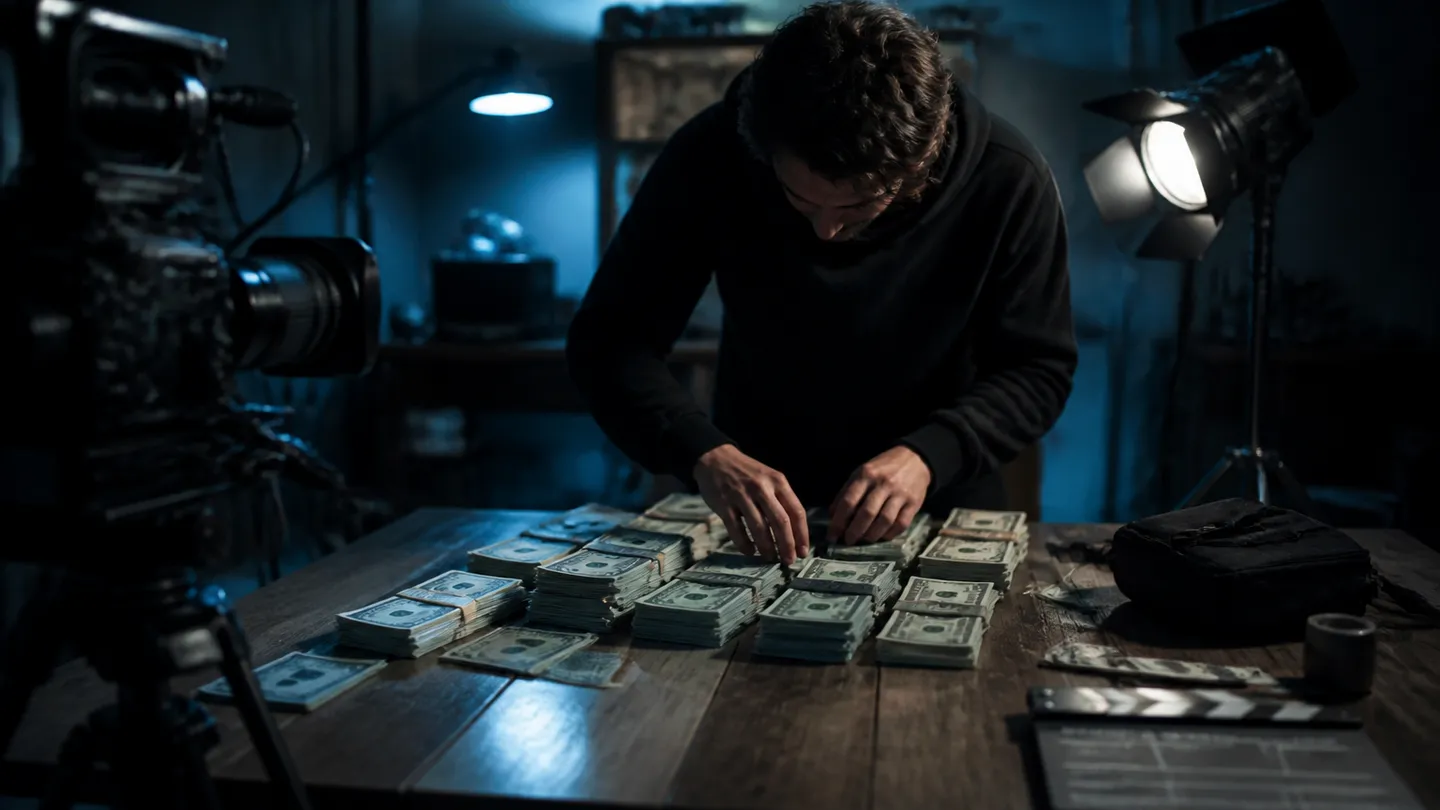
Prop money, on the other hand, is designed for use in movies, theatre productions, or other entertainment purposes. It is typically marked clearly as fake and is not intended to be used as legal tender. Novelty notes, while sometimes appearing similar to U.S. dollars, are often used for promotional purposes or as jokes. It is important to remember that just because a note looks like a dollar does not make it a legitimate form of payment.
Altered genuine bills involve taking a legitimate note and modifying it, such as changing the denomination from a lower value to a higher one. For instance, a $5 bill could be altered to appear as a $50 bill. Such alterations can be difficult to detect, but they are illegal and can result in criminal charges.
Before accepting any note, we recommend checking for security features, such as the 3-D security ribbon and the bell in the inkwell. If you suspect a note is counterfeit or altered, do not attempt to spend or return it. Instead, handle it minimally, note where it came from, and report it to local law enforcement. Understanding these distinctions can help individuals avoid falling victim to fraud and ensure safe transactions. For further details on identifying counterfeit notes, check out our guide on Fake US Dollars: How to Spot Them.
How to Check a U.S. Dollar Bill: Feel, Tilt, and Check
To ensure that a U.S. dollar bill is genuine, we recommend following the official Feel–Tilt–Check method. This simple approach involves three main steps: feeling the bill, tilting it, and checking it against the light.
First, feel the texture of the bill. Genuine U.S. currency is printed on a unique blend of cotton and linen, giving it a distinct, textured feel. You should notice the raised printing, especially on the larger denominations. Counterfeit bills often lack this tactile quality, feeling smoother or more plastic-like.
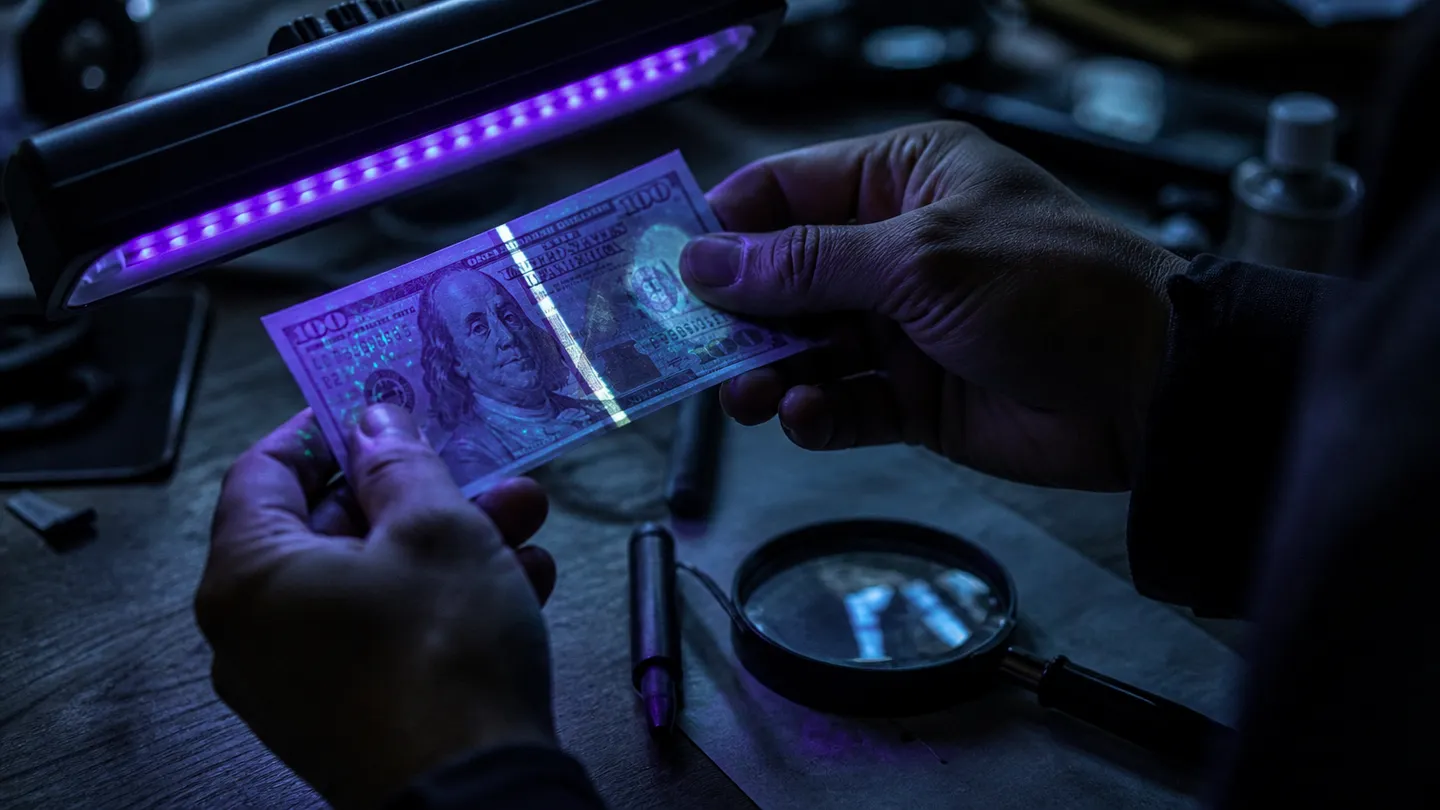
Next, tilt the bill to observe the colour-shifting ink. On the $20, $50, and $100 notes, the numeral in the lower right corner changes colour when tilted. This feature is difficult to replicate accurately in counterfeit versions. Additionally, look for the 3-D security ribbon embedded in the bill, which features images that shift as you tilt the note.
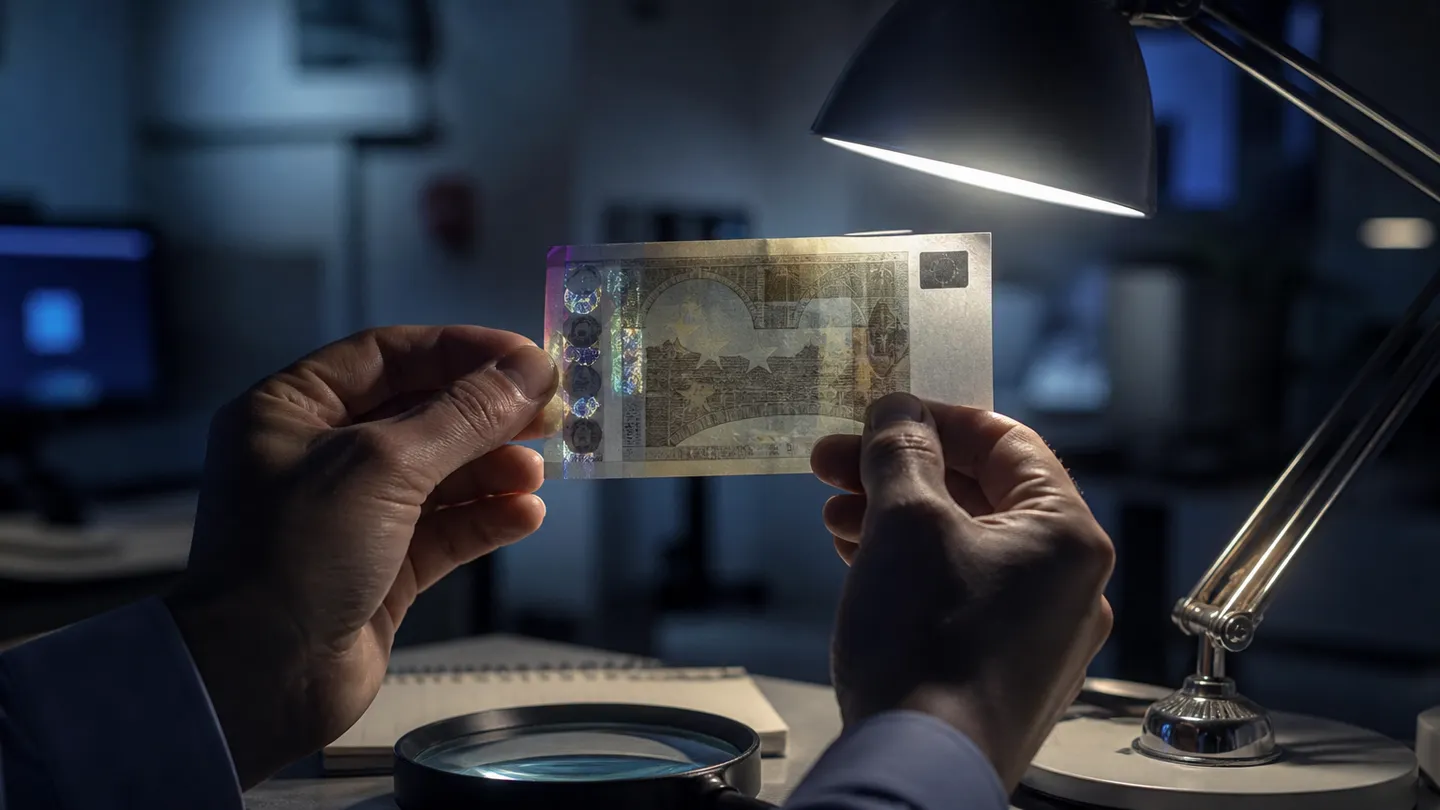
Finally, check the bill against a light source. Genuine U.S. dollars have a watermark that is visible when held up to the light. The watermark should match the portrait on the bill and should appear as a subtle image, not a stark outline. Also, inspect for the embedded security thread that runs vertically through the note, which is also visible when backlit.
When assessing a suspicious bill, it’s wise to compare it with a known genuine note of the same denomination and series. This side-by-side comparison can help highlight discrepancies that might not be immediately evident. Remember, no single feature alone guarantees authenticity; it’s the combination of these checks that provides a clearer picture.
By employing the Feel–Tilt–Check method, we can significantly reduce the chances of accepting counterfeit currency. Always stay vigilant and educated about the features of genuine U.S. dollars to ensure safe transactions.
Security Features by Denomination
Security Features by Denomination
Understanding the security features of U.S. currency is essential for identifying counterfeit notes. Each denomination has distinct characteristics that help authenticate it. Below, we present a table summarising the security features of various U.S. dollar bills:
| Denomination | Watermark | Embedded Security Thread | Color-Shifting Ink | 3-D Security Ribbon | Bell in the Inkwell |
|---|---|---|---|---|---|
| $1 | No | No | No | No | No |
| $2 | No | No | No | No | No |
| $5 | Yes | Yes | No | No | No |
| $10 | Yes | Yes | Yes | No | No |
| $20 | Yes | Yes | Yes | Yes | No |
| $50 | Yes | Yes | Yes | Yes | No |
| $100 | Yes | Yes | Yes | Yes | Yes |
It is important to note that not all denominations include every security feature. For example, the $1 and $2 bills do not have watermarks or embedded security threads, so their absence does not necessarily indicate that they are counterfeit.
The modern $100 bill, introduced in 2013, showcases several advanced security features. It includes a 3-D security ribbon with images that shift as you tilt the bill, a colour-shifting ink that changes from copper to green, and a bell in the inkwell that is visible when held to the light. Additionally, it contains a watermark that matches the portrait of Benjamin Franklin, which becomes visible when the note is held up to the light.
For those handling cash, being aware of these features can significantly reduce the risk of accepting counterfeit currency. Always remember to check for multiple security features, as relying on a single characteristic can lead to mistakes. If a note seems suspicious, handle it minimally and report it to local authorities. For further insights into counterfeit notes, we suggest reviewing our guide on Fake US Dollars: How to Spot Them.
Common Signs of Counterfeit USD
Identifying counterfeit U.S. currency can be challenging, but being aware of common signs can help us spot fakes more effectively. Several key indicators can suggest that a bill is counterfeit. Look out for features such as blurry portraits and lines, discrepancies in the watermark compared to the stated denomination, and printed instead of embedded security threads. Additionally, counterfeit notes may exhibit incorrect colour-shifting elements, unusual paper texture, and repeating serial numbers across multiple bills.
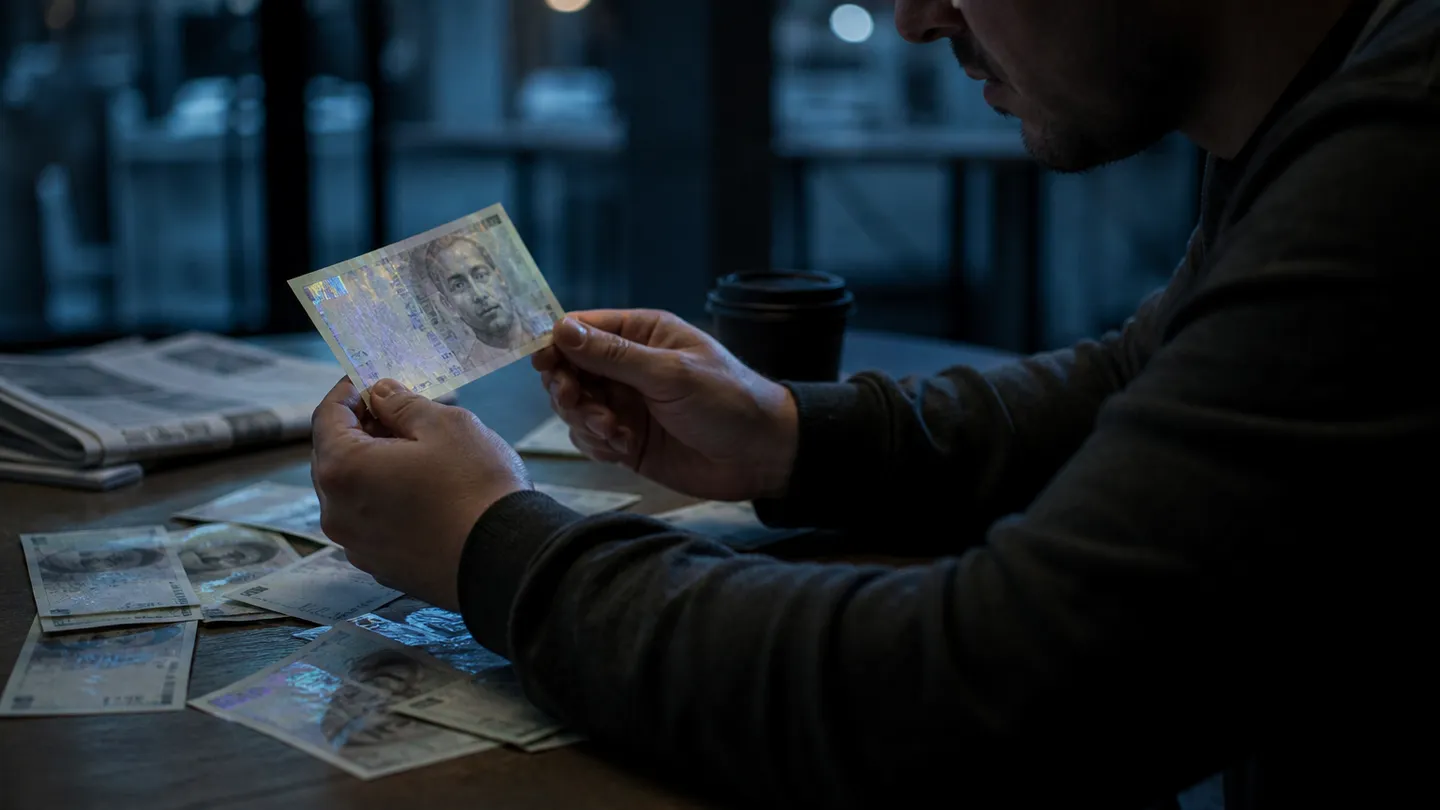
Blurry images are one of the most apparent signs of counterfeit currency. Genuine U.S. dollars have crisp, clear portraits and fine lines. If the portrait appears fuzzy or lacks detail, the bill is likely a fake. The watermark, which should match the portrait and be visible when the bill is held up to the light, can also be a telltale sign. If the watermark is missing or does not correspond to the denomination, it raises red flags.
Moreover, counterfeit bills often feature printed security threads rather than the embedded ones found in authentic notes. For instance, the $20 bill includes an embedded security thread that is a vital feature. When it comes to colour-shifting ink, genuine notes will show a noticeable change in colour when tilted. If the ink appears dull or does not shift, this can indicate a counterfeit.
To illustrate, consider the following combinations of signs: a $50 bill with a blurry portrait and an absent embedded security thread is suspicious. Similarly, a $100 bill with a mismatched watermark and printed security thread should be treated with caution.
It's crucial to note that signs of wear, stains, or stamps do not automatically indicate counterfeiting. Bills can become worn or damaged over time, so it's essential to consider the overall combination of characteristics. If we encounter a bill that seems suspicious, we should handle it minimally, note where it came from, and report it to local authorities. Awareness of these signs can significantly reduce the risk of accepting counterfeit currency. For further insights into identifying counterfeit notes, we recommend checking our guide on Fake US Dollars: How to Spot Them.
Counterfeit Money vs. Prop Money and Replica Bills
Counterfeit currency, prop money, and replica bills serve different purposes and are governed by distinct legal considerations. Understanding these differences is essential for anyone who handles cash regularly, as confusing them can lead to unintended legal consequences.
Counterfeit currency refers to fake U.S. dollars that are created with the intent to deceive. These bills are designed to look like authentic Federal Reserve notes but typically lack the required security features, such as the watermark, embedded security thread, and colour-shifting ink. The U.S. Secret Service is responsible for investigating counterfeiting, and possession of counterfeit money, with the intent to defraud, can result in severe penalties.
In contrast, prop money is fabricated specifically for use in film, theatre, or other entertainment settings. It is usually marked with phrases like "For Motion Picture Use Only" or "Replica," clearly indicating that it is not legal tender. While it is permissible to sell prop money online, it must comply with applicable laws. Attempting to pass off prop money as genuine U.S. dollars constitutes fraud and can lead to criminal charges.
Replica bills, similar to prop money, are designed to look like real currency but are marked or designed in a way that makes it clear they are not intended for actual transactions. For example, they may feature bright colours or unconventional designs that do not resemble any existing U.S. currency.
Before accepting any note, we encourage everyone to verify its authenticity by checking for security features typical of real U.S. dollars. If you suspect a bill is counterfeit or an attempt to use prop money as genuine currency, handle it carefully, document its origin, and report it to local law enforcement. Awareness of these distinctions and legal implications can help protect against fraud and ensure safe transactions.
Detection Myths: Pens, Serial Numbers, ATMs, and Foreign Writing
Detection Myths: Pens, Serial Numbers, ATMs, and Foreign Writing
When it comes to detecting counterfeit U.S. dollars, several common beliefs can lead to misunderstandings. One of the most prevalent myths is that a counterfeit detection pen is infallible. While these pens can indeed indicate the presence of starch, which is typically absent from genuine currency, they are not foolproof. They can produce false positives on some genuine notes and false negatives on some counterfeit ones. This means relying solely on a pen can lead us to mistakenly accept or reject a bill.
Another misconception is that a valid serial number guarantees a bill's authenticity. While each denomination's serial numbers are unique and follow a specific format, they do not serve as definitive proof of a note's legitimacy. Counterfeiters can and do replicate these numbers on fake bills, so we should not rely on them alone to confirm authenticity.
The acceptance of a bill by an ATM or cash register is often seen as a guarantee of its validity. However, machines can malfunction or be tricked into accepting counterfeit notes. Just because a machine accepts a bill does not mean it is genuine. It is essential to verify the note manually, especially if it appears suspicious.
Additionally, some believe that foreign writing or stamps on a bill indicate it is counterfeit. In reality, legitimate U.S. currency can sometimes have markings from previous owners or businesses. These may not affect the bill's authenticity, but they can make it appear less than pristine.
To effectively determine the authenticity of a bill, we recommend examining multiple security features such as the watermark, embedded security thread, and colour-shifting ink. If we find ourselves in doubt, seeking professional verification is the safest course of action. By understanding these myths, we can enhance our ability to identify counterfeit currency accurately and ensure safer transactions. For more details on identifying counterfeit notes, consider checking our guide on Fake US Dollars: How to Spot Them.
What to Do If You Receive a Suspicious Bill
Receiving a suspicious bill can be unsettling, but knowing how to respond can help us handle the situation safely. First and foremost, do not attempt to spend the bill. Instead, keep it separate from other money and handle it minimally to avoid any potential contamination. If we suspect that the bill is counterfeit, it is crucial not to return it to the person who gave it to us, especially if we feel unsafe.
Next, we should document the circumstances surrounding the receipt of the bill. Note the time, place, and any details about the transaction or the individual involved. This information can be vital when reporting the incident to authorities. After gathering this information, we recommend contacting the local police department or the nearest U.S. Secret Service field office. The U.S. Secret Service is the agency responsible for investigating counterfeiting, and they can provide guidance on the next steps.
It's important to understand that genuine counterfeit currency is usually not exchanged for real money. If we attempt to do so, we may incur a financial loss. Reporting the bill promptly helps authorities track counterfeit activity and may prevent others from falling victim to similar scams.
In summary, if we receive a suspicious bill, we should:
- Do not spend or return the bill.
- Minimise handling and keep it separate.
- Document the transaction details.
- Report to local authorities, such as the police or U.S. Secret Service.
By following these steps, we can protect ourselves and contribute to the ongoing efforts against counterfeit currency. For more information on identifying suspicious bills, consider our guide on Fake US Dollars: How to Spot Them.
Legal Consequences of Knowingly Using Fake USD
The legal ramifications of using counterfeit U.S. dollars can be severe. Distinguishing between accidentally receiving counterfeit currency and knowingly using or distributing it with the intent to defraud is crucial. Accidental possession might not carry the same consequences as deliberate actions aimed at deception.
Under 18 U.S.C. §§ 471–472, federal crimes related to the production and intentional use of counterfeit obligations can result in significant penalties. These can include imprisonment for up to 20 years, hefty fines, or a combination of both. The law is stringent, focusing on the intent behind the actions. For instance, if someone knowingly passes off counterfeit currency, they are subject to these severe penalties. In contrast, an individual who unknowingly receives a counterfeit bill may not face legal repercussions, provided they take appropriate steps upon discovery.
It's also essential to consider that individual states may have their laws regarding counterfeit currency, which could lead to additional charges or consequences. The U.S. Secret Service plays a pivotal role in investigating counterfeiting, and they often collaborate with local law enforcement to address these issues comprehensively.
If you find yourself in a situation that involves counterfeit currency, seeking legal advice is advisable. A qualified attorney can provide guidance tailored to your specific circumstances, ensuring you understand your rights and obligations. Remember, the penalties for knowingly using counterfeit U.S. dollars can have long-lasting effects on your life, so it’s crucial to act thoughtfully and responsibly when handling cash.
Key Security Features of U.S. Currency
| Denomination | Security Feature | What It Means | Next Step |
|---|---|---|---|
| $1 | No security thread | Low risk of counterfeiting | Verify other features |
| $5 | Embedded security thread | Authentic if present | Check for colour-shifting ink |
| $10 | Watermark present | Authentic if visible | Tilt to check ink |
| $20 | Embedded security thread | Authentic if present | Examine portrait clarity |
| $50 | Blurry portrait | Suspicious; may be counterfeit | Report if confirmed |
| $100 | Mismatched watermark | Suspicious; may be counterfeit | Handle minimally and report |
Common Mistakes and Misconceptions
Mistakes are avoidable. Before classifying suspicious cash, we suggest checking:
- whether its features match the denomination and design series;
- whether the chosen test is only a screening tool;
- whether we can document and report the transaction safely.
Expecting every denomination to have identical security features
People often learn the features of higher-value notes and then reject genuine $1 or $2 bills because a familiar element is absent. Security features vary by denomination and series, so a missing thread or watermark matters only when that specific design should contain it. We should compare the note with the correct denomination and design family rather than using one universal checklist.
Assuming an older design must be fake
Older notes may look unfamiliar beside current currency, leading cashiers or travellers to reject them based on appearance alone. A different portrait size, layout, or colour scheme does not establish that a note is counterfeit. We should identify the series or design family first, then compare features appropriate to that version.
Treating a counterfeit pen as a final verdict
A detection pen checks how the note’s material reacts, but it does not confirm that the printed denomination, portrait, or security features are correct. An altered genuine bill may react like authentic currency because its underlying paper is real. We recommend using the pen only as an initial screen, followed by denomination-specific visual and tactile checks.
Trusting a serial number or ATM decision
People may search a serial number online or assume ATM acceptance proves authenticity because both methods appear objective. A serial number can be copied, while machine acceptance means only that the note passed that machine’s programmed checks. We should treat either result as supporting information, never as a substitute for examining compatible security features.
Calling every unusual note counterfeit
Counterfeit notes, altered genuine bills, and marked prop money are not the same. An altered bill begins as genuine currency but is changed to represent another value, while prop money may carry wording showing that it is not legal tender. We should identify what we are handling without attempting to spend any item presented deceptively as genuine cash.
Expecting reimbursement or confronting the payer
Someone who fears losing money may return the note immediately, accuse the payer, or assume a bank will exchange it automatically. Confrontation can create a safety risk, and reporting suspected fake USD may still leave us with the financial loss. In Seattle, we advise preserving transaction records or available camera details, following workplace procedures, and contacting the Seattle Police Department or the nearest U.S. Secret Service field office.
Conclusions
Stay methodical.
- We should compare a note with the correct denomination and design series, rather than expecting every bill to share identical protections.
- No single screening method settles authenticity; physical feel, print quality, watermark, thread, and changing ink should support one another.
- Older designs, stamps, writing, or machine acceptance may raise questions, but none provides a reliable verdict by itself.
- If cash remains suspicious, we should stop the transaction, avoid confrontation, preserve relevant details, and follow workplace or local reporting procedures.
For a practical next step, use our Fake 20 Dollar Bill: Identifying Counterfeits guide before accepting an unfamiliar $20 note.
Straight answers
Is there a fake US dollar?
Yes. Counterfeit U.S. dollars are unauthorised copies intended to pass as genuine currency, while clearly labelled prop money is not counterfeit unless someone alters or uses it deceptively.
How to spot fake USD?
We should compare the note with a known genuine bill of the same denomination and design, checking the paper feel, raised printing, sharp borders, watermark, security thread, and colour-changing ink where applicable. If several features conflict or the note still seems suspicious, we should stop the transaction and request another payment method.
What is the most faked currency?
There is no dependable answer without current official data covering a defined place and period. Rankings can change depending on whether they measure seized notes, reported incidents, total face value, or counterfeits detected in circulation.
How to detect counterfeit money $100?
We should tilt the note and inspect the blue security ribbon, the colour-changing bell in the inkwell, and the colour shift on the denomination marking. When held to light, the watermark and embedded security thread should match the note rather than merely appear somewhere in the paper.